

Vegan Jerk Tofu with Coconut Rice and Peas
Ingredients
For the jerk tofu:
1 block tofu, pressed and cubed
1/2 cup (60 ml) jerk sauce (recipe included below)
Lime juice
For the rice and peas:
2 cups rice
1 cup coconut milk
1 cup water
1 onion, diced
4 cloves garlic, minced
1 habanero, chopped
1 scallion, chopped
2 cans kidney beans, drained
2 bay leaves
1 tsp thyme
1 tsp nutmeg
For homemade jerk sauce:
1 onion, chopped
6 cloves garlic, chopped
4 scallions, chopped
5 habaneros, chopped
1/4 cup (30ml) soy sauce
1/4 cup (30ml) apple cider vinegar
2 tbsp sugar
1 tbsp pepper
1 tbsp ginger
1 tsp nutmeg
1 tsp annatto
1 tsp allspice
1 tsp thyme
Instructions
- Prepare the jerk sauce by blending all ingredients in a blender until smooth. Skip this step if you bought jerk sauce.
- Heat the oven to 360F (180C). Toss the tofu in a bowl with 1/2 cup of the jerk sauce, then spread evenly on a baking sheet. Leave to bake for 30 minutes.
- While the tofu is baking, prepare the rice. Heat oil in a pan over medium heat. Add the onions and garlic and cook until soft (~3-4 minutes).
- Add all spices and the pepper, and cook for another minute.
- Add the coconut milk, water, and beans, and bring to a simmer. Once simmering, add the rice, cover, and lower the heat to low. Cook until the rice is done (~20 minutes).
A longer and more detailed description
Jamaican jerk is almost certainly one of the most famous Caribbean culinary exports. You can find it in so very, very many contexts that its inventors probably didn’t intend, but in which it is nevertheless delicious.
Like tofu! Everyone likes tofu. I’m sure I am causing zero offence by applying jerk sauce to baked tofu. I am a paragon of cultural sensitivity and culinary accuracy.
In fact, let’s start with my 100% authentic jerk sauce that is guaranteed to not cause offense to anyone. Read the ingredients I listed above, chop what I said to chop, then chuck it all into a blender. Blend it until you’re satisfied, then start in on the tofu. Take some amount of sauce - I recommend at least a 1/4 cup, 1/2 cup if you’re excited about your sauce, full cup if you’re really, really excited - and toss the cubed tofu in it. Pour that out on a baking tray, then bake it for at least half an hour, or until it’s sufficiently crispy. So half an hour.
While the tofu is baking, making the rice. If you’re familiar with jambalaya - and if you’re not, you should learn it, it’s tasty - this is a similar principle of cooking everything in one happy pot. Start with your onions and garlic and cook them until they’re mostly cooked. Add in your spices and peppers, cook them for a minute or so, and then add your liquid. Bring that to a nice light boil, chunk in the rice, cover it, lower the heat, and wash the capsaicin off your hands that you’ve managed to accumulate over the course of doing this.
Trust me on this one. Wash your hands.
Once everything is cooked, either serve the tofu on the side or mix it in with the rice and peas. Enjoy your meal and enjoy yuh meal!
Substitutions and suggestions
For the tofu - The tofu could either be substituted for something more akin to chicken (like jackfruit), or fried. I wanted something that contrasted a bit more with the rice and beans, so I went with baked tofu, which actually did a lovely job absorbing the flavour of the jerk sauce. Feel free to do whatever brings you joy, though.
For the jerk sauce - Ideally, the jerk sauce should include pimento seeds; however, I live in a place where even finding hot peppers was a challenge. This recipe is based on what I have available, but again, feel free to add what you have.
For the peppers - I’m recommending habaneros here because I think they’ll probably be more accessible than scotch bonnets, though scotch bonnets are the more traditional choice. What I do not recommend doing, however, is buying the six pack of mystery hot peppers from your local Woolworths, then chunking them whole into your sauce and rice. There are reapers in there, and the capsaicin will hang out on your hands for days. It will also make this extremely hot. You’ve been warned.
What I changed to make it vegan
I replaced chicken with tofu, butter with oil, and the gentle island vibes of Jamaica with me hacking and wheezing because I accidentally inhaled a pepper.
What to listen to while you make this
Well, have you heard of a guy named Bob Marley? Bit of an influential fellow. Famously Jamaican.
A brief context for this dish
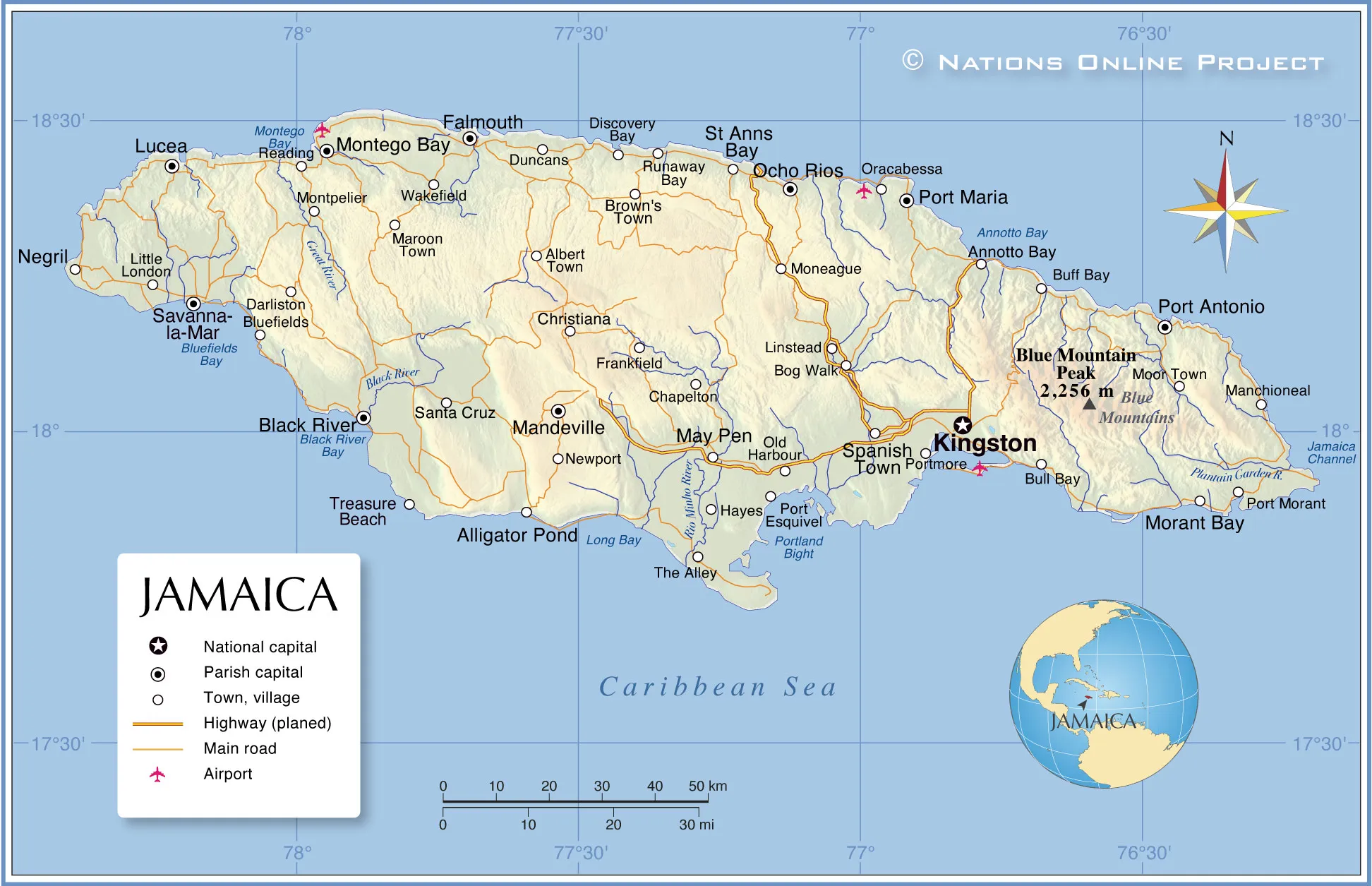
Jamaican cuisine, like all the cuisines of the Caribbean, is a blend of a wide variety of influences. It contains West African, English, Irish, French, Portuguese, Spanish, French, and Indigenous cuisines. It includes ingredients from North, South, and Central America, as well as the diverse plant and animal life available on the island. It contains themes that resonate throughout the islands of the Caribbean - saltfish, beans and rice, and callaloo abound - but also elements that are unique only to Jamaica. It’s in Jamaica that we find naturally vegan Rastafari dishes, and it’s from Jamaica that we get jerk seasoning.
Jerk seasoning is defined by two primary elements, namely, allspice and scotch bonnets. Both are ingredients that, while not endemic to Jamaica per se, are a fundamental part of what has historically defined Jamaican cuisine. Both allspice and scotch bonnets were brought to Jamaica by its original inhabitants - the Taino - and it is they who brought both jerk and the art of jerking into being.
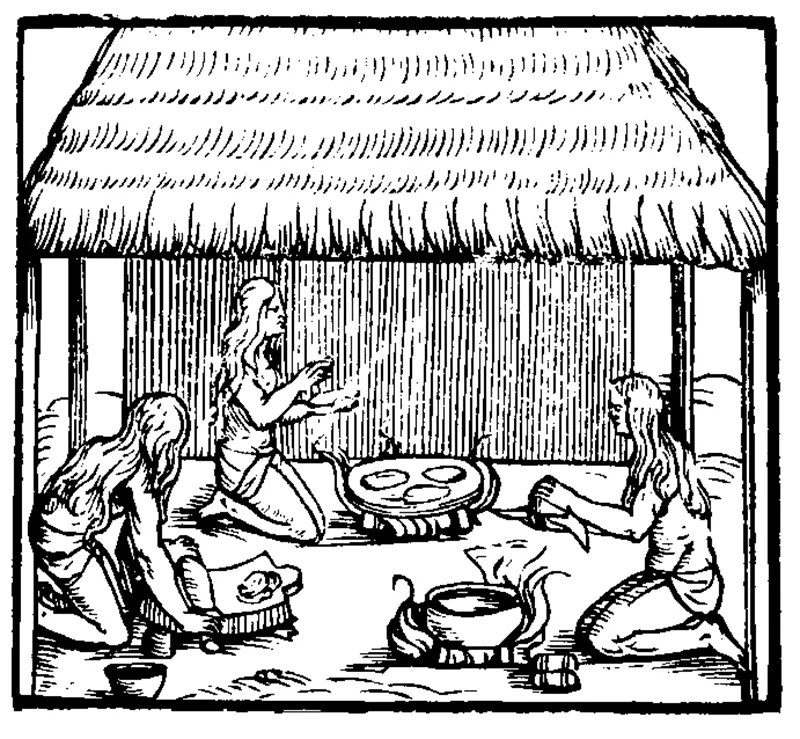 A Spanish illustration of Taino women preparing cassava bread (Source: La Historia del Mondo Nuovo 1565 via Wikipedia)
While I’ve discussed the Taino people and the genocide of the Taino at great length in other posts, it’s worth considering that the Taino did not originate on the various Caribbean islands they came to call home. The Tainos’ ancestors arrived in the Caribbean from South America - though where in South America is debated - roughly 2500 years ago. Sailing in canoes that could carry between 50 and 60 people each, the Arawak-speaking people diffused across the islands they encountered, becoming a culture of their own, linguistically similar, while also distinct. As with any group moving from place to place, they brought their food with them, introducing allspice, cassava, and scotch bonnets to the islands.
Scotch bonnets themselves are native to the Orinoco River valley on the northern coast of South America; however, they were perfectly happy to called Jamaica home as well. For centuries, the Taino incorporated scotch bonnets into their cooking, giving their dishes a sweet kick. The word “jerk” itself derives from the Taino “chirqui,” a tribute to its Indigenous origins. When the Spanish arrived and the Taino retreated, they took their culinary traditions with them.
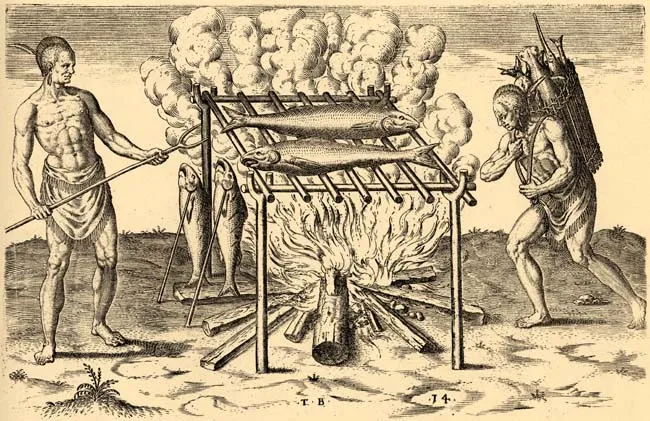 A Taino barbiciu (also a loanword from Taino) (Source: Doc South)
The modern jerk technique, however, is not just a product of a particular blend of spices and peppers. When the Spanish abandoned their Jamaican colony in 1655, they freed the enslaved Africans who had previously been forced to work on Spanish plantations. These enslaved Africans, too, fled into the hills of Jamaica, where they encountered the remaining Taino. There, both people and culinary traditions blended, with African cooking techniques of smoking meat in the ground were augmented with Taino peppers and spices. The people, too, became a blended entity, with Maroons and Taino intermarrying.
There is a common claim that the genocide of the Tainos was a “complete” genocide, with the Tainos being extinct. This is a claim that misunderstands how people work and, in many ways, continues to perpetrate the violent erasure of an entire people. The Yamaye Taino are a living example of the fact that the Taino have not been erased from Jamaica’s history or its future. The islands of the Caribbean continue to be populated by people of Indigenous descent, people whose ancestry etches out the story of colonialism in all its forms.
And of course, the Taino continue to be part of humanity through the legacy of their culture. Canoe, tobacco, hammock, hurricane, barbecue, and jerk are all derived from Taino. The work and the culture and the identity of the Taino is writ large on all of humanity, expanding out from beyond the islands to redefine the world as a whole. It is because of the Taino that our kitchens are what they are.
And part of that long, illustrious legacy and continued, vibrant and living future, is jerk.