

Vegan Likhobe
Ingredients
1 cup (200g) barley
1 cup (190g) buckwheat
1.5 cups (350ml) water
1.5 cups (350ml) vegetable broth
1 can kidney beans
1 tbsp turmeric
1 tsp soy sauce
Salt
Pepper
Instructions
- Add all ingredients except the beans to a pot. Bring to a boil, then lower to a simmer, covered, for at least an hour, or until the liquid is mostly absorbed.
- Add the beans and cook for another twenty minutes.
A longer and more detailed description
There is something delightful about a simple recipe that is nevertheless absolutely bursting with flavour, especially when I wasn’t expecting it, and when it’s using ingredients I haven’t worked with before.
All that to say this one’s a banger, and it’s worth the close to zero effort.
Start by finding a pot. It does not have to be a big pot, nor does it have to be a good pot, but it does have to be a pot with a lid. Dump everything but the beans into the pot, then bring it to a boil. Does it look delicious? Good. Lower it to a simmer, cover it, and wander off to do literally anything else with your life for the next hour or so.
Once you get hungry, go check on your dinner again. Once the liquid is mostly absorbed, you’re almost there, but not quite. Add the beans, stir it all together, then cover it again and let it simmer for another fifteen minutes or so. After that, you’re ready. Re ja ha monate!
Substitutions and suggestions
For the barley and buckwheat - Both of these are substitutions for grains that would be more commonly found in Lesotho, but which I had zero hope of finding in New Zealand, namely wheat berries and sorghum, respectively. If you happen to have access to these, by all means, give them a try. If you do not, however, barley tends to be fairly cheap everywhere, and is a good utility grain to have around for other dishes. You could also try substituting in quinoa for buckwheat, but I would definitely make sure to have two separate grains here for the variety.
For the kidney beans - You can use a bean of your choice here. If you use dried beans (which you should, they’re better for you, I’m just lazy), add them at the beginning of the cooking process and add a bit more liquid to compensate.
What I changed to make it vegan
Absolutely nothing. Lesotho is just amazing like that.
What to listen to while you make this
Lesotho is home to its own unique genre of music, known as famo. Famo is a genre of music stemming from Basotho workers in South African mines, and while it’s fascinating all on its own, it’s a story for another time. Still, here’s a taste of it from Mosotho Chakela!
A bit more context for this dish
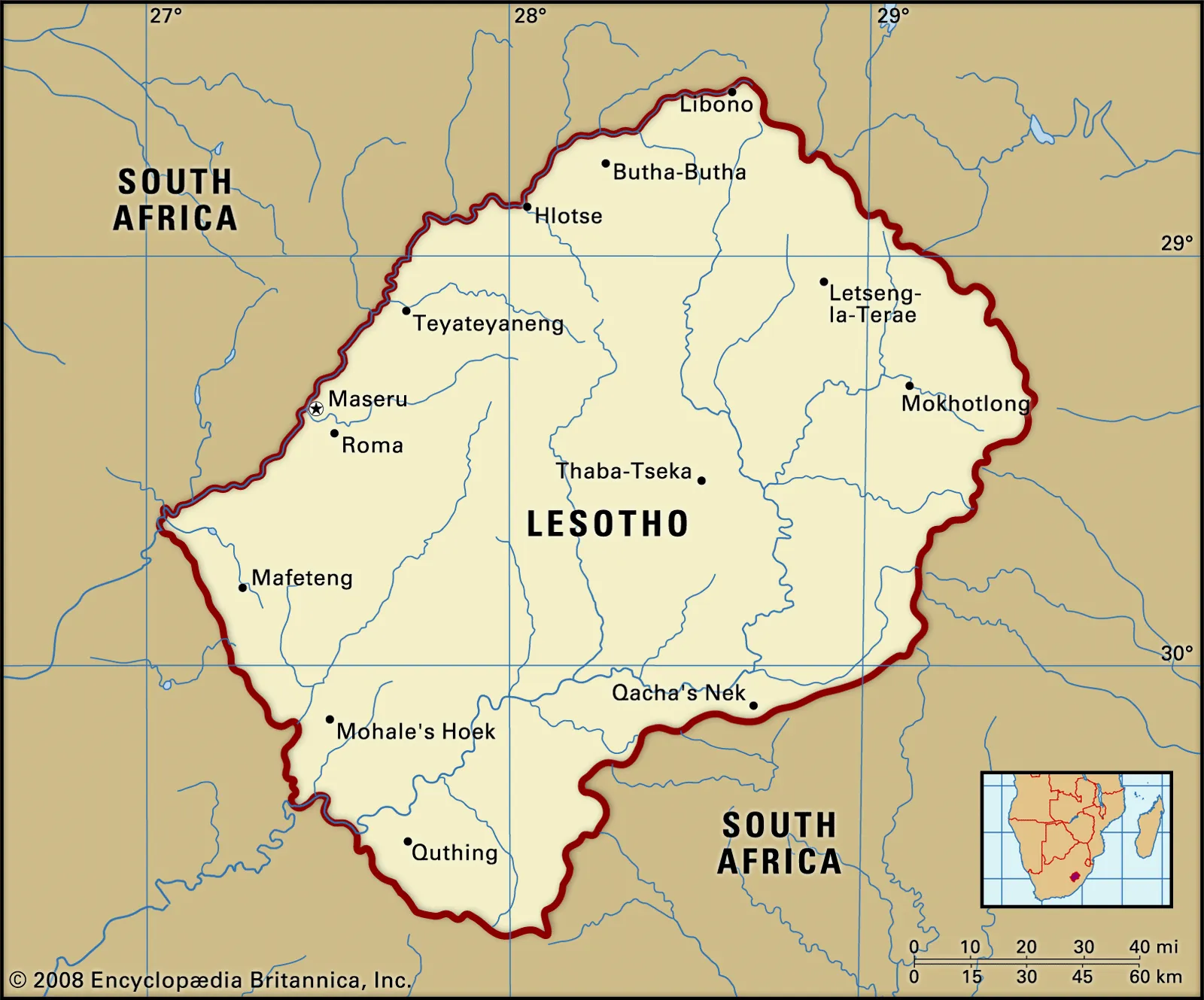
Lesotho is a small, mountainous southern African country, and its cuisine reflects that. Much like other mountainous countries, Lesotho doesn’t have a vast agricultural industry. Instead, its vegetables focus on what’s available and able to be grown in its rocky soil, namely grains in combination with the dairy from its many cattle herds. However, Lesotho is also a country with a high poverty rate, leading to its dishes being largely vegetarian, with beans and high-protein grains being the source of protein for its population. Like many African nations, much of its cuisine is naturally vegetarian, even if the reasons for that aren’t necessarily positive ones.
Lesotho is also one of only three sovereign states completely surrounded by another nation (fun quiz! Can you name the other two?), and as such, telling its story requires telling the story of its larger - and only - neighbour, South Africa and the relationship between the two.
And that is a story about water.
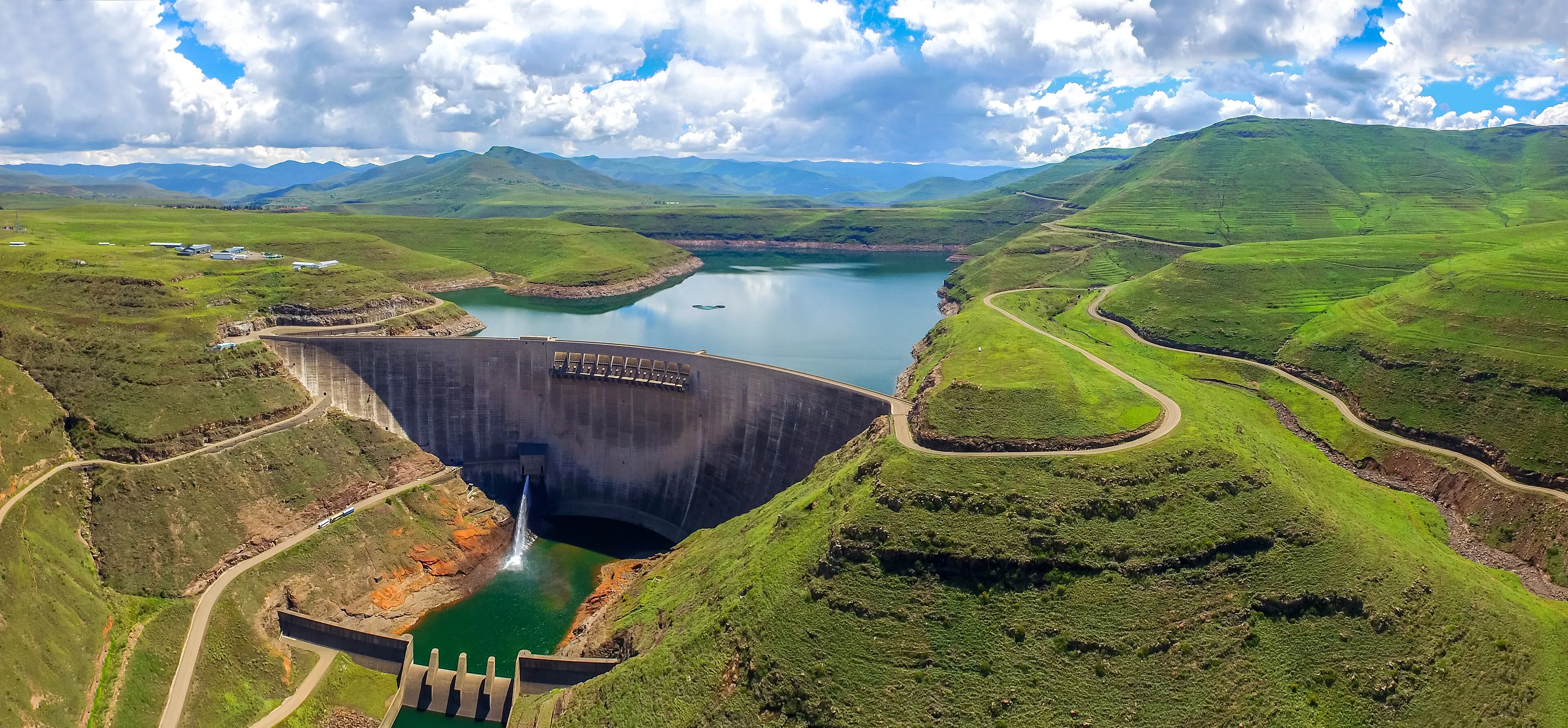 Katse Dam, Lesotho (Source: Wikipedia)
South Africa - and especially Johannesburg and the surrounding state of Gauteng - has a problem. South Africa has nowhere near enough water for its growing population, leading to chronic water shortages and stifled economic growth.
The reasons for this water shortage are myriad. Part of it is poor planning on the part of Johannesburg’s leadership, not considering the city’s growth or its future sources of water. Part of it is the slow decay of existing infrastructure. Part of it is climate change and the growing aridification of southern Africa, a death knell in a place already as arid as South Africa.
Neighbouring Lesotho, however, is relatively lush. Its mountains and hills are covered in brilliantly green grass, and frequent rainfall keeps its many rivers flowing. It is flush with water, but few other resources, presenting a potential solution to parched South Africa.
To quote a most excellent meme template, “What if we take the water and put it over there?”
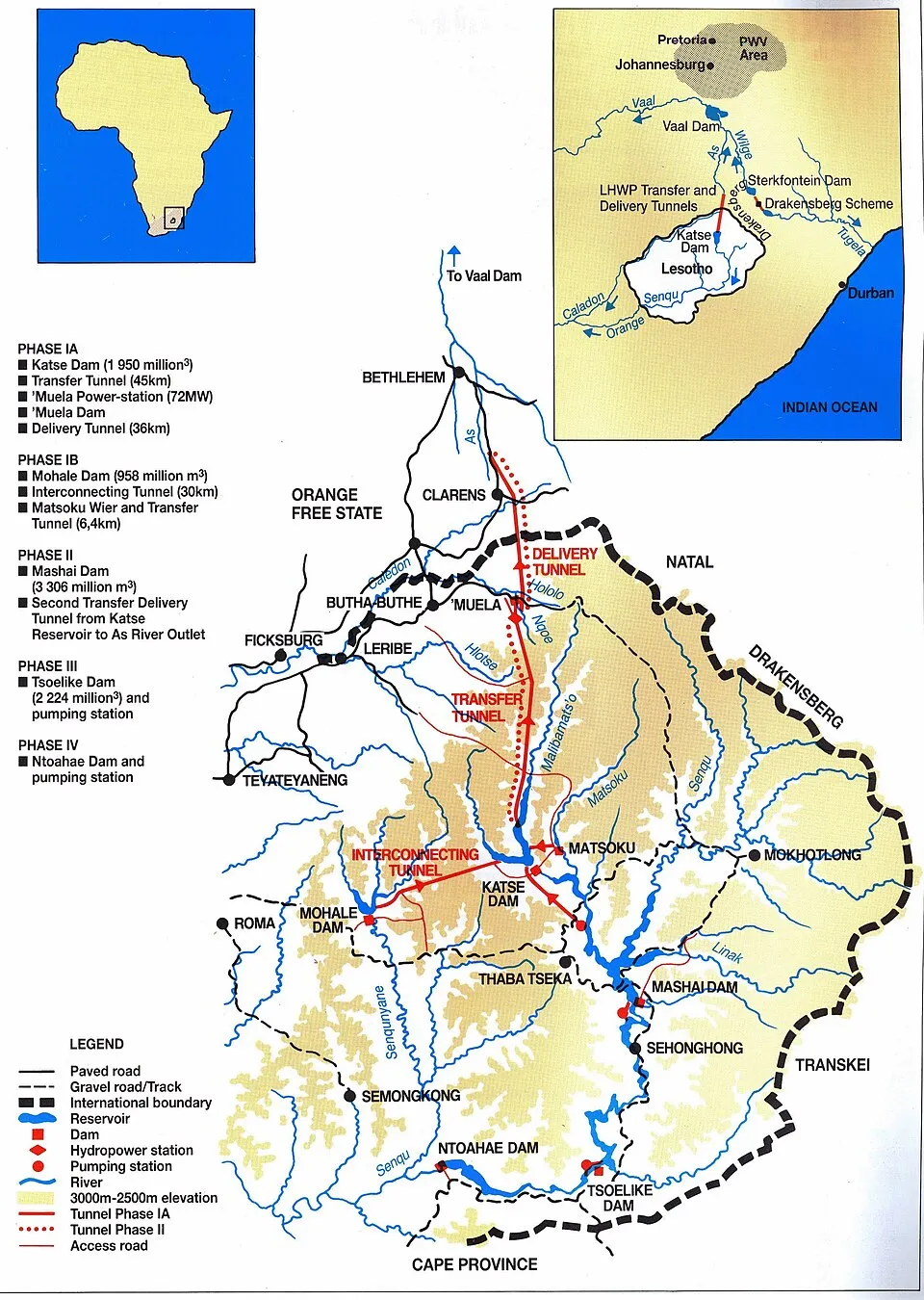 A map of the Lesotho Highlands Water Project, which is definitely a better way to communicate this than memes (Source: Wikipedia)
Originally conceived in the 1950s by the British, the Lesotho Highlands Water Project is a long-term project to transfer water from water-rich Lesotho into South Africa, and specifically, Gauteng. South Africa invested in a number of dams in Lesotho, providing the country with hydroelectric power and hundreds of kilometres of infrastructure, and in return, gaining access to its water. The water export scheme makes up roughly 5% of Lesotho’s GDP, and as such, has been beneficial to the country as a whole.
However, with climate change accelerating the aridification of both South Africa and Lesotho, the amount of water provided by the reservoirs is no longer enough for both countries, with Lesotho frequently siphoning water to provide for the people of Maseru. What worked in the 1950s no longer does, though the treaties binding Lesotho’s water to South Africa remain in force. Increasingly, the engine that fuelled Lesotho looks less and less like a benefit, and more and more like exploitation, with the people of Lesotho paying the price.
Which, of course, some would argue they always had.
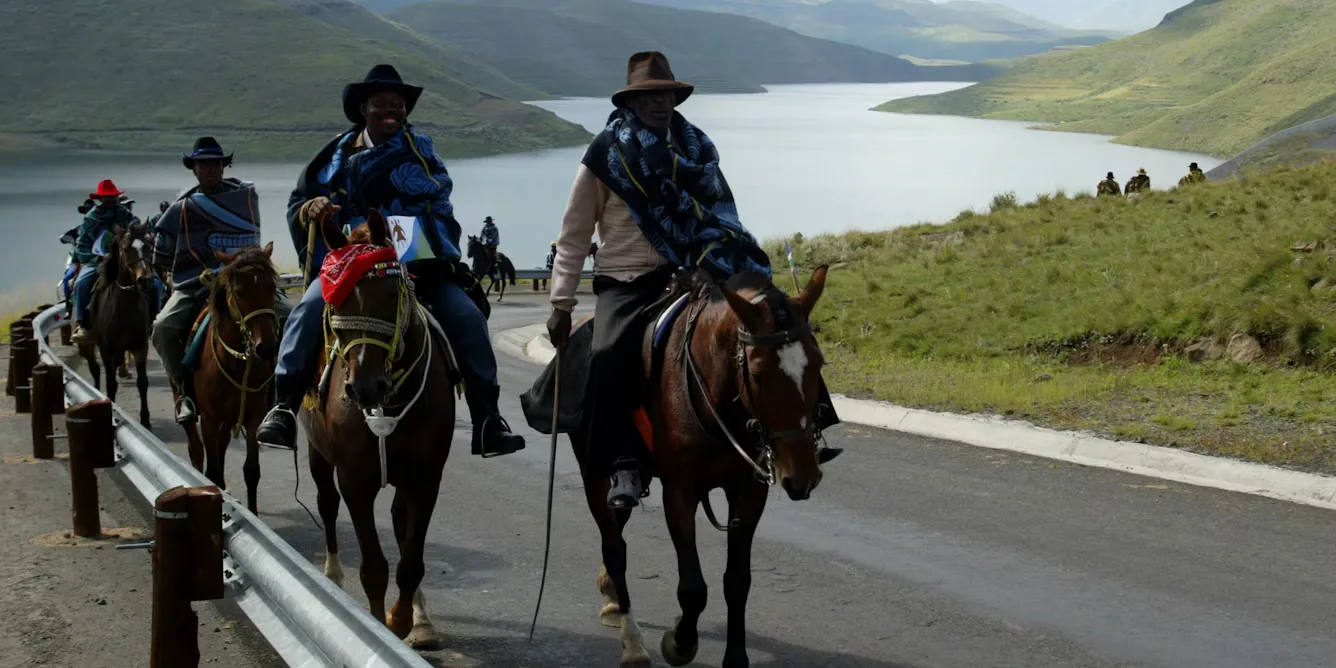 Cowboys in Lesotho (Source: Juda Ngwenya via Reuters)
As with any damming project, the act of building a dam is not without its victims. Numerous communities that had previously lived along the shores of Lesotho’s rivers were displaced, many of whom have never received compensation for that displacement.
This displacement shouldn’t be solely understood as no longer being able to live in a particular place. People forced out of their homes gave up not only their homes, but their ways of life, being forced into the lowlands and a world for which they were unprepared. This sense of ill-preparedness was furthered by the groups funding the project, with organisations like the World Bank insisting that displaced people be moved into more economically wealthy areas, despite the fact that people could not afford to live there. Time and time again, the fate of the people of Lesotho was determined not by themselves, but by external entities convinced they better understood how to govern a people they knew nothing about.
The colonial enterprise is alive and well, and arguably, the Lesotho Highlands Water Project is a modern example.
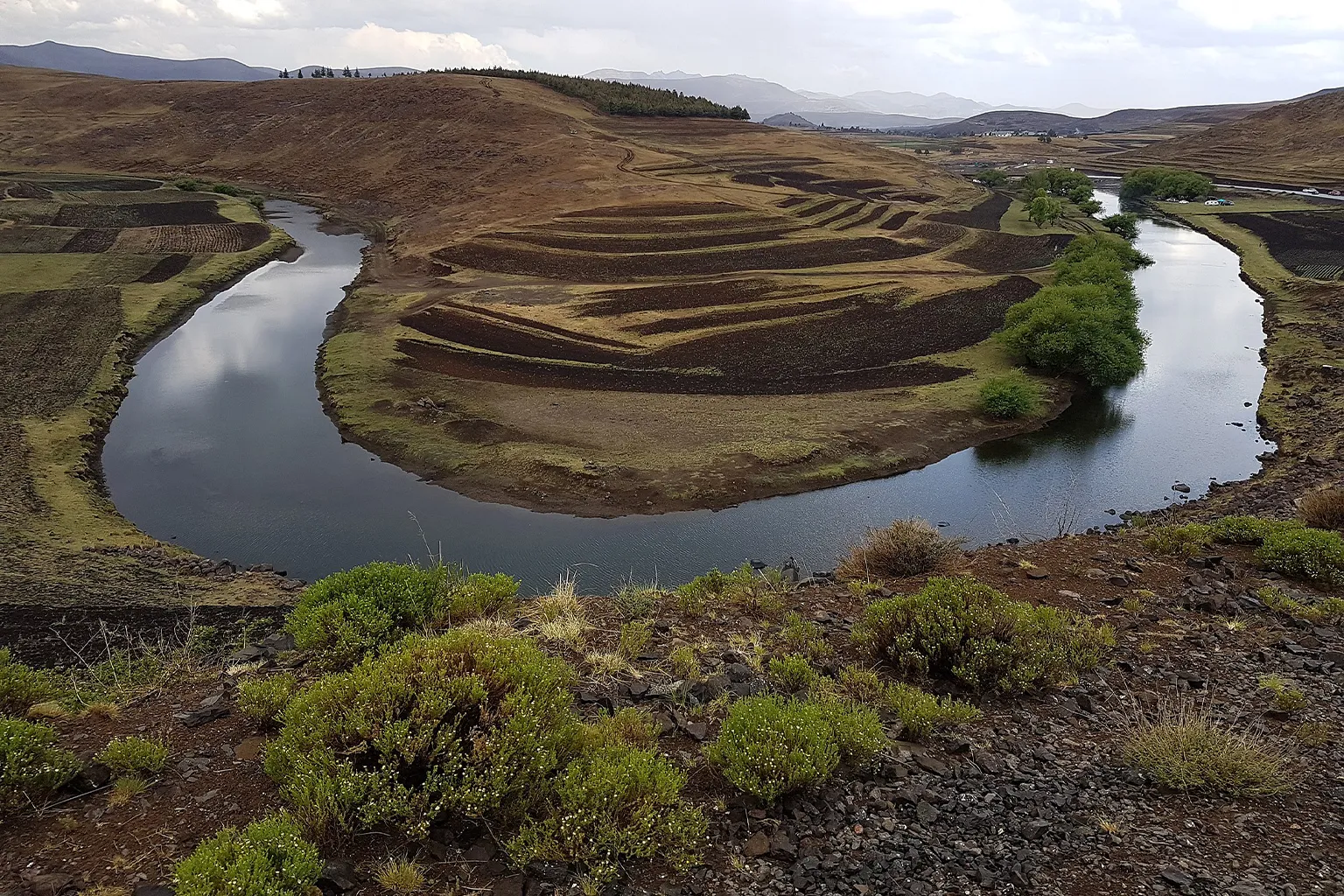 The Senqu River in the Lesotho highlands (Source: Letlhogonolo Ramasilo via Wikimedia Commons)
The agreement establishing the Lesotho Highlands Water Project was not an agreement made between two democratic states. Entered into in 1986, it was a joint agreement between South Africa’s Apartheid government and Lesotho’s military dictatorship. While both countries are now democracies, nothing about the initial agreement was. Rather, South Africa leveraged its position of power to provide wealth to a privileged few in Lesotho to provide water to its own country.
Lesotho uses roughly 10% of its water supply. The rest goes to South Africa, and there is still never enough.
Legally, this is all above board. An agreement exists, and South Africa has invested substantially in Lesotho to build the water infrastructure. However, given the circumstances under which the agreement was reached, it’s worth asking - whose water should it be? Its extraction has caused trauma to the people who had historically lived beside it and had no say in its removal. In a changing climate, there is no longer enough water for both Lesotho and South Africa, and so who should get it? To whom do the rains belong?
And shouldn’t the people of Lesotho have a say?