

Vegan Masroshi
Ingredients
For the dough:
3 cups (375g) flour
1/3 cup (80ml) oil
1 tsp salt
For the filling:
1 can chickpeas, drained
2 chili peppers, deseeded
1 onion, chopped
5 cloves garlic, minced
1/2 cup grated coconut
1 sheet nori, cut into squares
2 tbsp curry powder
2 tbsp ginger
2 tbsp lemon juice
Instructions
- Combine dough ingredients to create a dry, soft dough.
- Add filling ingredients into a blender and blend to create a pate-like mixture.
- Take pieces of dough and roll them into small balls. Create a dimple in each ball, then use that to form a cup shape.
- Fill each cup with filling, then close the cup over the filling.
- Flatten the cup into a pancake-like shape.
- Fry each flattened masroshi in oil over medium-high heat until golden.
A longer and more detailed description
I am aware that every third recipe I make is basically a dumpling, and I’m not going to apologise for that. Dumplings are great. In my defense, this one is less a dumpling and more a chapati. I’m not apologising for that either.
Start by making a nice dough. This particular combination of oil and flour is dead simple and makes one of the best doughs I’ve had the pleasure of working with. It’s smooth, firm, really more like clay than dough, but in all the right ways. 10/10 dough, Maldives, well done.
Anyway, make your gorgeous dough and file this dough recipe away for next time you have to make dumplings and don’t want to struggle with getting the flour and water proportions right. Heat some oil in a pan (whatever oil and however much, I’m not your oil tsar), and chunk all your filling ingredients into a blender. Blend it into a paste, and then do the fun part.
Take a small handful of dough and roll it into a ball. From that ball, make a cup shape by digging your thumbs in and pinching outwards. The thinner the cup, the better, as it means you can add more filling. Once you have your cup, add your filling, then fold the cup inwards over it. Set this down, then smash it flat. Or, alternatively, if you don’t want to make a mess, gently flatten it with the ball of your hand until it’s roughly the thickness of a cookie.
Or smash it. It’s more fun that way.
Add each smashed dumpling into the oil and fry until golden and crispy. މެރުކޮ، ކަލަޗހެ!
(Apologies for any spelling errors with my Dhivehi - I was unclear on how to write a sunun.)
Substitutions and suggestions
For the dough - You can add some coconut to make it crispier, but if you don’t like coconut, don’t do this.
What I changed to make it vegan
You’re never going to believe this, but it turns out an island nation in the Indian Ocean is really big on fish. I am not. Masroshi is generally made with tuna, which I subbed out for chickpeas. I think it worked it fabulously well.
What to listen to while you make this
Digital Flock’s album Aviary is absolutely the right vibe for this entire meal. I highly recommend it.
A bit more context for this dish
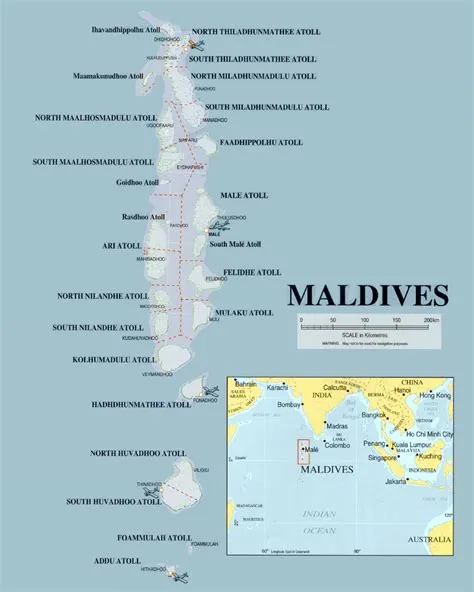
The Maldives is defined by the sea. It is the smallest country in Asia by landmass, yet is a long archipelago, creating one the world’s most geographically disparate countries. Indeed, English derives the word “atoll” from the Maldivian language Dhivehi. Its highest point is 7ft (2m) above sea level, meaning that it, like so many other island nations, is in danger of disappearing beneath the waves over the course of the next century.
With that disappearance would come the loss of a deeply unique culture and tradition. Unlike Pacific Island nations, the Maldives sits at a confluence of trade routes, with its culture and cuisine being informed by all the peoples traversing the Indian Ocean. Maldivian cuisine, as you might expect, is heavily dependent on the sea. Featuring coconuts and fish in various incarnations, Maldivian cuisine also includes curries and a mind-boggling number of ways to cook fish.
Originally Buddhist, the people of the Maldives converted to Islam with the arrival of Arab traders. Its language is an Indo-Aryan language, and Indic writings discuss people moving there from Sri Lanka over 3000 years ago. With all these ties, it nonetheless has a deeply unique cuisine, culture, and language.
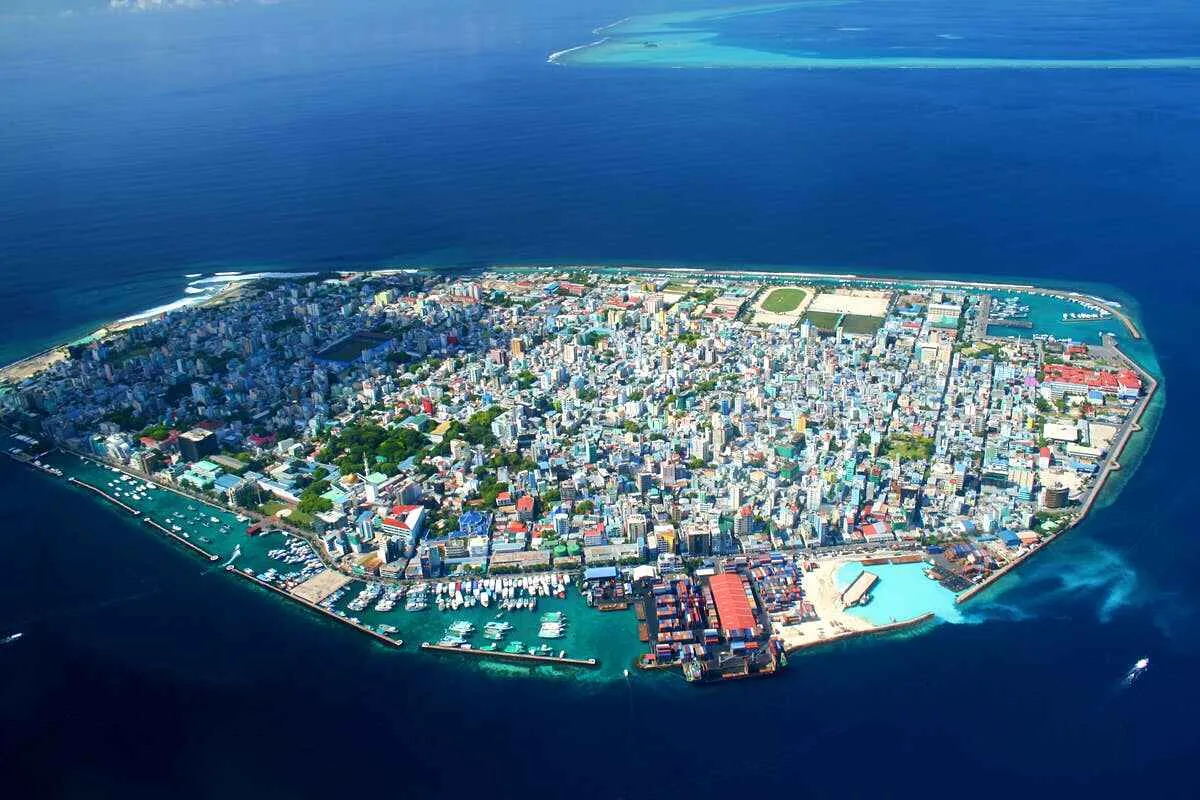 Male, the capital of the Maldives, and frankly, a really cool-looking city (Source: Maldives Times)
Like much of Maldivian culture, the Maldivian writing system is a blending of a wide variety of influences, and is found nowhere else. Dhivehi is written in a script known as thaana, which, at first blush, resembles Arabic. However, looking at it for a moment longer, it is not Arabic at all, but is instead, inspired by Arabic and is very much its own thing.
To understand what makes thaana unique, it’s helpful to understand a few definitions of writing systems. English uses an alphabet - each letter corresponds to a particular sound, with the vowels being written out. The Latin alphabet is an alphabet. The Cyrillic alphabet is an alphabet. Hangul is an alphabet. What matters is that each sound is spelled out in the word.
On the other end of the spectrum is logographies, where words are represented with symbols and the meaning of any given symbol can’t necessarily be inferred from piecing together the component segments of the symbol (please don’t at me, i know many Chinese symbols are rebus-esque). Egyptian hieroglyphics and Chinese characters are good examples of this.
In the middle, then, is a broad swath of writing systems that notate some sounds, but not all sounds. Arabic and Hebrew, for instance, are abjads, in that they notate consonants and some vowels, but not all vowels. There are also abugidas, like Inuktitut, Thai, and a large swath of Indic languages that notate the consonants, and add the vowels as diacritics.
And then there’s thaana, which looked at these options and all the people around it, and said “Yes. Yes, we like these options.”
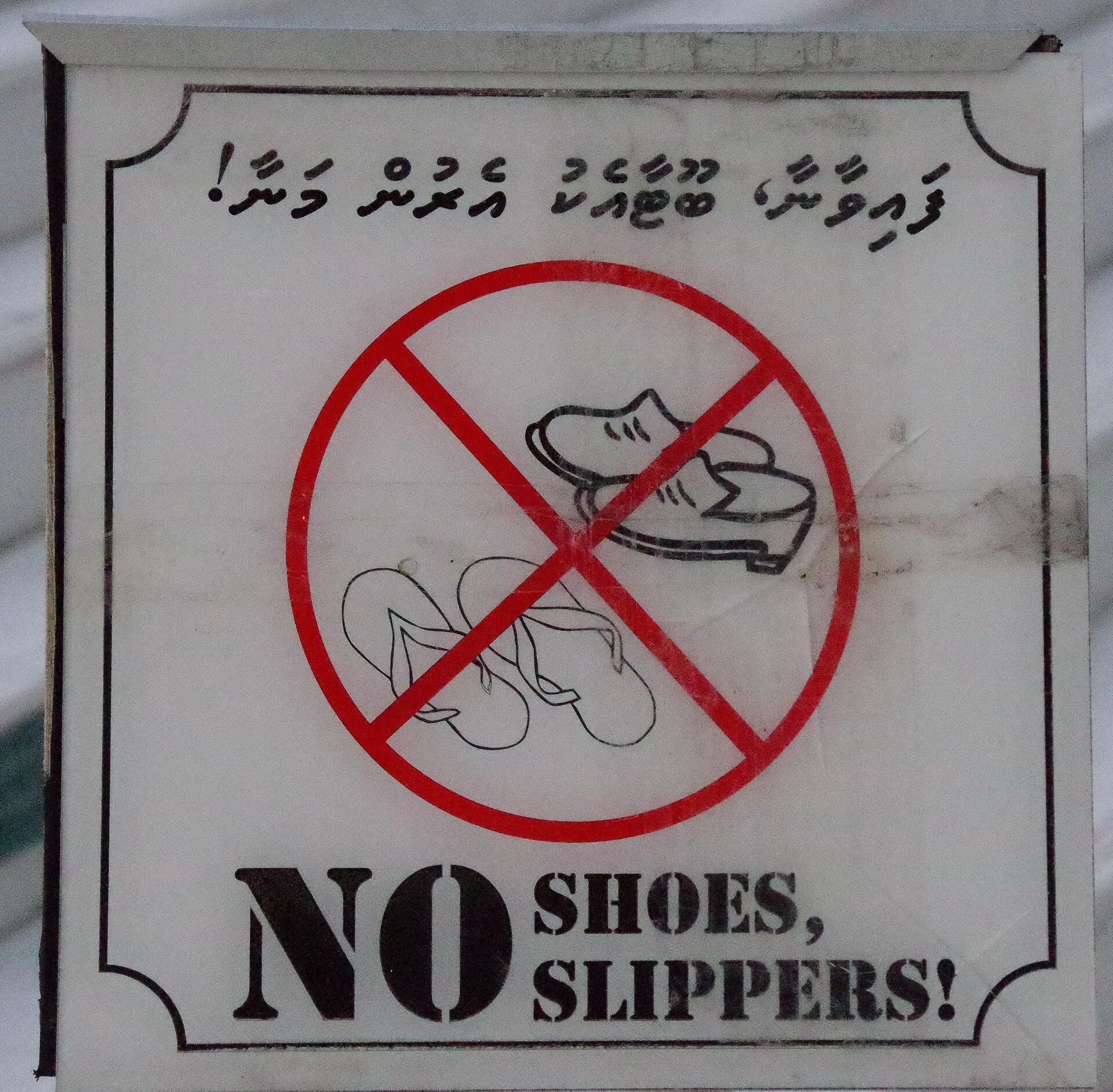 A sign on a mosque in Male (Source: Wikipedia)
At first glance, thaana resembles the Arabic script, albeit with disconnected rather than connected letters. However, thaana is an abugida, with each of its consonants being paired with a vowel, marked by a diacritical. It is what happens when a language with an Indic context meets a writing system that marks vowels differently. It takes what it can from Arabic, blends it with the understanding that vowels ought to be marked, and moves on from there.
Thaana is not endangered, per se, but neither is it thriving. In the 1970s, as a result of digital technologies not supporting it, there was a push towards a Latin alphabet; however, signs are now generally written in both orthographies. The greater threat to thaana is the fact that the land that uses it is itself in danger of disappearing. Thaana is used nowhere else and by no other language, and the language that does use it only has half a million speakers. When the Maldives disappear, Dhivehi speakers will scatter, and their language with them.
There is a tragedy to the loss of island nations. These are unique ecosystems and entire countries, with histories and cultures all their own. Part of the loss of these islands, though, is the loss of quirks of language and particularities of how they formed that go as well. Languages have always been dying, with globalisation hastening their decline. However, a language dying despite every effort being made to preserve, ultimately dying due to climate change, it has its own level of tragedy.
It’s worth remembering and celebrating for what it is, as are the Maldives as a whole.