

Vegan Quetschentaart
Ingredients
For the crust:
1/4 cup (60g) vegan butter
1/4 cup (50g) sugar
2 cups (250g) flour
1 tbsp baking soda
1 tsp vinegar
For the filling:
4 plums, depitted and cut into sixths
Instructions
- Preheat the oven to 400F (200C).
- Combine sugar and butter and mix together until creamed.
- Add the flour, baking soda, and vinegar, and mix to form a crumbly dough.
- Add your dough to the pie pan to create a crust.
- Chop your plums into sixths, then arrange in the pie crust in a circular pattern.
- Bake until the plums are soft (15-20 minutes), then sprinkle with powdered sugar.
A longer and more detailed description
I have been informed that I do not make enough desserts in this series, and so, here I am. Do I have the right kind of plums? No. Did I feel fortunate to find any plums at all? Of course. Has any of this stopped me? It never will.
Today, we’re making a plum pie. I’ll be honest, I’ve never cooked with plums before, nor have I had them in a pie, but je suis intrigue, so off we go. Start by making your pie crust. You could, theoretically, buy a graham cracker crust if you live in a country that acknowledges the existence of these things, or you could be like me and forced to make your own pie crust. Cream together your sugar and butter (others will advise you to use a mixer, but I have a spoon and a forearm of steel, so that’s what I did), then add your other ingredients. Mix it all together to create a crumbly dough that doesn’t look like dough, but when you squeeze it, does in fact hold together surprisingly well. Add this dough to your pie tin (which you also felt delighted to find, there is something seriously wrong in New Zealand), covering the sides and bottom.
Next, chop your plums into sixths. You could peel them first, but that feels messy, so I didn’t. Remove the pits, then add them into your pie in a nice circle. I managed to fit 21 wedges into my pie, but if you can fit more, you go for it. This is your pie, and you do what brings you joy. Pop it in the oven to bake all the tartness out and replace it with sweet - baking is magical, and moreso with fruit - while you wander off to forget you put a pie in the oven. Come back at some point, hopefully before the crust has burnt, and retrieve your pie. Serve with powdered sugar and/or vegan whipped cream to people who will be pleasantly surprised by how good it is. Gudden Appetit!
Substitutions and suggestions
For the plums: For obvious reasons, you cannot remove the plums from a plum tart. However, if you can find Damson plums, those are more correct than the plums I found. I could not find Damson plums, but I also live on an island in the middle of the south Pacific. Your mileage may vary.
For the crust: There are two traditions for the crust here, one with yeast, and one without. I chose to make the one without yeast because I thought it would better balance the tartness of the plums. However, if you want the yeasty crust, feel free to add a bit of yeast. Just make sure you give the dough time to rise after you do.
What I changed to make it vegan
You see those eggs and dairy that some would argue are fundamental to baking? What if we just, you know, remove them?
What to listen to while you make this
It’s more mellow than I usually listen to, but I really enjoyed Legotrip.
A brief context for this dish
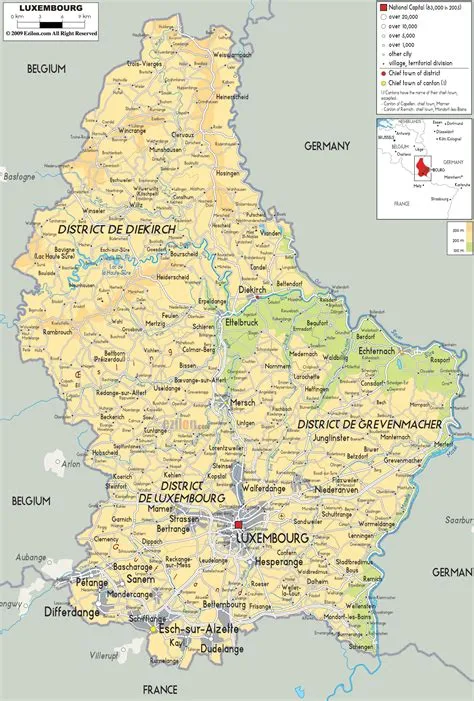
Luxembourgish cuisine is an interesting blend of the cuisines of its neighbouring countries, namely German, Belgian, and French cuisines. While it does have its own culinary identity, that identity is shaped by its neighbours and its status as a tiny, land-locked country sandwiched between them.
Luxembourgish cuisine features ingredients local to Luxembourg, including fruit, fish, and grain. While it does increasingly feature French haute cuisine, much of traditional Luxembourgish cuisine is more closely related to German peasant cuisine. There are French pastries, but so too are there bean soups, pretzels, potatoes, and sauerkraut.
This blending between French and German is part of what makes Luxembourg special. While it has its own language (and recognises Luxembourgish as the sole official language), in practice, its 700,000 people speak French. It’s a fascinating little country whose history reflects its mishmash of influences.
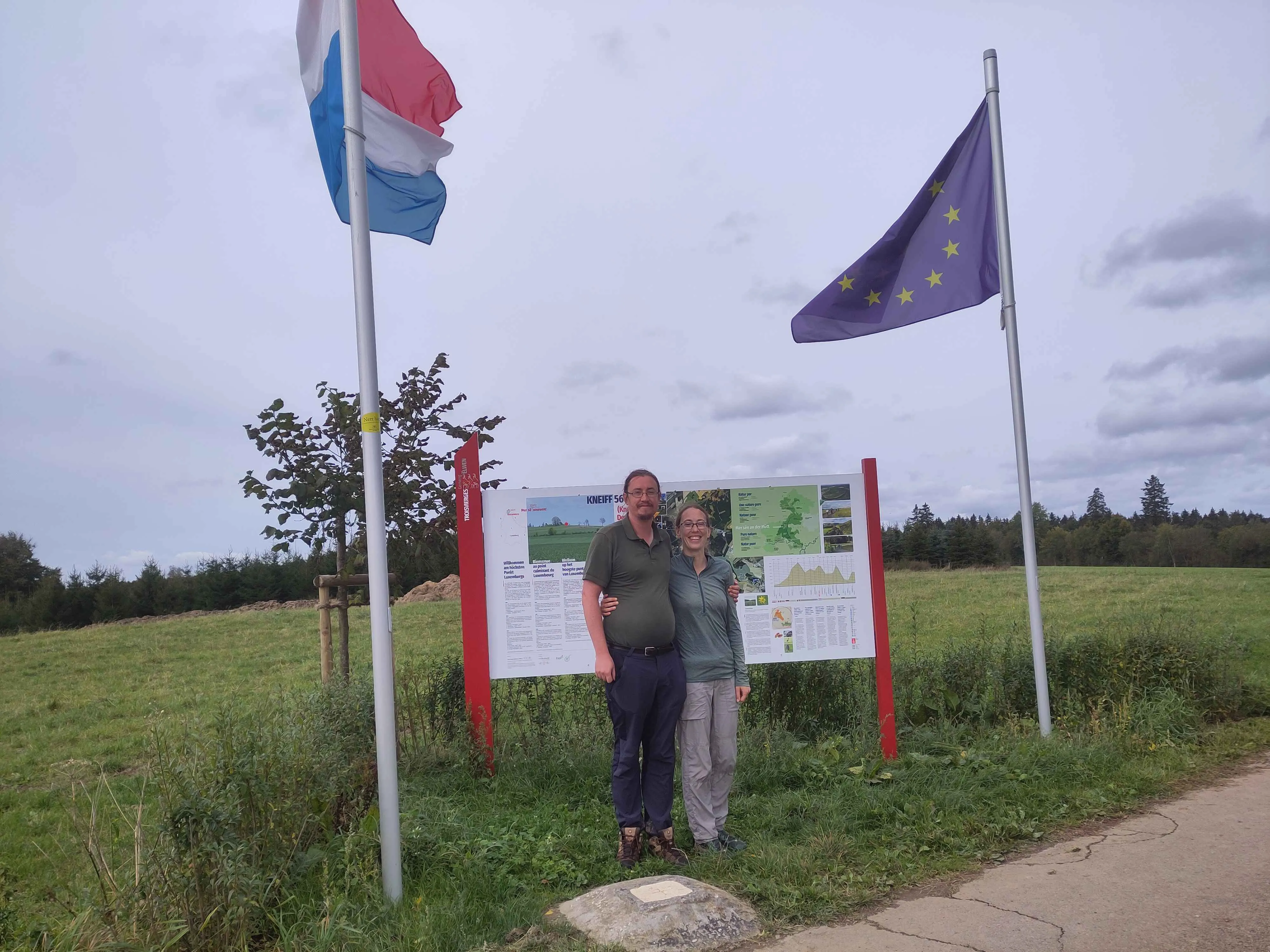 The author at the highest point in Luxembourg (Source: Me)
“Benelux” is a term used to refer to the collection of Belgium, the Netherlands, and Luxembourg, three countries with similar histories but, more importantly, three small countries that act as one to increase their economic and social bargaining power. That the Benelux is a (semi) united entity is historically hilarious, as the entire existence of Luxembourg as an independent nation is predicated on the idea that both Belgium and Luxembourg wanted absolutely nothing to do with the Netherlands, and that this reality caused its own multitude of crises throughout Europe.
In 1815, following the end of Napoleon’s rule, Luxembourg became the personal property of the king of the Netherlands. This likely makes very little sense unless you see a map of the Netherlands from 1815 and how much actually belonged to the Netherlands:
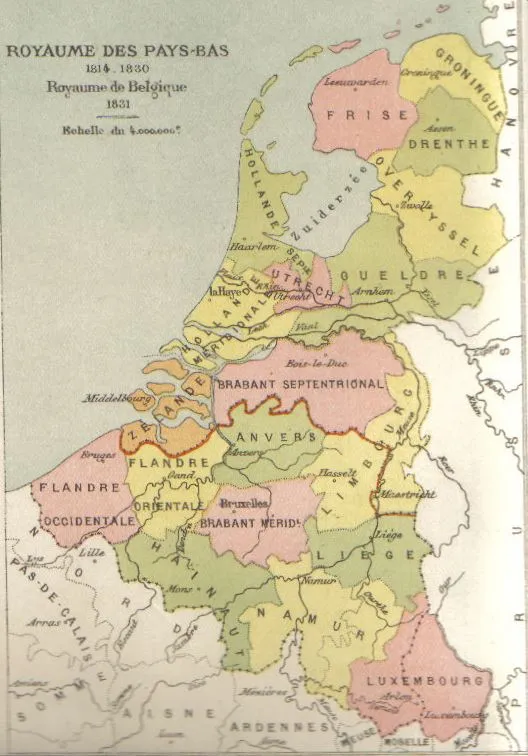 Map of the Netherlands in 1815. (Source: Alexis-Marie Gochet).
As with many states that came into being because someone drew some lines on a map and said “good enough,” the United Kingdom of the Netherlands was not a stable entity. Belgium was Catholic, while the Netherlands was Protestant, and the southern half of Belgium spoke French. Belgians, as a whole, felt as though the wealth of Belgium was being extracted to fuel the economy of the north, and so, rebelled, declaring independence in 1830. While Belgium declared the war won and itself to be independent by October 1830, the Dutch refused to acknowledge the existence of Belgium until the Treaty of London in 1839, at which point, they ceded some of Luxembourg to Belgium. Threatened with the inability to maintain control over the remaining Luxembourgish territory, King William I entered Luxembourg into the German customs agreement.
It’s here that it’s worth discussing what else was happening in Europe in the mid-1800s. The 1800s are a notoriously unstable century for Europe, with several modern European states being formed throughout the century. One example of these states is Germany. German nationalism coalesced throughout the 1800s, with Prussia and Austria increasingly vying for dominance of the newly formed German Confederation. As the two went to war, France attempted to mediate. France, Prussia, and Austria all ended up at the negotiating table, trying to find a solution for the increasingly unstable power struggles between them.
Luxembourg stood as a potential solution. Bordering both Germany and France, and with one of the best forts in Europe, Luxembourg was a potential neutral zone between Europe’s great powers.
First, France attempted to buy Luxembourg, to which Bismarck objected. Austria then suggested giving Luxembourg to Belgium in exchange for France receiving some of Belgium’s French-speaking land, to which Belgium’s Leopold II objected most vociferously. France’s Napoleon III then suggested Prussia remove its troops from Luxembourg, at which I can only assume the delegations began in engaging in fisticuffs, given that, it’s at this point, the tsar of Russia, who had zero reason to be involved in any of this, suggested they all go to London to talk it out. The United Kingdom was happy to host, as they saw any absorption of Luxembourg as a weakening of their ally, Belgium.
Everyone was involved in this, is what I’m saying. Everyone cared about the fate of Luxembourg, this tiny piece of land with a fort.
In London, the great powers came to a compromise - Luxembourg would become independent, but would remain in the German customs union. This was a victory for no one, and indeed, became a public scandal for the Netherlands.
Luxembourg, however, was its own political entity, and in 1890, ceased to be the personal property of the king of the Netherlands. It grew into its own entity with its own identity, free of both Belgium and the Netherlands. Which, again, makes the existence of the Benelux even funnier.
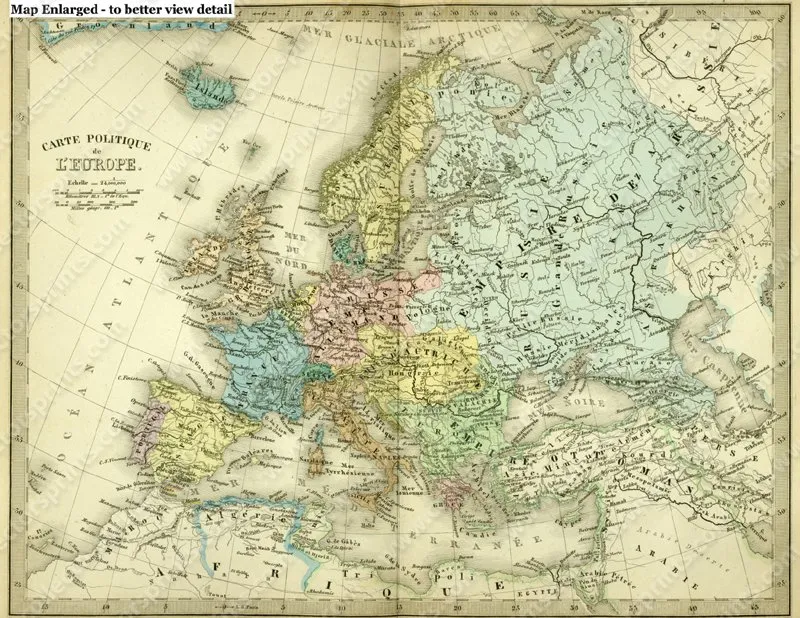 Map of Europe in 1870
Luxembourg is a fascinating little country. Its cuisine, its culture, and even its language are a fantastic blending of everything surrounding them. It is small, and it is difficult to get to, but that doesn’t change its uniqueness and what it means in modern Europe. Luxembourg City is now one of the capitals of the European Union (bonus points if you can name the other three), and it was one of the founding members of the European Union.
The reasons, I hope, are clear.