

Vegan Sabich
Ingredients
1 aubergine, sliced
1 cucumber, sliced
1 tomato, sliced
Hummus
Mango chutney
Pickles
Lemon juice
Pitas
Instructions
- Preheat an oven to 400F (200C). Place your aubergine slices on a baking tray, drizzle with olive oil, salt, and pepper, and roast for 20 minutes. \
- Once the aubergine is roasted, assemble your sabich. Spread hummus and mango chutney inside a pita. Add aubergine, pickles, cucumber, and tomato, and spritz with lemon juice to taste.
A longer and more detailed description
The hardest part of this recipe is roasting an aubergine. Trust me, I know this because I accidentally charred an entire aubergine. You’ve been warned.
Start by roasting an aubergine. Don’t do what I did and put the temperature up too high, then forget about your aubergine because you were busy playing a dog-themed puzzle game. Put it on the correct temperature for your aubergine (whatever that may be) and remember the aubergine exists. You’ll know the aubergine is ready when it’s delicious. Do not eat the aubergine if it is not delicious.
Once the aubergine is ready, prepare your pitas. Line each pita with hummus and mango chutney, then shove in however much aubergine, tomato, cucumber, and pickles you feel is appropriate. I’m not here to tell you how much is correct, just suggest that if your sandwich is bringing you joy, you are living life to its fullest. !בתאבון
Substitutions and suggestions
For the mango chutney - I, as always, am making due with what I have. Some sort of pickle is important for a sabich, and in this case, I’m substituting mango chutney in for amba. If you have pickled mangos available, absolutely go with that. Indian spicy pickles are also an excellent choice here. If you cannot find those, you can always go with my combination of mango chutney and pickles. If mango chutney is also not an option, a fruit hummus is also nice. If that’s not an option, extra hummus and more aubergine is also delightful. If hummus is not an option, please contact me - I need to know more about your life and how it works.
For the aubergine - Aubergine in sabich is traditionally fried; however, I strongly preferred the flavour of roasted. Fry it for a more traditional sabich, or roast it, if that’s more your fancy.
For the toppings more generally - Beyond the aubergine, these toppings are fairly flexible. Feel to mix and match whatever you like, including swapping the pita for something more interesting. Let your sandwich bring you joy!
What I changed to make it vegan
Sabich usually includes a hardboiled egg. I didn’t add this, and made my aubergine extra tasty to compensate.
What to listen to while you make this
When coming up on an Israeli recipe, I was extremely aware of the fine line I’m walking. While I’ll go into the difficulty with defining “Israeli” cuisine in more detail in the next section, recommending music comes with its own difficulties.
Israel continues to conduct genocide in Palestine, regardless of how much this has faded from public consciousness since the ceasefire in October 2025. There continue to be bands and musicians vocal about their support for this genocidal mission and for Netanyahu more broadly. There is also a wide body of bands and musicians who, after the 7 October attack by Hamas, spoke out publicly calling for support for Israel and the return of the hostages. Most Israeli musicians have, at some point, served in the IDF, one of the key drivers of the the genocide in Gaza.
Setting aside Gaza and the events since 2023, it is continually worth reiterating that Israel is an apartheid state. The Israeli government’s treatment of the Palestinians over which it has jurisdiction is a crime against humanity, including its forced displacement, seizure of land, extrajudicial killings, and denial of citizenship to Palestinians. The state of Israel ought to be as much of a pariah state as Russia or North Korea because of its treatment of Palestinians and its habitual disregard for international law.
None of this, however, is a condemnation of the existence of the state of Israel. However much of a colonial project Israel’s founding and current trajectory might be, Israel itself is a nation with its own unique identity and people. To be Israeli is valid, regardless of the actions of the current regime, much as it is valid to be American despite its historic and ongoing legacy of colonialism and genocide. None of this is to disregard Israel’s current actions - and I highly encourage everyone reading this to both advocate to your government to cease aid to Israel and recognise the genocide in Gaza, as well as donate to organisations such as the Palestine Children’s Relief Fund - but it is to say that, however much Israelis have materially benefitted from the apartheid state perpetuated by the Israeli government, it is still possible to separate Israeli musicians from the actions of their country and government.
All that said, Israel is becoming an increasingly authoritarian state, with the consequences for speaking out against the government being severe. Musicians speaking out against the genocide are finding themselves blacklisted and unable to perform in Israel, while also being unable to perform outside Israel due to being Israeli. When faced with censure, it’s understandable why some musicians would be hesitant to speak out about the genocide, however necessary and important their voices would be.
However, despite this censure and the threat to their existence as musicians, some have still spoken out. Noa has been critical of the Israeli apartheid for years, and continues to speak out against the genocide in Gaza while facing backlash from within Israel for her advocacy. Chava Alberstein’s song “Chad Gadya,” released in 1989, was banned from Israeli radio for explicitly advocating for Palestinians, and she continues to protest for Palestinian causes. Composer Haim Permont has also been outspoken in his criticism of the genocide in Gaza.
This is not an exhaustive list, but instead a demonstration that, even in countries verging into authoritarianism, there are still those with the courage to speak out against the horrors and crimes committed in their names. Israelis are not a monolith, and those who speak deserve every bit of support.
A bit more context for this dish
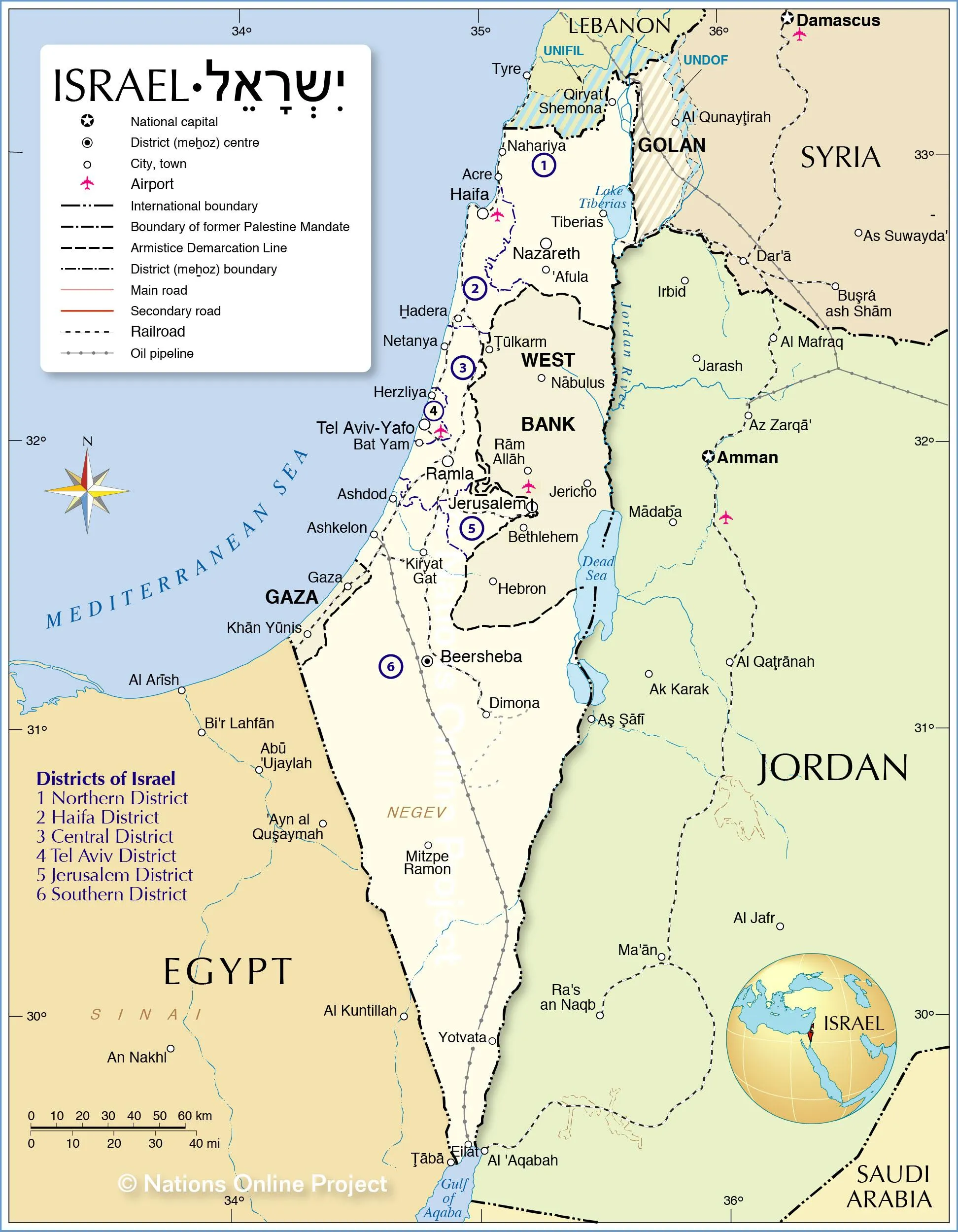
Israeli cuisine is, like many cuisines of nations that have seen heavy immigration, a cuisine defined by its blending of a variety of influences, ingredients, and cooking techniques. It combines influences from its surrounding Arab neighbours with the cuisines of the Jewish diaspora, which is, in turn, hugely varied. Israeli cuisine is found in falafel, shakshuka, and couscous as much as it is in challa, sufganiyot, and mangal. As the global Jewish diaspora immigrated to Israel, they brought their culinary traditions with them. As much as cuisines like Canadian or Argentine cuisines are fusions of immigrant cuisines, Israel is perhaps the archetypal example of a fusion cuisine. It’s in Israel that Mizrahi, Sephardic, Ashkenazi, Arab, and a wide range of other dishes came together, creating a culinary landscape unlike any other.
It’s in this broad diversity that sabich was born.
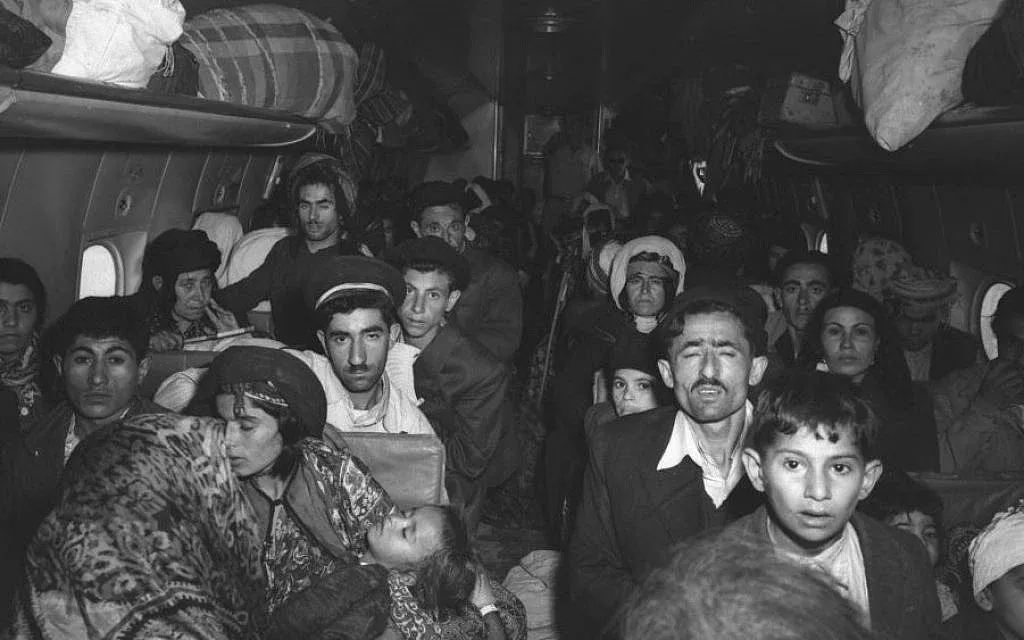 Iraqi Jews arriving in Tel Aviv in 1951 (Source: Times of Israel)
Jewish history is, in some ways, a history of diaspora and emigration. While Jews have settled in a wide variety of places and become part of the fabric of these places for centuries, if not millennia, this settlement has historically often been tenuous. In Europe especially, Jewish populations were frequently victims of pogroms and expulsions, leading to the already diasporic population becoming more scattered throughout the places they were legally allowed to work and live. While many Jews settled in Europe - especially eastern Europe - others found homes in the Ottoman Empire and beyond. For Jews living in the Arab world, their status as dhimmi meant that, in some cases, they had more rights and protections than their fellows in Europe, though their status as a minority faith and people left global Jewish populations vulnerable.
The impact of the Holocaust on the history of Israel is obvious. It is because of the Holocaust that Israel as a state exists, and it is because of the Holocaust that so many European Jews emigrated to what is now Israel in a process known as aliyah. However, it would be a mistake to believe that European Jews represented the whole or even the bulk of immigration to Israel. Ashkenazi Jews - or Jews whose ancestors come from central or eastern Europe - represent only 32% of the population of modern Israel. Instead, the largest population in Israel is of Mizrahi Jews, or Jews whose ancestors come from the Middle East and North Africa (the Israeli government also includes Sephardic Jews in their categorisation of Mizrahi Jews).
That the largest ethnic group is Mizrahi is not solely a product of Israel’s location in the Middle East. It is, as much as the presence of a large population of Ashkenazi, the product of the Holocaust and the very founding of the state of Israel.
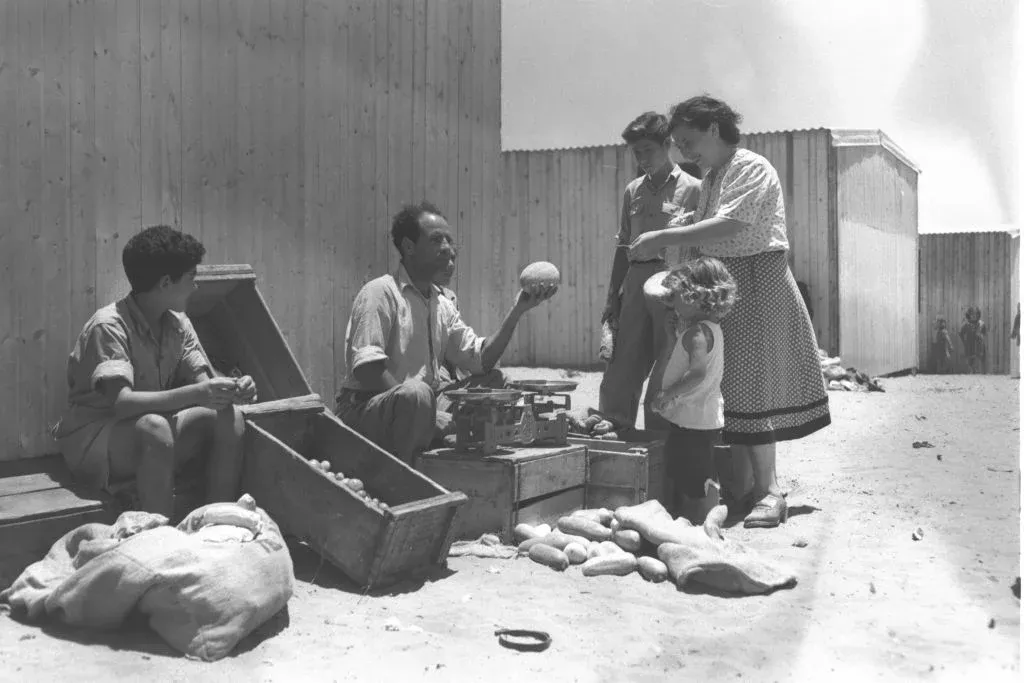 Eliahu Abraham, a former actor from Iraq, selling vegetables to Mrs. Pliska, a new immigrant from Ukraine, in the Kiryat Ono immigration camp in 1951 (Source: Times of Israel)
As discussed in my Algerian recipe, European antisemitism had a reach that extended far beyond continental Europe. Throughout the early 20th century, much of the Middle East and North Africa fell under the colonial rule of either the French or the British. In areas ruled by the French, the French implemented racial categorisation systems that elevated Jews above Muslims, leading to backlash against Jewish populations as countries like Algeria gained their independence. Jews living in North Africa faced pogroms from their Arab neighbours, then occupation and deportation by occupying Nazi and Italian forces. In the aftermath of WWII, while some countries re-embraced their Jewish neighbours, others viewed them as part of the legacy of colonialism, expelling them.
Jews throughout the British-occupied territory, however, generally faced less discrimination, with the exception of Iraqi Jews. Jews had called Iraq home for millennia, stretching back to the original exile of the Jews by the Babylonians. The Jewish population in Baghdad was, until the invasion of the Mongols in the 13th century, one of the largest and most influential Jewish populations in the world, establishing multiple important yeshivas and being the source of the Babylonian Talmud. For centuries, the shofar sounded alongside the call to prayer, and the Jewish community in Iraq thrived, developing its own unique identity, style of dress, and even language. By the early 20th century, 40% of Baghdad’s population was Jewish, with Jewish hospitals, schools, and clinics being part of the fundamental fibre of the city. Iraq’s Jewish population was also not limited to Baghdad, with 25% of Basra’s population and a significant percentage of Mosul’s also being Jewish. Indeed, so fundamental were the Jews to Iraq that, in King Faisal I’s first speech, he included Jews explicitly, stating that “there is no meaning for words like Jews, Muslims, and Christians within the concept of nationalism. This is simply a country called Iraq and all are Iraqis.”
The Iraqi government’s sentiments changed with the influence of Arab nationalism, the impact of Zionism on Palestinians, and the introduction of Nazi propaganda. When the Iraqi government was overthrown by a pro-Nazi coup d’etat in 1941, oppressive measures had already been put in place to deport Iraqi Jews and relegate them to second class citizenship. When the government fell, violent pogroms - the Farhud - were all but inevitable.
On 1 June 1941, violent mobs murdered over 200 Iraqi Jews, injured over 2000, and looted and destroyed Jewish businesses and property. Iraq had ceased to be a haven for Jews. Iraq’s Jewish population began leaving Iraq, some bound for Palestine, others for other areas in the Middle East, and some for British colonies in India. While there had been some movement towards Zionism prior to the Farhud, it was the Farhud that ensured the Iraqi Jewish community’s movement towards the political and its actions to ensure its own survival. The Zionist movement gained steam and support from Iraq’s Jewish population.
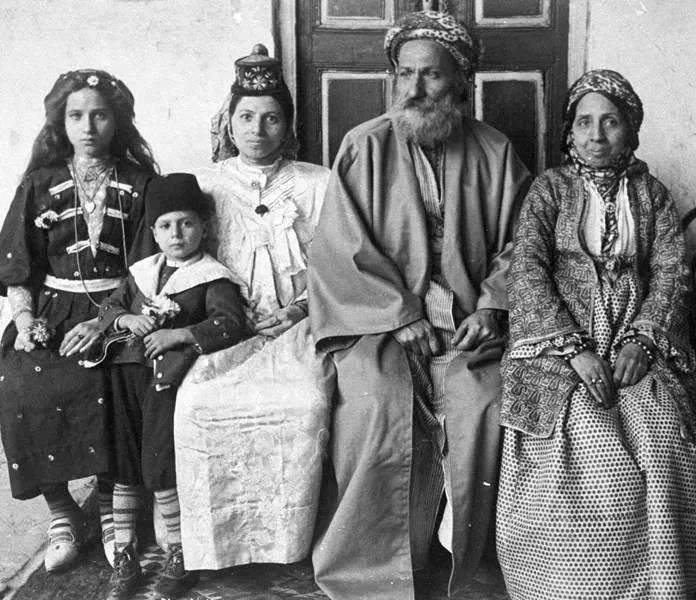 Rabbi Ezra Dangoor and his family in Baghdad in 1910 (Source: Seraphicpress)
It’s here that we need to take a step back. Colonialism is a fundamental part of the story of Judaism in the late 19th and 20th centuries. It is European colonialism - and the resistance against it - that shifted Arab states from sanctuaries for their Jewish populations to places that were actively hostile towards those same populations. In fighting back against colonial occupation, the populations of occupied areas relied on nationalist sentiments and the creation of their own identities, an identity which often excluded minorities, including Jews. It is colonialism that created the conditions for Jews to flee what had been their home for centuries.
There is also an argument to be made that the Holocaust itself and the numerous genocides perpetrated by the Nazis against the peoples of Europe are themselves extensions of and have roots in a settler colonialist mindset, this idea of “reclaiming” a land that had historically been German, and the utter dehumanisation of those living on said land to justify the resettlement of it by Germans. This is not to say that the Holocaust was purely a colonialist project, but the thread of colonialism winds through genocide after genocide, with the Holocaust being no exception. Millions died in Europe as a sacrifice on the altar of colonialism and empire, including six million Jews.
And there is a very clear argument to be made that modern Zionism and the state of Israel itself are a product of colonialism. Modern Zionism arose in the 1880s in response to rising antisemitism throughout Europe, with the hopes of integration being dashed and increasingly replaced by the idea that, to be truly safe and accepted as equal members of society, Jews needed a homeland of their own. Peoples without a homeland - or, at least, a homeland recognisable to their would-be colonisers - were vulnerable to the violence and exploitation of colonialism, with Theodor Herzl making explicit the connection between a homeland and the “whitening” of the Jews in the eyes of Europeans. Other Zionists such as Moses Hess explicitly tied the idea of a Jewish homeland to the formation of nation-states throughout Europe and the expansion of European colonial empires throughout the 19th century, solidifying that a people, to be a people, needed a homeland. While early Zionists didn’t necessarily place this Jewish homeland in Palestine, the 1917 Balfour Declaration granted political legitimacy of the newly conquered Palestine solely to its Jewish inhabitants, citing the desire to “civilise” the area and guard the Suez Canal. Zionism and the resulting settlements were explicitly seen as similar to the plantation projects of Northern Ireland, with Ronald Storrs stating that British support for the Zionist project had the goal to create “a little loyal Jewish Ulster in a sea of potentially hostile Arabism.” When the British encouraged Jewish immigration to Palestine, they did so with an explicitly colonialist agenda.
When this colonialist project resulted in the Nakba - the massacre and mass displacement of hundreds of thousands of Palestinians - and the founding of the state of Israel, newly independent Arab states viewed the creation of Israel as a continuation of the colonialism they had broken free of in the first place. They took this fear of continued colonialism out on their Jewish populations through forced expulsions, pogroms, and dispossession. These Jews, in turn, fled to Israel, seeking out a land that would welcome them, which Israel did. Among these fleeing Jews were 120,000 Iraqi Jews, fleeing persecution and dispossession in Iraq for resettlement in Israel.
Colonialism was the driving force behind this community no longer being welcome in their homeland. It was also the source of a new one.
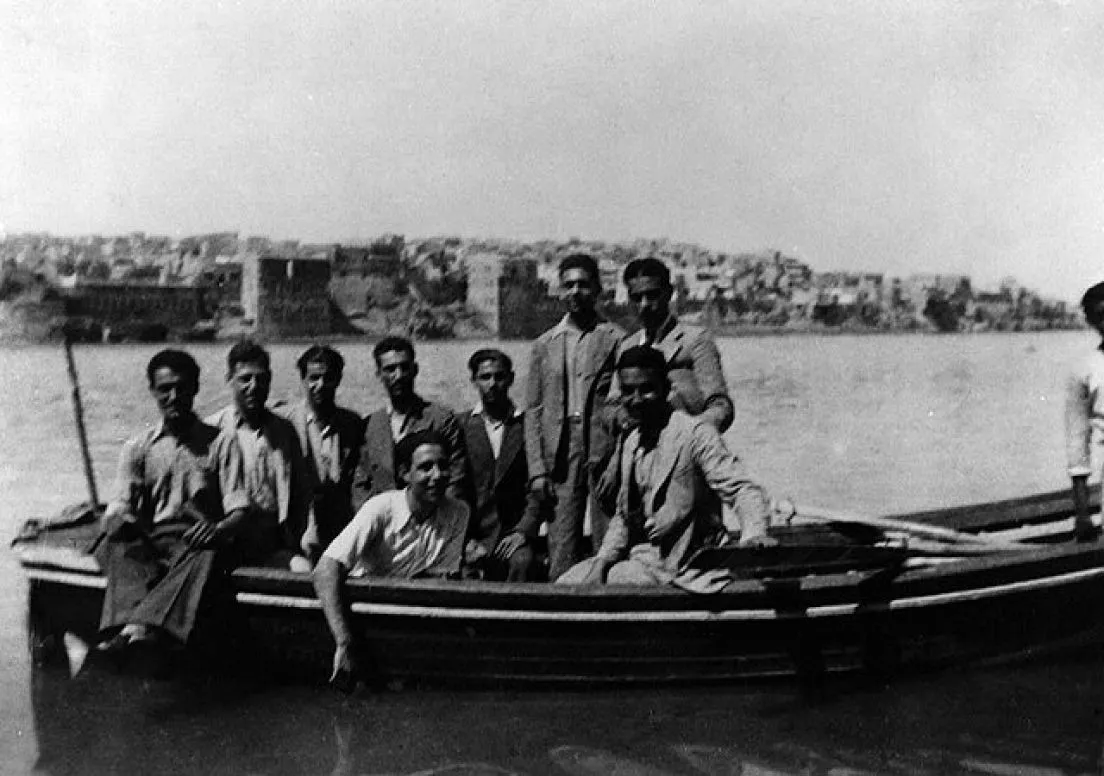 A group of Iraqi Jews fleeing to Palestine in 1941 (Source: Moshe Baruch via the Oster Visual Documentation Centre)
It’s this expulsion from Iraq that also led to the sandwich in today’s recipe. Amba is a spicy version of mango chutney, and, like chutneys, originally derives from India. Amba made its way into Iraq via Jewish merchants in Mumbai shipping it back to Basra, then bringing it back themselves. As these Jewish merchants left India and Iraq for the newly formed Israel, they brought amba with them.
The actual creation of sabich is one of those rare dishes where we can point to a specific inventor. Sabich Tzvi Halabi arrived in Israel from Iraq in the early 1950s. In the early 1960s, he and his wife, Rina, opened a small snack stand in Ramat Gan, at first selling leftover eggs and fried aubergine from breakfast. As the stand grew in popularity, though, the sandwich expanded, encompassing salad vegetables and being wrapped in a pita before being passed off to workers starting their days. The sandwich exploded in popularity, taking the name of its inventor before becoming an iconic part of Israeli street food.
However, there is more to sabich than amba, and in many ways, sabich reflects this history of diaspora and refusion in Israel. The amba that, in many ways, defines sabich comes from the Iraqi Jewish population. The pita - not usually used in Iraq - comes from the surrounding Arab nations and Israel’s location on the Mediterranean. The aubergine is both an Ottoman introduction and a part of Jewish cuisine (recall that cooking with aubergine was part of how the Inquisition identified Jewish families during the Reconquista). Sabich is a perfect encapsulation of everything that is Israeli cuisine and what defines Israel more generally. It is a product of the blending of a great many people, all of whom bringing their own ideas and from them, making something new, but not entirely new. The sabich is a symbol of Israel and a symbol of what fusion and identity can be.