

Astrea: Six-Sided Oracles
It’s not really a secret that I’m a huge fan of deck builders. They’re some of my go-to games, always a nice way to unwind and just build something that brings me joy. What I’ve generally been less fond of is the sub-genre of dice builders. Much like deck-builders, dice-builders involve assembling a collection of dice into a consistent strategy, then using that collection to battle enemies. The difference with dice builders, however, is the degree of randomness. Deck builders have one level of randomness, namely, which cards are drawn. Dice builders have two - the draw and the roll. It’s this extra level of randomness that makes them, in my opinion, less fun. I can consistently control the randomness of the draw, but the roll? There is no mechanic that allows me to control the roll, throwing me into a more random situation than I’d like to be in.
Astrea is an absolute masterclass in how to make a dice-builder work.
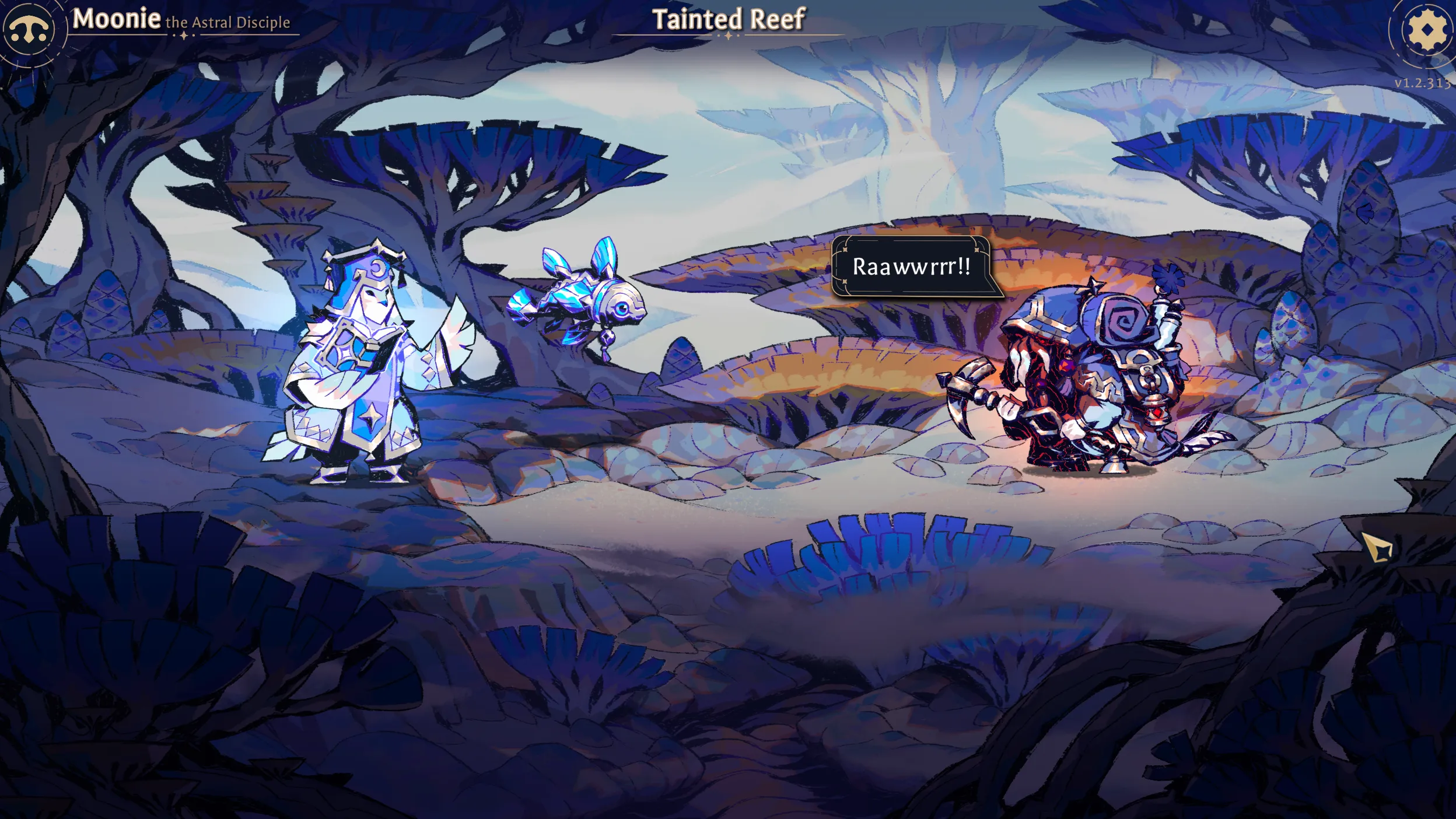 Okay, so hear me out...
In Astrea, you play as one of six characters, out to save the world from corruption. Much like with other games in the genre, the player progresses through a series of increasingly difficult levels, with each level providing battles, opportunities to enhance a build, and a boss battle. Astrea is also one of the shorter games I’ve encountered in the genre, with a complete run taking between 30 and 45 minutes, making it ideal for slotting in while waiting for food to cook, or while eating breakfast, or while procrastinating on the massive pile of other things you’re supposed to be doing.
Each of the six characters in Astrea has their own mechanics which radically reshape the game and how it’s played. Strategies that work well for one character are completely non-existent for other characters. While the game assigns its own difficulty metre to each character, a better sense of difficulty comes instead from the player’s own playstyle. I struggled more with the characters that were straightforward “play an attack dice and don’t forget about your block dice,” for example, than I did with the “spin these orbs three times forward, back one, play that dice, loop it five times, then spin a few more times” character. However, that there is such a broad variety of play styles is absolutely to the game’s benefit. Each playthrough and each character feels like a different experience, keeping the game fresh, even with the limited potential variety inherent to its short play time.
None of that, however, is particularly unique or surprising. They’re the basics of what I would want from a deck-builder. I want variety in my runs, I want each run to have its own challenges, I want to control the randomness. The interesting aspect of Astrea, though, is how well it provides a chance to control the randomness. It takes randomness and uses it as an actual winning strategy. And I love it.
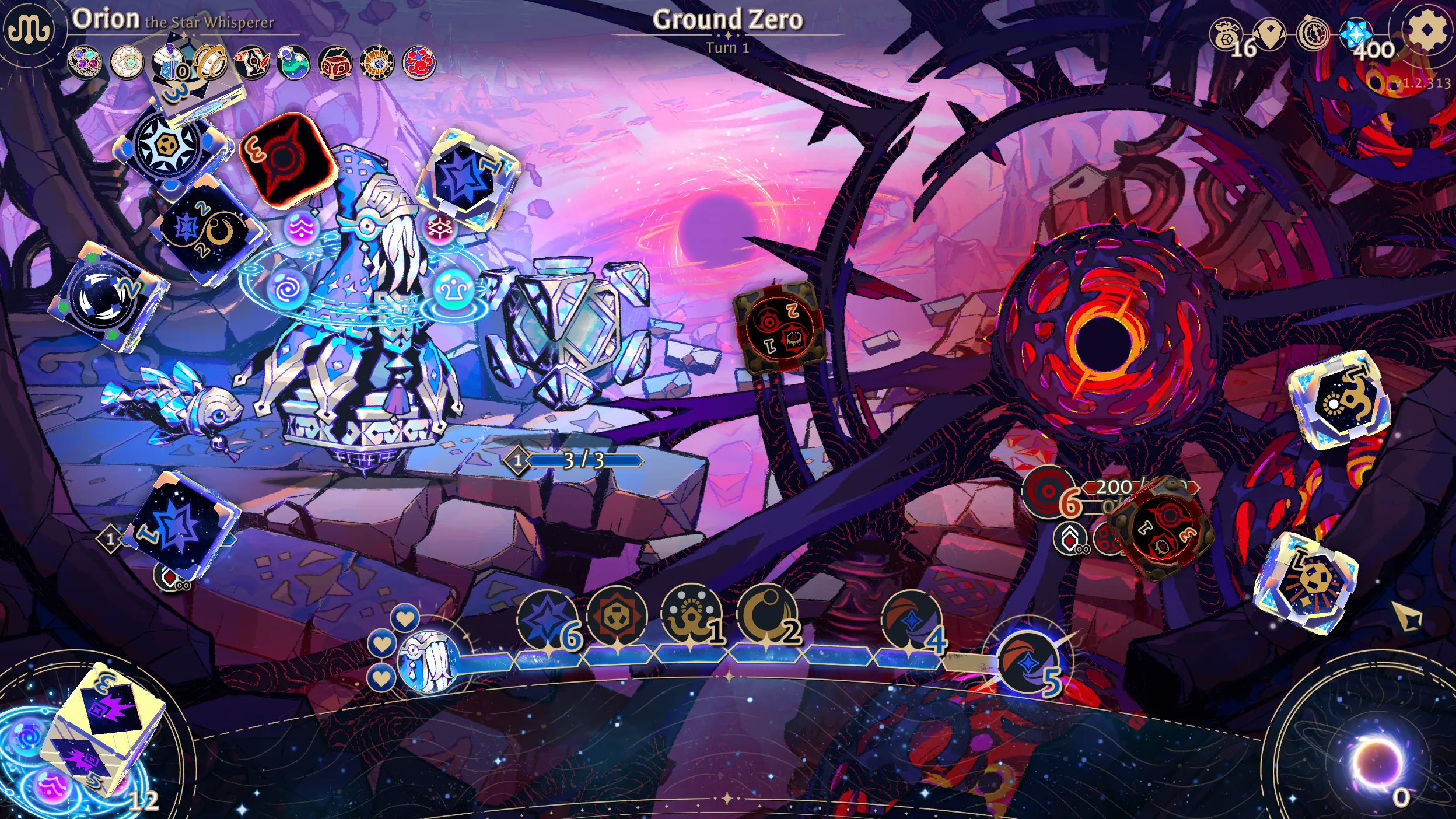 ...so...many...dice...
One of the key issues I have with dice-builders is the idea that, no matter how well I control my dice pool, there will inevitably be moments where I take more damage or even lose a run because a dice flips incorrectly. Astrea understands this frustration, and makes controlling that randomness an actual viable strategy for victory.
“What if,” Astrea asks. “Any time you reroll a dice, you do three damage to an enemy?” “Or,” it says again. “How about if I give you an artefact that, when you are forced to take a negative action, it actually heals you?” Rather than making the act of trying to navigate dice faces a neutral act at best, Astrea instead works the player’s need to reroll, discard, and redraw into winning moves that progress the game. One of my runs relied entirely on discarding and redrawing my entire hand multiple times per turn, for example, while another rewarded me for every reroll.
More than anything else, it’s this ability to use the mechanics that dice-builders need to include regardless as winning plays that makes Astrea an absolutely fantastic game. The variety of plays isn’t just in the stated variety of dice or character abilities. It’s in how much the player wants to engage with randomness itself.
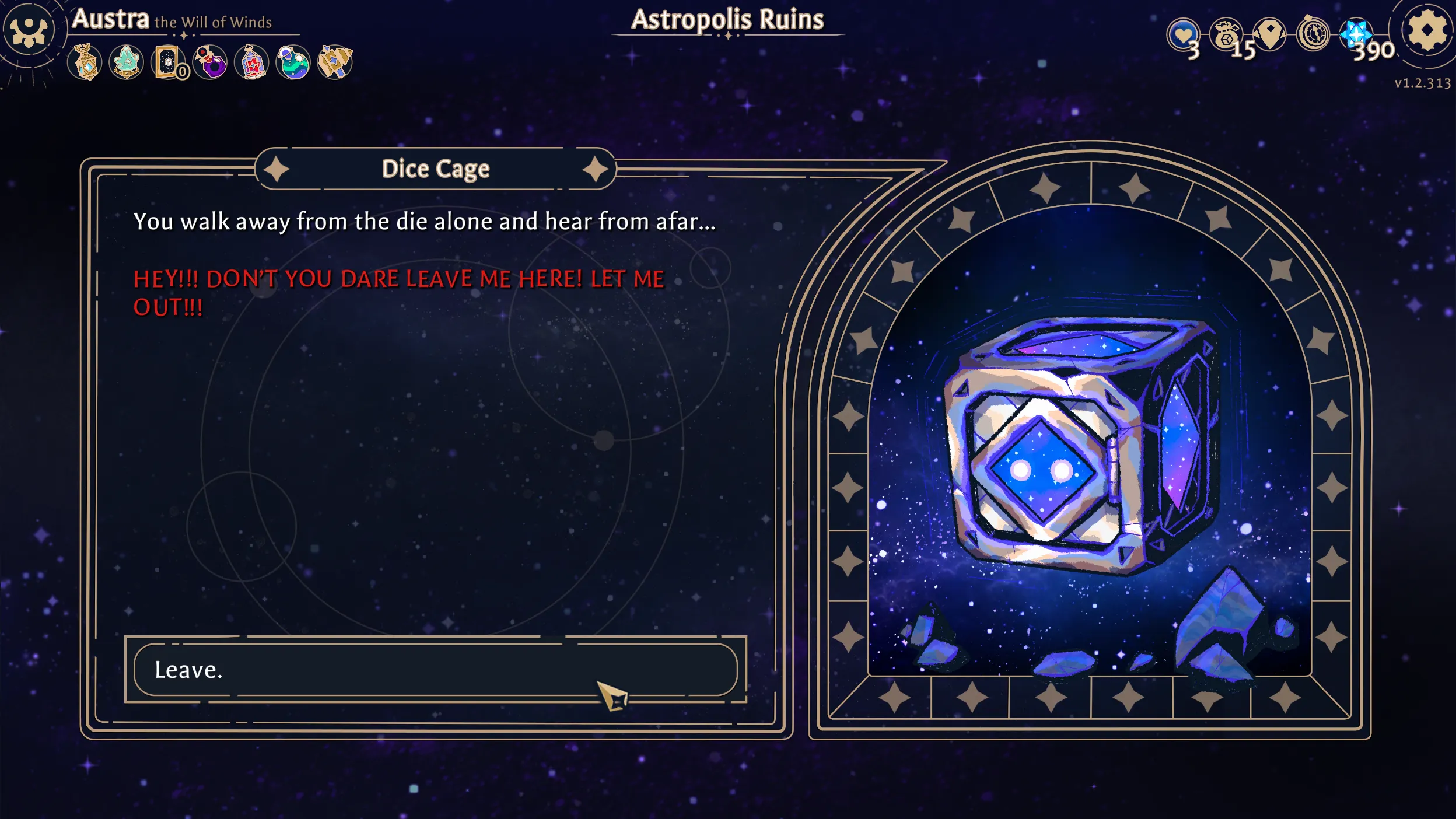 I do enjoy freeing the madness...
Astrea’s mechanics are, of course, not the only reason it’s a phenomenal game. Its music has been stuck in my head for days now, and I love its pastel yet surreal art style. Its story is light, yet interesting enough to keep me interested in what’s just beyond the next battle, and the characters are a soft delight. Everything in the game complements each other nicely to create a smooth, almost chill experience. This is a game about battling cosmic horrors that doesn’t feel like it’s about battling cosmic horrors. It feels like the player is following a friend on a soft adventure that happens to involve saving the world along the way.
It’s rare that I find a game that so absolutely engrosses me, but I admit, I struggled to put Astrea down. I wanted to crack open its mechanics and explore its possibilities as thoroughly as I could. It’s not a game that allows for the absolute mad builds of Balatro or Slay the Spire, but it doesn’t suggest it will be. It’s a gentle game that nonetheless maintains a good amount of tension and suspense. I absolutely adore it.
Developer: Little Leo Games
Genre: Deck builder, dice builder
Year: 2023
Country: Brazil
Language: English
Play Time: ~45 minutes/playthrough
Playthrough: https://youtu.be/TW69WLvSa1Q