
Bingle Bingle Review
I find the trend of Balatro-likes fascinating. Watching the flood of them and the way each takes the fundamental core of Balatro - a simple, familiar game with the mechanics of a deckbuilder slammed on top - then develops it is interesting. I am watching the formation of an entirely new subgenre in real time, and with it, the narrowing of the rules of what qualifies and the pushes at the limits of those rules.
Some games do this successfully. Some games understand the heart of what makes a Balatro-like work, and when they do, they create something new and excellent.
Other games are Bingle Bingle.
 Fun fact! I meant to write this review three weeks ago. I didn’t.
Bingle Bingle is a roulette-based Balatro-like. As with any Balatro-like, players move through a series of escalating minimum scores, punctuated by shops and boss rounds, and ending if the player is unable to meet the minimum score. Players take the relatively familiar rules of roulette and turn them on their head by modifying the roulette wheel, the ball, and everything else that could possibly be modified.
On the surface, there’s nothing wrong with the premise of Bingle Bingle. Balatro-likes are at their best when they start with a simple and understandable base, and, in theory, there is nothing simpler than roulette. Wheel spin, ball land, everybody wins.
What I learned playing Bingle Bingle, though, is that this is not how roulette works, or is at least, not the entirety of how roulette works. There are a range of betting strategies - do you bet on a colour? A type of number? A block of numbers? A line? - that, for anyone unfamiliar with roulette seem arcane at best.
I learned a lot about roulette from Bingle Bingle, perhaps more than the devs would have wanted me to. I learned about pockets, tokens, balls, and of course, the range of bets, all of which, again, should be simple and straightforward, until I went to modify it.
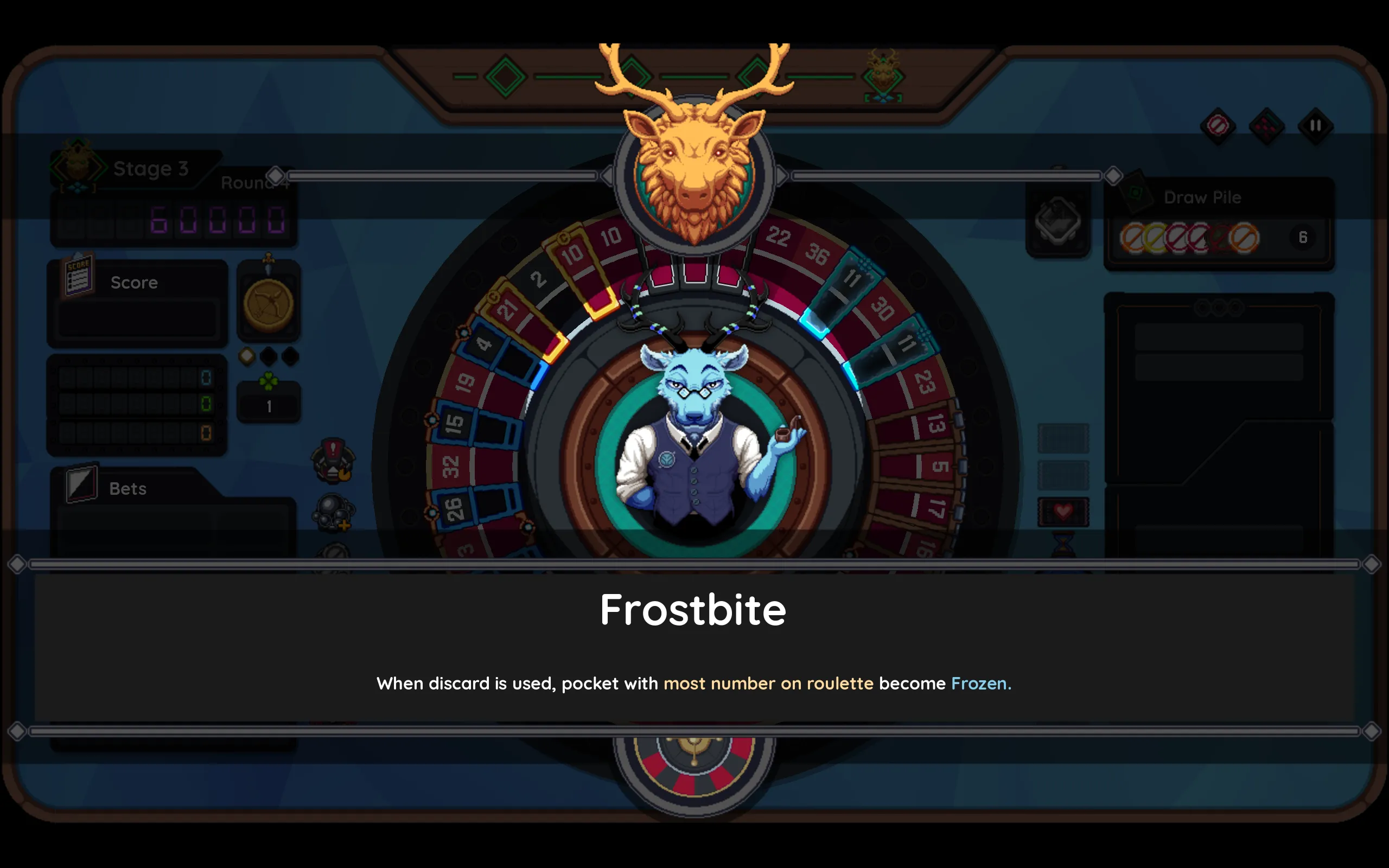 POV: You have never played roulette and now have to figure out what this deer wants.
I would argue that the soul of any Balatro-like is in the satisfaction of warping a game’s rules to the point of unrecognisability. When I’m playing Balatro, I consider it a victory when my deck is nothing but twenty-three aces of diamonds, each giving me a ridiculously disgusting modifier. The rules and reality of poker lie in the dust, crushed beneath my determination to twist this deck into something that works for me and me alone.
Bingle Bingle does this as well. I can, if I so choose, turn the entire board into a red 2, repeating endlessly as the ball buffets between them, indecisive about which specific two is speaking to it. I can modify each token to generate a big ball, or many balls, or a ball that is not a ball. There are many ways I can shape this roulette wheel, and the game is happy to throw as many of them at me as it can.
But it’s in that desire to give me many options that Bingle Bingle begins to miss the point. What makes a Balatro-like work is that its simplicity is deceptive. Behind the simple rules and the familiar game lies a vast variety of ways to break those rules and destroy that game. Bingle Bingle at no point pretends to be simple. From the outset, it introduces a bivvy of undefined terms and icons, some of which I still don’t understand after four hours of play. It presents a huge world of options, missing that, where a Balatro-like succeeds is not in recreating the immense complexity of a traditional deckbuilder, but in masking that complexity behind a limited set of easily understood mechanics.
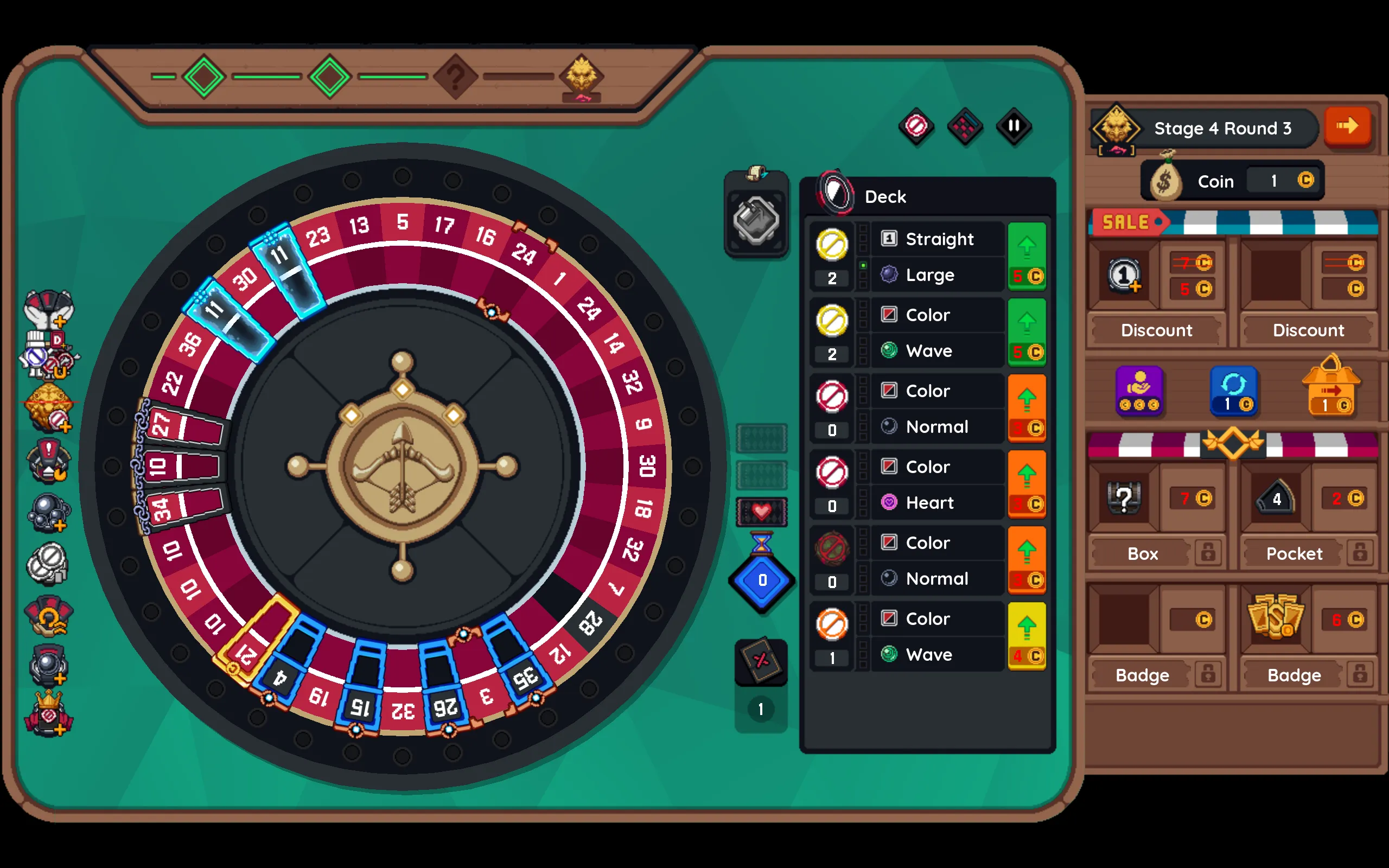 But hey! There's a shop!
Learning to navigate complexity is, of course, a fundamental part of a deckbuilder, though I would argue that, despite having the word “deck” in it, Bingle Bingle is not a deckbuilder. However, there comes a point where the sheer amount of complexity comes full circle again, where there is no longer a sense of building something that will control the randomness, but rather, that the number of options are beyond controlling. Attempting to build towards anything in particular becomes an exercise in futility. Crafting what you have into something coherent becomes impossible. The game itself has too many moving parts to truly be controlled, and instead, just feels random and unsatisfying.
Even in the runs where I win, the lack of labelling and the sheer amount of stuff happening makes it difficult to understand why I’ve won. The techniques and tactics I’ve learned from dozens of other deckbuilders don’t work here because there is too much going on to control. I can perfect my tokens, but in doing so, I lose the wheel. I can focus on the wheel, but then the badges slip away. There is too much to be able to control in any meaningful sense, and too little time or resources in which to do it.
The core of what makes a Balatro-like is gone. The simplicity masking an underlying complexity is gone. All there is too many mechanics to be satisfying, and too little explanation of what they are and why they matter for me to care.
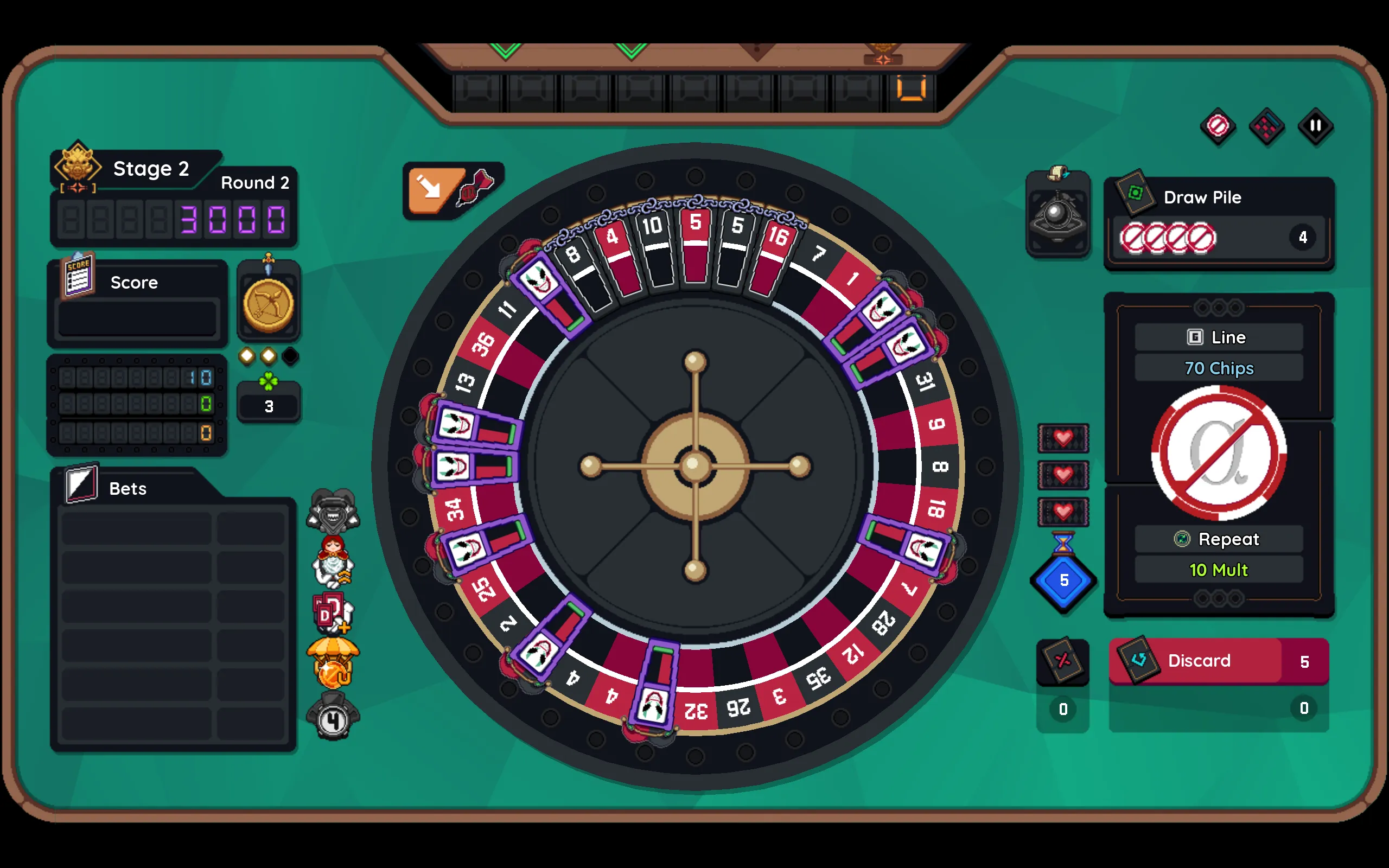 This wheel mocks me.
Once you finish a run of Bingle Bingle, the game offers an endless mode where you can see just how far your build will get. However, rather than following the same pattern of two normal wheels, then a boss with a modified ruleset, Bingle Bingle’s endless mode instead puts the player in an endless string of bosses, one modified ruleset after another. There is no way to plan for these bosses, no way to predict which one is next, just bosses that may or may not randomly destroy everything that was built so far with no way to work around it.
This, in many ways, summarises my experience playing Bingle Bingle. I can understand the mechanics, and I can plan a build around the badges or quests or initial starting bonuses I draw. I can plan these things, but none of it will matter. There are too many mechanics for me to get the upgrades I need. The board will end up random, and there is nothing I can do to change it.
So I throw the ball. I see where it lands. And I recapture the feeling of playing actual roulette.
Developer: Knitting Games
Genre: Balatro-like
Year: 2024
Country:
Language: English
Play Time: 30-40 minutes/run