

Do Not Feed the Monkeys Review
It’s weird that there is a whole genre based on the concept of watching people, right? This is a weird thing.
And yet, here I am, playing another one of these games.
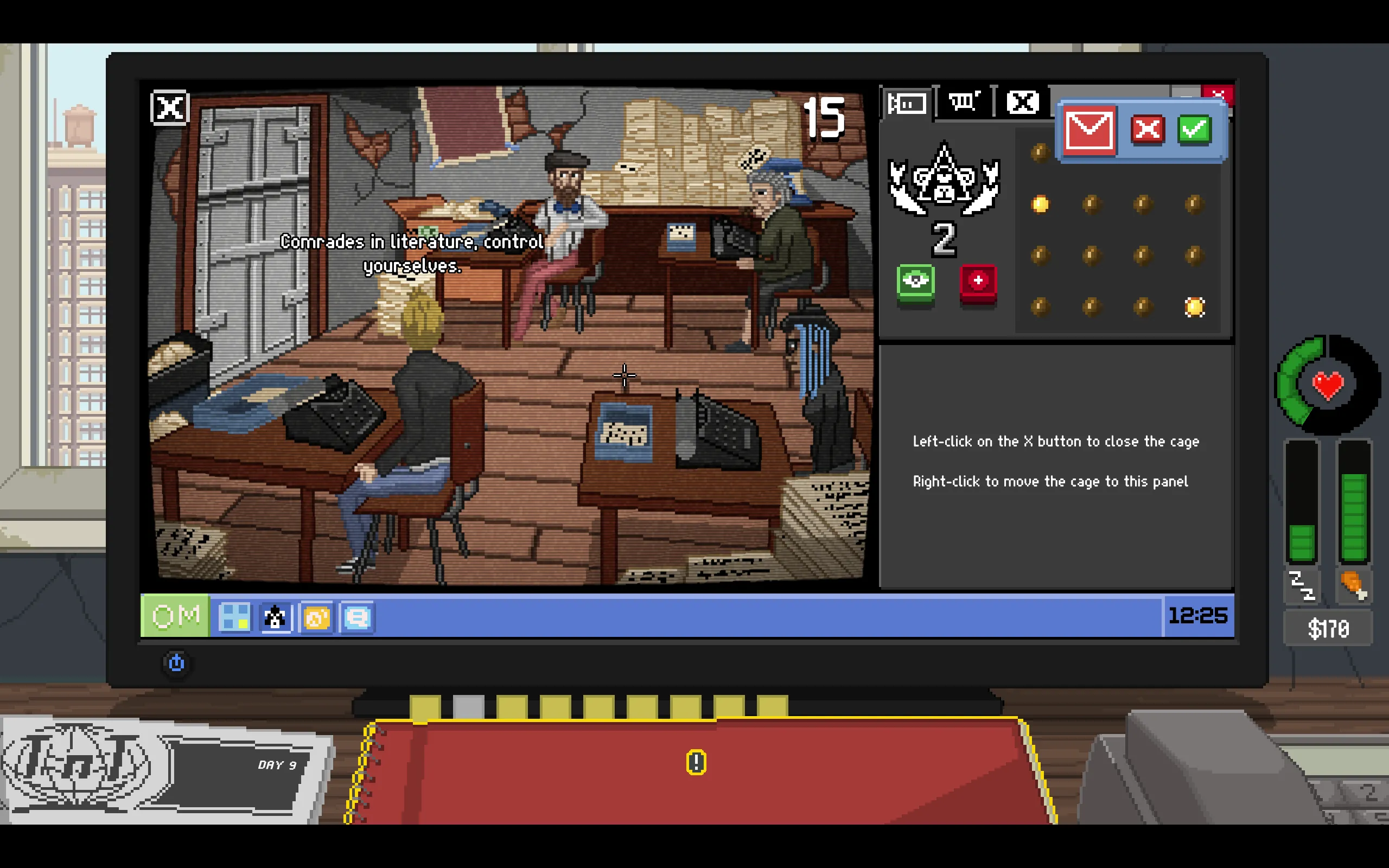 I will not.
Do Not Feed the Monkeys is a simulation game, part of a genre I like to call the “dystopian observation” genre. Like other dystopian observers, Do Not Feed the Monkeys involves the player observing a series of scenes, noticing the details and keeping track of what’s relevant and what’s not. Through their observations, players have the choice to get involved in the narrative, or to sit back and be passive observers, choosing instead not to feed the monkeys.
Like all observation games, the devil is in the details, with gameplay requiring players to pay attention to the nuances of the scenes they’re observing. Players collect details about scenes and the activities within them, using these details to answer questions and influence the scenes themselves. While observing, players must keep track of their health and funds, but are free to balance their time between observing, working, and sleeping to their heart’s content.
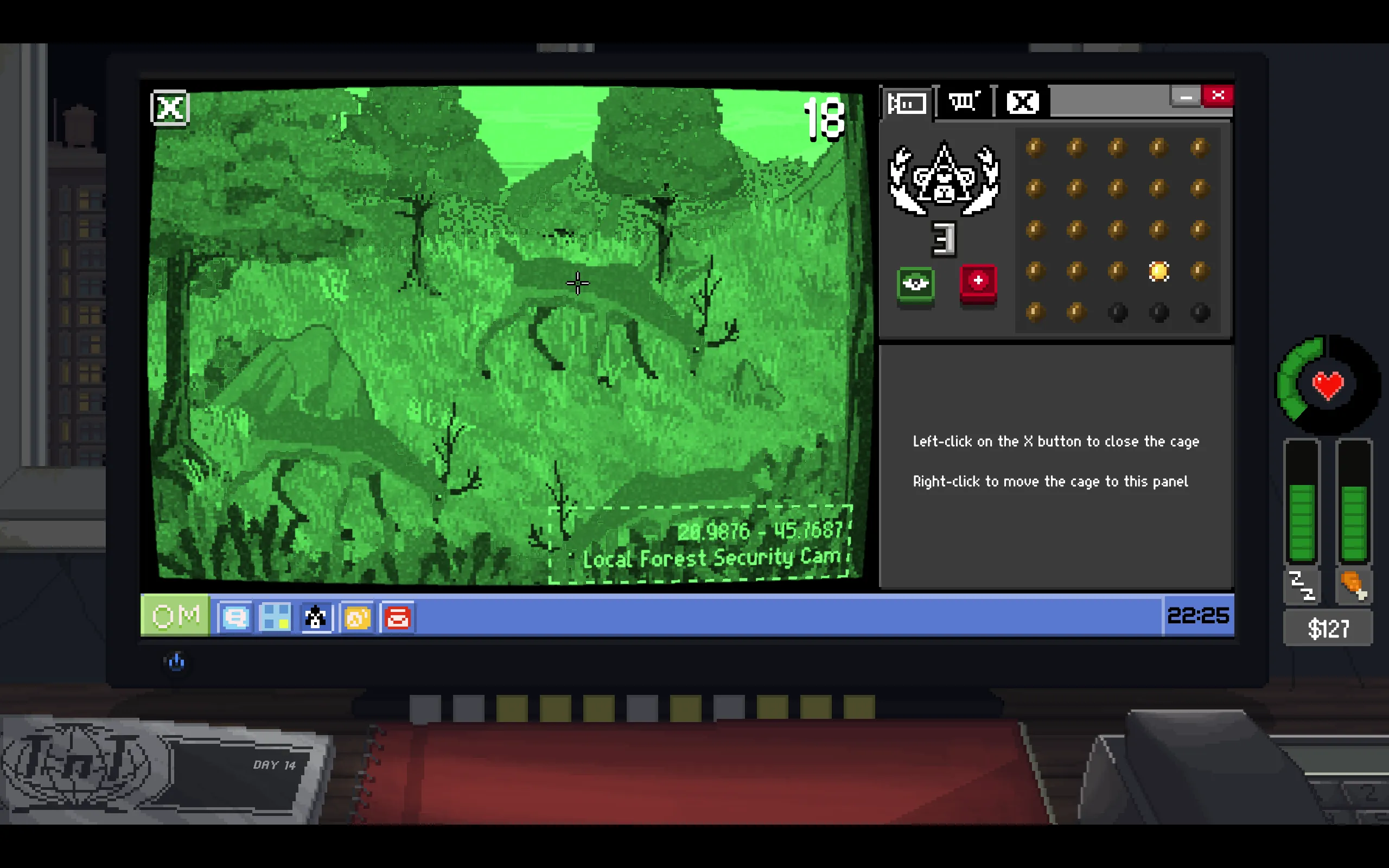 I see zero reason to influence this happy little scene.
It’s in that opportunity to influence scenes that Do Not Feed the Monkeys shines. While most observation games include some element of player choice, Do Not Feed the Monkeys combines the distance of observation with fragmented knowledge and the realities of having to survive. There are, for instance, significant incentives to blackmail someone I’m observing so I don’t starve that week. Doing so is obviously wrong, though, and so these choices gain actual weight. Do Not Feed the Monkeys, for all the distance it keeps from the people being observed, still creates a real sense of meaning to each of the small stories it tells. It’s easy to get engrossed in conversations. It’s easy to get lost in the narratives of the individual characters. It’s a deeply immersive game, and one where “right” feels impossible to figure out.
Paired with this desire to take a certain action is the fact that information to influence the scene has to be gleaned from within the scene itself. Blackmailing a particular character, for instance, requires careful observation, waiting for enough information to be revealed for said blackmail to be possible. Information is gathered both from observing a scene and from researching the details separately, creating a situation where players have potentially exhausted all the information from a scene, but aren’t sure what to search to get the information they need. This mechanic, in some ways, is reminiscent of point and clicks and their moon logic, but unlike point and clicks, feels earned by the game itself. It’s reasonable that searching terms may not provide the answers an observer is looking for. The sense of powerlessness, though frustrating, is meaningful within the context of the game.
Sometimes, we can’t help. Do Not Feed the Monkeys is a good reminder of the separation between knowledge and action.
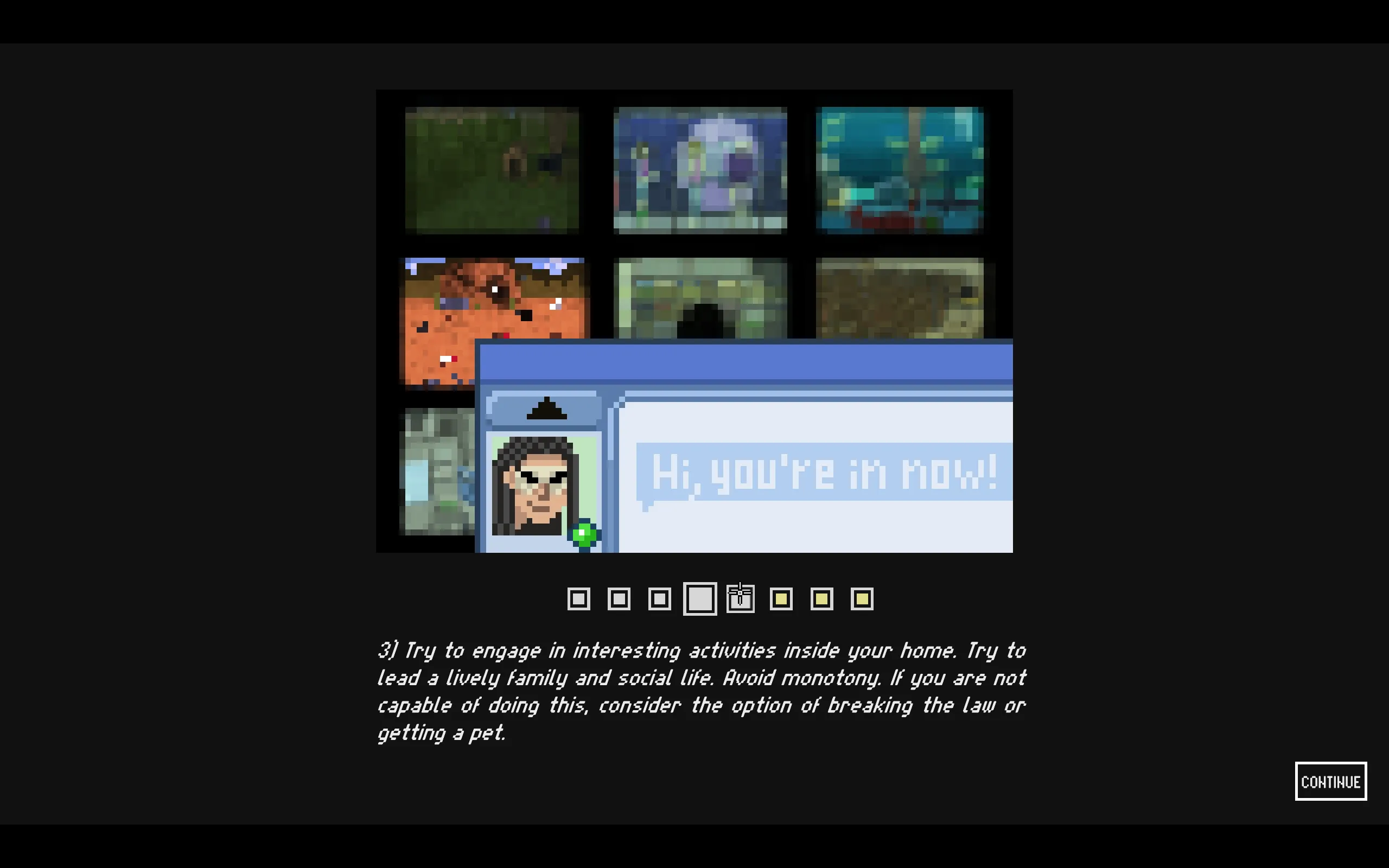 DONE
DONE
Do Not Feed the Monkeys is perhaps one of the best dystopian observation games I’ve played, specifically because of the frustration of knowing without being able to act. Watching a character die over the course of days not only is a tragic event, but feels like one. Through a small set of lines of text and a few actions on a screen, Do Not Feed the Monkeys cultivates a deep and meaningful relationship with the scenes it depicts, and in so doing, makes the act of observation a meaningful one. Each character, each moment becomes compelling, and each failure to help, a tragedy. It’s a sensation I haven’t gotten from an observation game before, and one I found miserably delightful.
Developer: Fictiorama Studios
Genre: Observation, point and click
Year: 2018
Country: Spain
Language: English
Play Time: 2-3 hours/playthrough
Playthrough: https://youtu.be/HJ1cmNW8av4