

Rice Banke
Ingredients
1.5 cups rice
4 cups water
1/2 pumpkin
1 can coconut cream
2 tbsp sugar
Salt
Instructions
- Chop the pumpkin into chunks and boil until soft (~12-15 minutes).
- Once soft, puree the pumpkin and set aside.
- Cook rice for half its usual cook time. Add the pumpkin and coconut cream to the rice, then stir to combine. Lower heat to a simmer and simmer until thick.
- Stir in salt and sugar.
A longer and more detailed description
This recipe says to add half a pumpkin because it means to add half a pumpkin. I declared war on a pumpkin this evening, and after half an hour of struggle, I was victorious.
Feel no pity for the pumpkin. It drew blood. It does not deserve your pity.
But to what end did I battle this pumpkin? As I watched its fleshy remains bob in the boiling water, I felt joy, unrepentant and exultant, and delighted in the vanquishing of my foe.
And then I ate it. I mashed it into a puree, unrecognisable as the fruit it had once been, mixed it with half cooked rice and globs of coconut, and I devoured it. Whoever the first person was who discovered that pumpkin was food, who pierced its hard shell and discovered on the inside, glory, I understood that person as I stood over my dinner. I understood what it was to stare down a mortal foe and know you are victorious.
Eñjake am mōñā.
Substitutions and suggestions
Do not just by pureed pumpkin. Having to get multiple knives to pry the pumpkin open and then accidentally cutting yourself on the pumpkin rind which isn’t even sharp is a fundamental part of the experience.
What I changed to make it vegan
I picked the only thing with ingredients I could find that is naturally vegan, and that is what I made. I’m going to admit - I don’t even like coconut, but this is what I made.
What to listen to while you make this
Your own screams as you realise you’re being defeated by a pumpkin. Billions of years of evolution, and you can’t figure out how to get into a pumpkin.
A bit more context for this dish
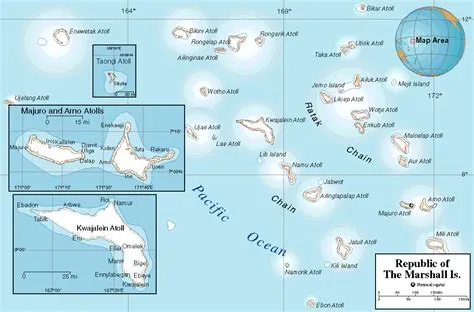
I am going to admit - beyond struggling with a pumpkin, I had a very hard time with this one. Marshallese cuisine, like with many Pacific islands, is a cuisine centred around fish, fruit, and especially pumpkins and coconuts. What fruit exists in the Marshall Islands - other than coconuts - was by and large brought to the islands by Austronesian sailors from the Solomon Islands no earlier than 1200BCE. These early settlers navigated by the stars and the feel of the waves beneath their boats, as well as through intricate stick charts that mapped ocean swells and island locations. To use them, sailors would lie on the surface of the boat to trace the difference in ocean patterns beneath them, with those currents revealing whether the boat lay in the “shadow” of an island. Unlike modern maps, these weren’t designed to be consulted en route, instead being memorised and repeated by sailors as they moved from island to island.
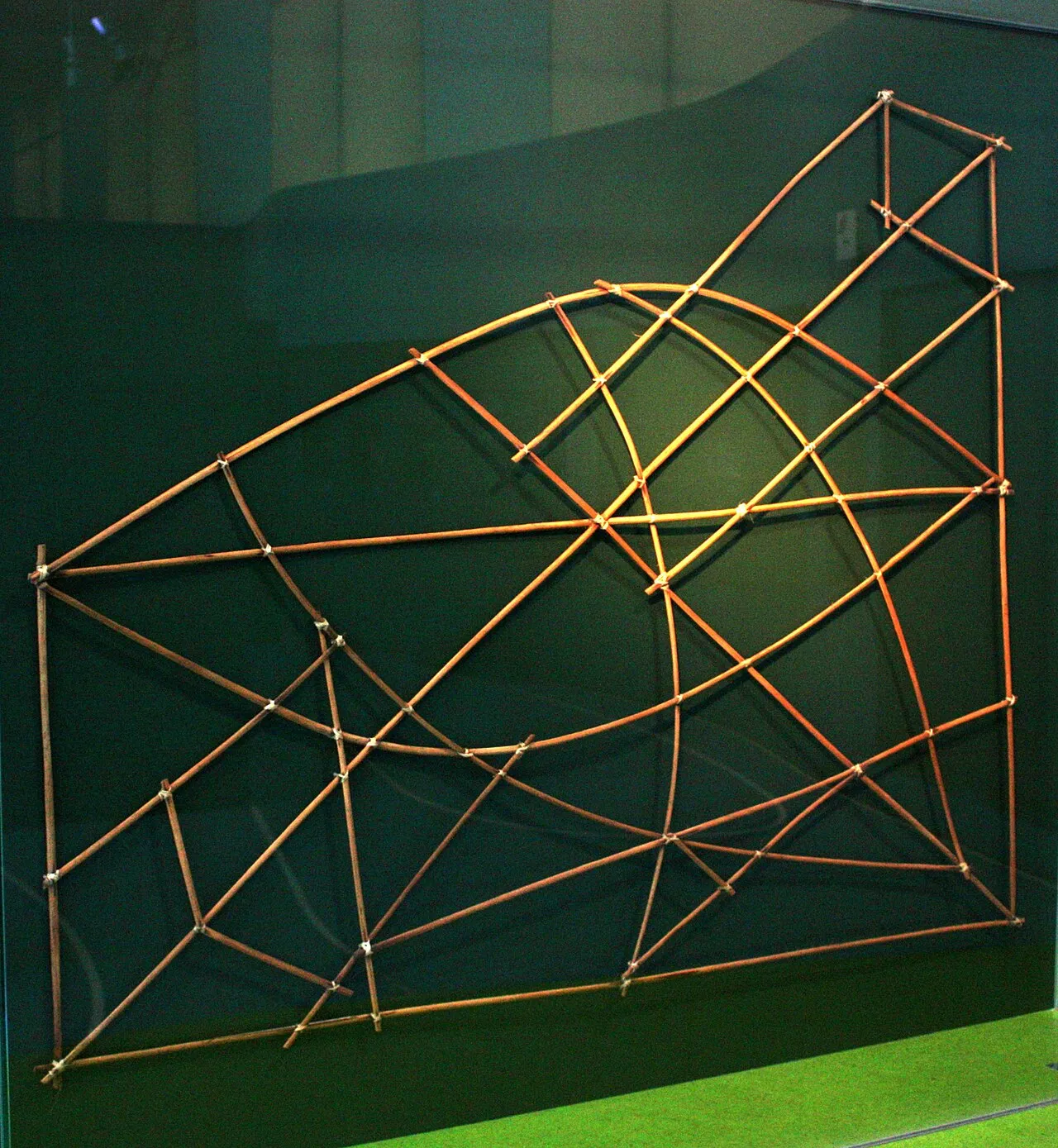 A Marshallese stick chart in the Uberseemuseum Berlin
When settling a new island, Austronesian sailors would arrive on an atoll and generally find it barren, but with potential. They would seed the island with a few plants - breadfruit, taro, and coconuts - then return a few years later to settle it, having already solved the problem of food shortages. From there, they could live both off what they grew, and off what they could catch in the endless waters surrounding their island.
This means that the Marshall Islands, like many other Pacific islands, have cuisines heavy in ingredients that are difficult to find. I tried very hard to find breadfruit so I could make bwiro, but there is nowhere in this city that sells it. I could not find taro. I do not enjoy coconut. And so, I settled for rice banke.
One particularity with the Marshall Islands, however, is that, unlike other Pacific islands, they have remained fairly isolated, with Europeans not having a consistent presence on the islands until the 1850s. The Marshall Islands remained fairly isolated even after this point, with the Marshallese maintaining their own culture well into the 20th century. The Marshall Islands moved from being a German protectorate to a Japanese colony to a WWII battleground, disturbed but not unduly so, through virtue of being seen as economically useless by everyone who wanted to colonise it.
Everyone, obviously, except for the Marshallese. For the Marshallese, this was their home.
Once the Americans took control of the Marshall Islands after WWII, the islands ceased to be seen as useless. Instead, because of their isolation, limited population, and low economic output, they were instead seen as the perfect testing ground for something that could only really be detonated where and when no one was looking.
The Marshall Islands became home to the US’ nuclear testing grounds. Their tropical atolls were blasted into oblivion by bomb after bomb after bomb, dropped on islands deemed inconsequential by everyone but those who lived there.
When they did so, they destroyed an entire culture.
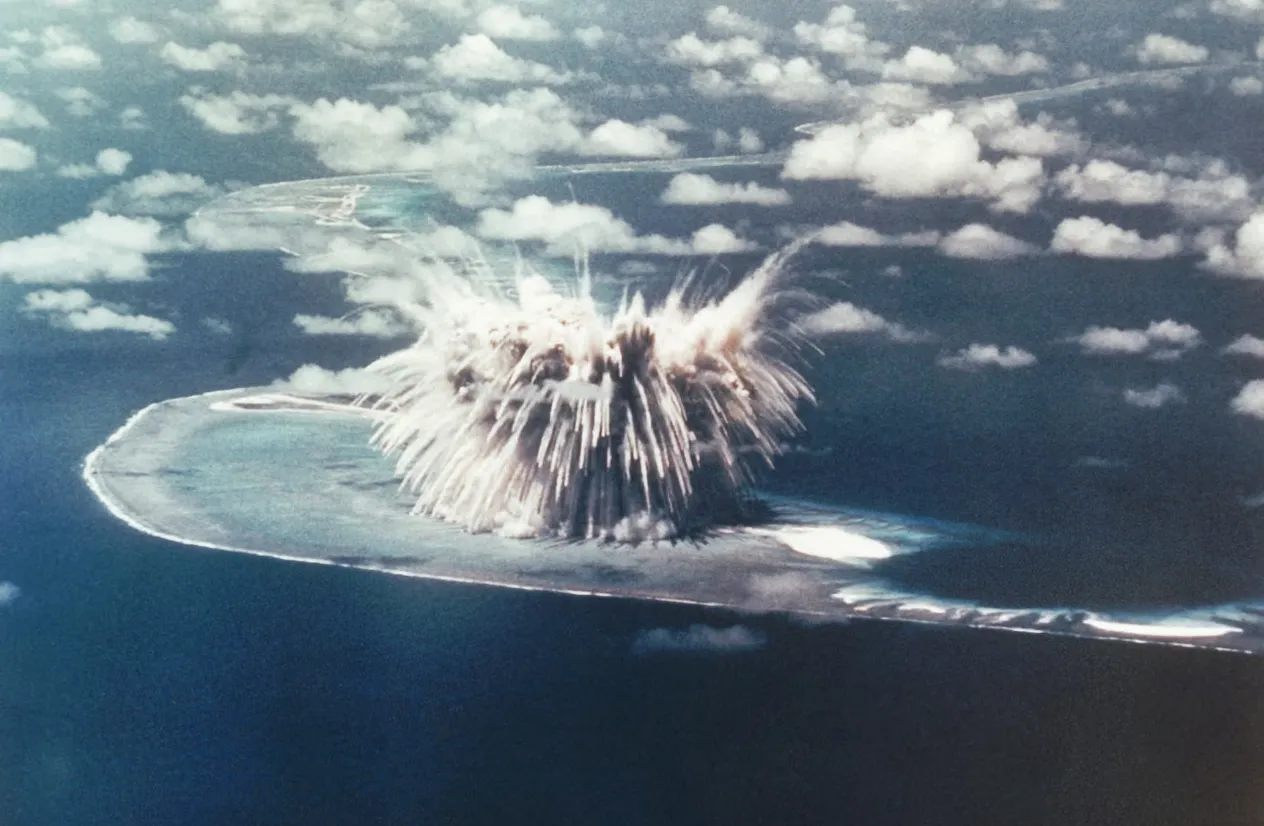 The Seminole nuclear test on Enewak Atoll (Source: The Guardian)
As part of its nuclear testing programme, the US forcibly removed Marshallese from their homelands, displacing the residents of Bikini and Kwajalein. This was done without compensation, and without the Marshallese necessarily being told what was going to happen to their homes. American nuclear testing annihilated these islands, rendering them uninhabitable. It annihilated the matriarchal culture that had dominated the islands for centuries, and, on occasion, returned people to irradiated islands to see what would happen.
When the fallout rained down on the still inhabited islands, children played in it like it was snow. When the people became sick with radiation poisoning, they swam in the lagoon to try to relieve the burning, not knowing that it, too, was highly irradiated.
Women continue to suffer miscarriages and thyroid problems because of the background radiation. The domes meant to contain nuclear fallout are collapsing due to rising seas and climate change. The US has ceased to pay compensation or provide medical care. Nearly as many Marshallese now live outside the islands as within them. Coral reefs - fragile ecosystems that take centuries to form and which are now at risk of vanishing from the seas entirely - disappeared en masse in an instant. It is not an exaggeration to describe what happened to these islands and the people living on them as apocalyptic.
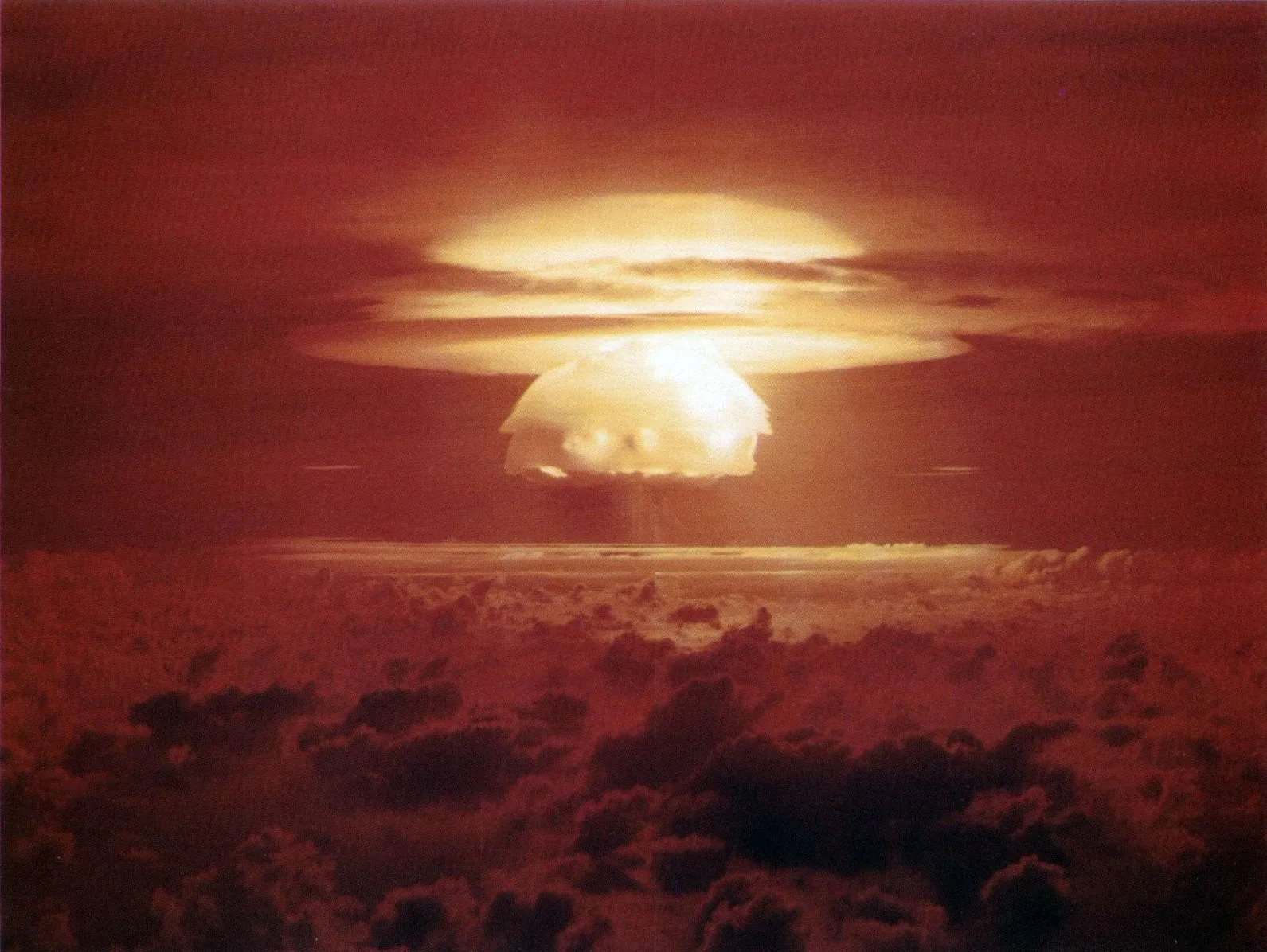 The blast from the Castle Bravo test at the Bikini Atoll in the Marshall Islands (Source: US Department of Energy)
The stick maps which are found nowhere else in the world are no longer used. They can’t be. The shadow of the islands is gone, and for those that remain, the currents might drive the boat towards an irradiated hell. That element of Marshallese culture is gone, wiped away by an atom bomb.
I did not recommend a song for this week’s recipe, not because there are not musicians from the Marshall Islands. There are. There is no place on Earth that has both humans and a lack of music, and that continues to be true of the Marshall Islands. The Marshall Islands has a rich musical tradition of women singing their stories, their history, their thoughts out to the world.
Radiation collects in the thyroid. After the bombs fell, most women developed thyroid cancer. The surgery to treat that cancer alters the voice, leaving many survivors unable to sing.
This is the reality of “inconsequential” islands. This is the reality of the Cold War and the cost paid by those who survived it. The atomic bomb came at the cost of an entire people, stripped of their homes, their culture, their lives, and left, in turn, with nothing.
I usually try to end these posts with something positive, something about the resiliency of a people, and to an extent, that’s true of the Marshallese. The Marshall Islands are, however, doomed. Their population is declining as those who remain flee to the United States, with the waves reclaiming what’s left. Soon, the radioactivity will be swept out to see, and that will remain will be the images of mushroom clouds, the memory of what lay beneath them obliterated.
It’s very hard to be optimistic when the bombs targeted their songs, just as those who dropped them knew they would.