

Vegan Angwa Moo
Ingredients
1.5 cups long-grained white rice
3 cups vegetable broth
1 onion, diced
1 chili pepper, chopped
2 cups (250g) mushrooms, chopped
Salt
Pepper
Instructions
- Heat oil in a pan over medium high heat. Add half the onion and cook until brown.
- Add the rice, frying until lightly toasted (~2-3 minutes).
- Add the vegetable broth, remaining onion, chili pepper, mushrooms, salt, and pepper. Raise the heat to a boil, then lower to a simmer and cover. Serve when the rice is fluffy and fully cooked (~15 minutes).
A longer and more detailed description
I don’t know why you need a longer and more detailed description. This is the easiest thing in the world to make.
But okay! Start by heating oil and adding half your onion to it. Cook it until it’s brownish, then add the rice. Toasting rice is always good fun, and today is no different. Personally, I toasted to its versatility and the knowledge it will be tasty when fully cooked. It did not acknowledge me, but that’s okay, because I ate it to get my revenge.
My toasts will be acknowledged.
Once the rice has learned its lesson, add all remaining ingredients, give everything a mixy mix, and bring it all to a boil. Once boiling, lower the heat, cover it and let the rice fluff up in its own steam. Once it’s fluffy, you’re done! Nya w’aduan mu anigye!
Substitutions and suggestions
For the chili pepper - I used a scotch bonnet, and that was a choice. Be aware that any pepper you add will essentially add its heat to the broth, making the pepper heat inescapable. I personally enjoyed how spicy this got. My partner did not. Think carefully about what pepper you want and whether to add it from the outset or as a topping.
For the mushrooms - You could probably substitute any meat substitute you like in here. I like mushrooms.
What I changed to make it vegan
Angwa moo is generally made with some sort of salted meat and topped with a fried egg or fish. I didn’t do any of that, and instead added mushrooms and extra salt.
What to listen to while you make this
Call me basic, but Iron Boy by Black Sherif is a vibe, and I’m here for it.
A bit of context for this dish
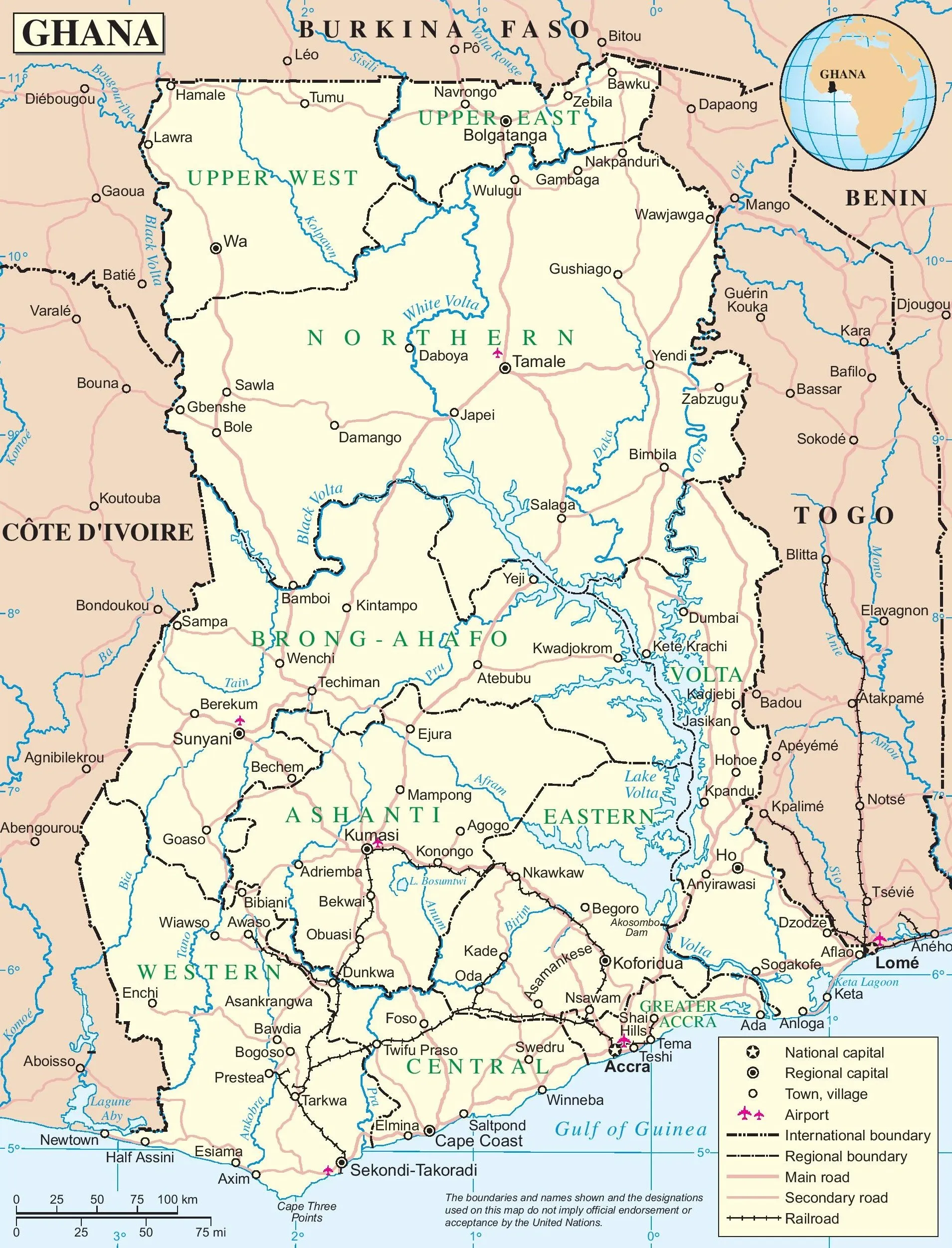
Ghanaian cuisine is defined, not only by ingredients, but by colour. Ghanaian dishes tend to be red or orange due to the chilies, hot peppers, and onions permeating the soups and stews.
Angwa moo is no exception. While mine isn’t quite as red as I wanted it to be, there’s no denying that it is a lovely shade of pink while also tasting decidedly red. That said, Ghanaian cuisine isn’t solely spicy fruits. Much of it also centres around seafood, starchy tubers, and the related staples permeating west African cuisine. Indeed, much of what defines Ghanaian cuisine is also what defines west African cuisine more generally.
However, what makes Ghana interesting is not just its cuisine. Rather, in looking at the story of Ghana, it’s interesting to consider how much influence this country has actually had over the course of the 20th century, particularly in its approach to global geopolitics and decolonisation.
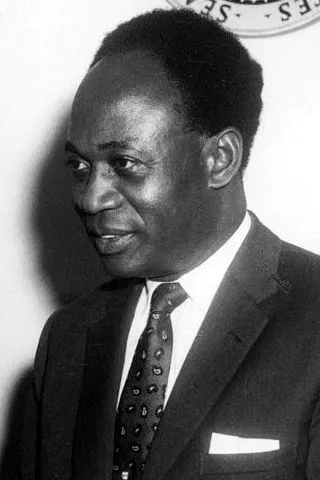 Kwame Nkrumah in 1961 (Source: Wikipedia)
On 6 March 1957, Ghana became the first British African colony to gain its independence from the United Kingdom. While the struggle for independence was not entirely peaceful, it had been gradual, shifting from a system of local rule to independence over the course of the 1940s and 1950s. After its independence, however, it became a rallying cry throughout the world for decolonisation, due in no small part to the work of Kwame Nkrumah, Ghana’s new president.
Rather than seeing Ghana solely as its own entity, independent both from the United Kingdom and the rest of the world, Nkrumah instead recognised what it meant for Ghana to be the first to achieve independence and used its position as an independent to support and advocate for independence across the continent.
In addition to independence, however, Nkrumah was also a strong advocate for pan-Africanism. hosting numerous conferences in Ghana uniting the African continent in the struggle against colonialism. His 1958 conference, for example, included representatives from north Africa, uniting what had been considered “Arab” states with those in sub-Saharan Africa in a common cause. Conferences like these established the unaligned nature of Africa during the Cold War and the need for an African identity to be independent of colonial powers. These states continued to support one another throughout the continent’s struggles for independence. It was these efforts that led directly to the creation of African Union.
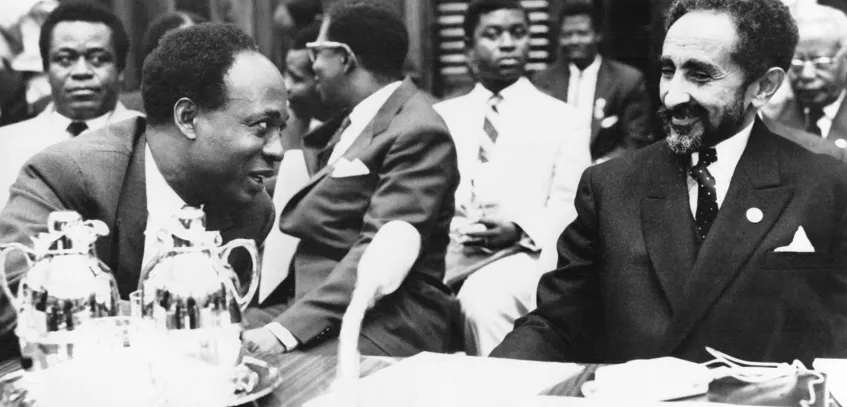 Kwame Nkrumah and Haile Selassie (Source: African Union)
Pan-Africanism also came to broader implications for the world as a whole. Decolonising Asian states also saw Ghana as a model for how to transition out of a colonial state and to fight for independence. American civil rights leaders also saw their work as existing within the Pan-African space. Their fight for civil rights was not just an expression of their individual rights, but of the common fight of the African diaspora for recognition, rights, and dignity. When they fought, they fought for all people, not just any particular group.
In telling the story of Ghana, then, it’s impossible to solely tell the story of Ghana. Instead, Ghana is representative of a greater story, one of struggle and resistance against colonialism in all its forms.