

Vegan Moussaka
Ingredients
3 aubergines, sliced into thin circles
2 potatoes, sliced into thin circles
1.5 cups (300g) brown lentils
1 can diced tomatoes (or 1 tomato, blended in a food processor)
1 onion, diced
4 cloves garlic, minced
1.5 tbsp soy sauce
1 tsp pepper
1 bay leaf
1 tsp thyme
1 tsp oregano
1/2 tsp cinnamon
1/2 tsp cloves
1 tsp dried parsley
1 tsp chives
Vegan mozzarella
Salt
2 tbsp vegan butter
1/4 cup vegan flour
1 tbsp nutritional yeast
1/8 cup vegan mozzarella
1 cup (235ml) non-dairy milk
2 tbsp olive oil
Instructions
- Cook lentils per package directions. Add in the soy sauce and bay leaf while they are cooking.
- In a separate pan, saute the onions and garlic on medium heat until translucent (~5 minutes). Once the lentils are fully cooked, mix these in with the lentils, adding in the tomatoes and spices. Let this mixture simmer on low heat to combine all flavours.
- While the lentils are cooking, fry the potatoes and aubergines in oil on medium-high heat until lightly browned (~3-5 minutes). Once cooked, set aside on a paper towel to dry. Remove as much oil as possible from the vegetables.
- While the vegetables are drying, prepare your bechamel sauce. Melt butter in a pot over medium heat, then add flour, mixing to create a paste.
- Add non-dairy milk, stirring to mix in the roux. Once combined, add the olive oil, cheese, and nutritional yeast. Lower the heat and let thicken. The consistency should ultimately be thick, but still liquid.
- Preheat the oven to 330F (165C).
- In a baking dish, layer the vegetables to create an aubergine-esque lasagna. Place the potatoes on the bottom, then lightly salt and pepper the potatoes. Dust with the vegan mozzarella.
- Add a layer of aubergine, lightly salting and peppering this one as well, then once again adding a dusting of cheese.
- Add another layer of aubergine, repeating the salt, pepper, and cheesing process.
- Pour the lentil filling over the aubergines, smoothing if necessary.
- Pour the bechamel sauce over the lentil filling, again, smoothing if necessary.
- Bake for 30 minutes. After removing from the oven, let sit for 10 minutes, then serve.
A longer and more detailed description
You know how everyone always touts their recipes as “one-pot,” “super simple,” “great weekday meal,” and all that jazz?
This is not that. This used up most of my dishes and made a mess. It took an hour and a half. You’ve been warned.
If you want to embark on this journey with me, then let us travel to the magical world of “I bought too many aubergines and now every shelf of my fridge is full of aubergines.”
Begin by preparing your lentils. Lentils are easy. You dump them in water and ignore them until suddenly, they’re fluffy and delicious. This time, we’re going to complicate things a bit for them by adding soy sauce and a bay leaf, but I’m sure they’ll figure it out.
While the lentils are cooking, start frying your vegetables. If you’re like me and have a fairly small frying pan, this will take several rounds of frying, transferring to a paper towel to drain, and get increasingly panicky about what to do with the massive amount of aubergine you are accumulating in your kitchen. It will stack on your cutting board. It will stack on your drying plate. It will pile in the frying pan. Help. Save me from the aubergine they’re taking over my -
While frying your vegetables, prepare your bechamel. Start by making a roux, then adding milk. Give everything a mixy mix, then add your cheese, nutritional yeast, and olive oil. This is likely cheesier than an authentic bechamel, but look, I’m here to make us both happy, and cheese makes us happy, right? Right. Let that simmer and thicken.
Check on the lentils! If they’re ready, add in your sauteed onions and garlic, the heap of spices, and the tomatoes, and give it all a lovely stir. Let that simmer and mix its flavours for a bit. Preheat your oven and turn, at long last, to the massive pile of aubergine you’ve managed to accumulate.
Start your actual moussaka with a layer of potato. Line the bottom of your casserole dish with potato slices in an even layer. If you have extra potato, just eat it. No one will tell. Salt them, pepper them, and dust them with cheese, then add a layer of aubergine. Try to keep the layer even, but again, if it’s a bit lumpy in some places, that’s fine. It will still taste great. Salt them, pepper them, and dust them with cheese once again, then add another layer of aubergine. Salt, pepper, cheese, and pop any remaining aubergine in your mouth. Aubergine is nice, isn’t it? Of course it is.
With your layers now set, it’s time to add the filling. Pour your lentil filling over the aubergines, letting it get everywhere. Make sure to not overfill, as there still needs to be space for the bechamel, but this is the heart of your moussaka, so make it count. Once you’re satisfied or have run out of lentils, pour the bechamel over everything. Pop it into the oven, and then wander off to do something else with your life. Personally, I played a video game, but that’s because that’s where most of my free time goes. I’m an adult.
After half an hour, remove the moussaka from the oven. Let it settle for a bit (I waited fifteen minutes because I was hungry, but you can wait longer if you have more self-control than I do which, let’s be honest, of course you do), then cut it into squares and serve. Καλή όρεξη!
Suggestions and substitutions
For the lentils - If you’re not a fan of lentils, you can try subbing in mushrooms. A Romanian version substitutes the meat for onions and rice, which also sounds excellent!
What I changed to make it vegan
Moussaka is a dish traditionally made with a meat filling and dairy sauce. That’s no good, so I substituted the dairy for non-dairy, then swapped the meat for lentils. Interestingly, because this is a Greek dish (sort of, we’ll get into it), there is a native vegan version specifically for Orthodox fast days. This version uses ground aubergine and breadcrumbs instead of the meat filling. While I didn’t make that version, it still brings me joy that there is a vegan version.
What to listen to while you make this
Okay, so I know I have a bad habit of sourcing Eurovision for my song suggestions, but Marina Satti is legitimately excellent, and her Eurovision song, Zari, is very far from her best work. Instead, I’m going to suggest “Lalalala.”
A bit more context for this dish
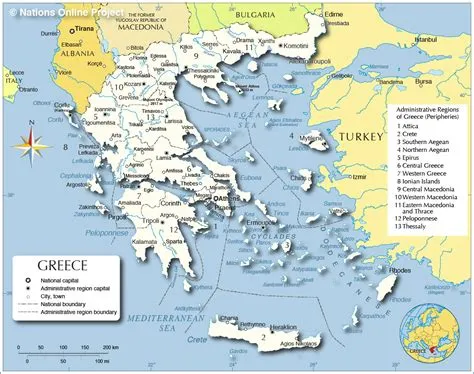
Greek cuisine falls, unsurprisingly, in the broad swath of cuisines known as “Mediterranean” cuisines. Focusing on wheat, wine, and olive oil, historically, Greek cuisine involved vegetables and fish, though modern Greek cuisine has increasingly incorporated meat and spices into that tradition. Indeed, much of what’s thought of as “traditional” Greek cuisine is, in fact, adopted from Greece’s many neighbours and conquerors. Italian and Ottoman cuisine have heavily influenced modern Greek cuisine, with dishes such as feta cheese and loukoumi traveling into Greece via the Ottomans.
Moussaka, though, represents an almost perfect confluence of a large variety of influences, all coming together to create something that is now viewed as quintessentially Greek. And, perhaps unexpectedly, there is a single person we can point to to understand how moussaka came to be.
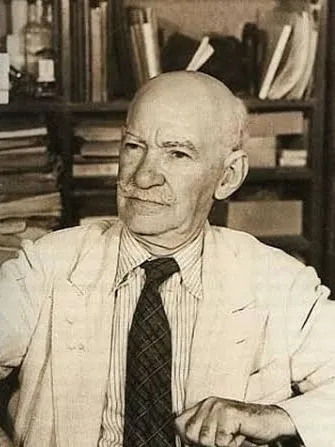 Let's all say hello to Nikolaos Tselementes, a man so foundational to Greek cuisine that his surname is literally used as a synonym for "cookbook" (Source: Wikipedia)
At the turn of the 20th century, Greece was in the throes of modernisation. Athens had, over the course of the last decade, nearly doubled in size as farmers flocked from the fields to the opportunities provided by a rapidly industrialising economy. With this rapid urbanisation came the growth of a middle class, as well as non-Greek visitors. Hotels and restaurants sprang up throughout Greece, catering to people with money to spend and a curiosity about what Greece had to offer.
There was just one problem. These foreign visitors did not like traditional Greek food, and middle class Greeks who had themselves travelled to France, wanted something nicer than soup and greens when they went out to eat.
The solution was obvious. If Greek cuisine wasn’t enough, then it needed an infusion from the world’s greatest cuisine. It needed to be French.
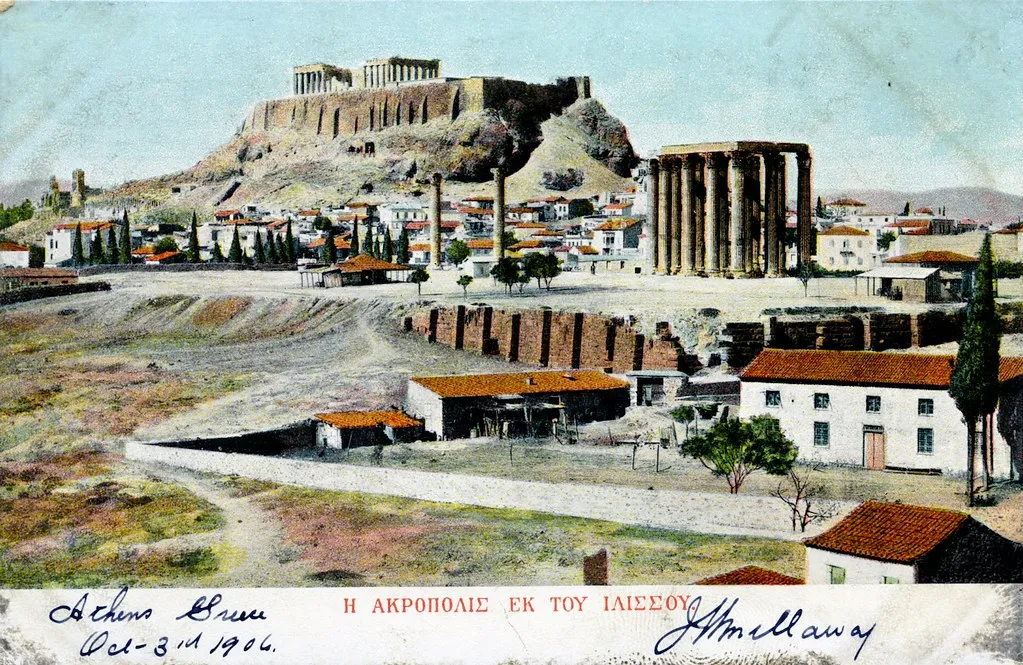 A postcard sent from Athens in 1906 by John Milliway as he prepared to circumnavigate the world (Source: Flickr)
It’s here that Nikolaos Tselementes re-enters the story. A young cook from Athens, he had travelled first to Vienna, then to the United States, working in some of the best restaurants in the world. Upon his return to Greece, he took it upon himself to modernise Greek cuisine. In 1910, he began publishing Odigos Mageirikis, a cooking magazine replete with recipes, tips, and international culinary advice. In 1930, he published the “Cooking and Patisserie Guide,” a cookbook which is still foundational in modern Greek cuisine. His ideas and his recipes became central to the idea of what it meant to cook Greek cuisine, and how to elevate what had been a cuisine of what was available into something more akin to the process-laden method of French cuisine.
It’s in the 1920s, however, that he became influenced by something other than French cuisine. It’s here that geopolitics continue to shape diet and identity.
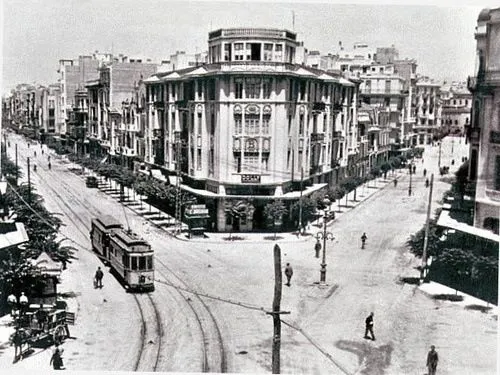 Image of Thessaloniki in 1920 (Source: Pinterest)
“Moussaka” is not a Greek word, and indeed, the origins of the dish are almost certainly not Greek. The word itself derives from the Arabic “مصقعة” (musaqqa’a), which translates as “pounded,” and can be traced back to the mid-1860s. This version looks not dissimilar to our moussaka, consisting of baked aubergine basking in a tomato sauce, sometimes served cold, sometimes with meat in the middle, but fundamentally of thinly sliced aubergines in a tomato sauce.
It’s this version of moussaka that permeated the Ottoman Empire, travelling from the Levant south into Egypt and north into what is now Turkiye and into the Balkans. When thousands of refugees fled northern Greece for Athens in 1922, they brought Ottoman dishes and spices with them. Cumin became part of Greek cuisine, as did a Turkish stewed veal dish.
And Tselementes combined them. He took the aubergine and tomato from musaqqa’a, the stewed veal of hunkar beyendi, and the French bechamel, and smashed them all together. The modern moussaka was born.
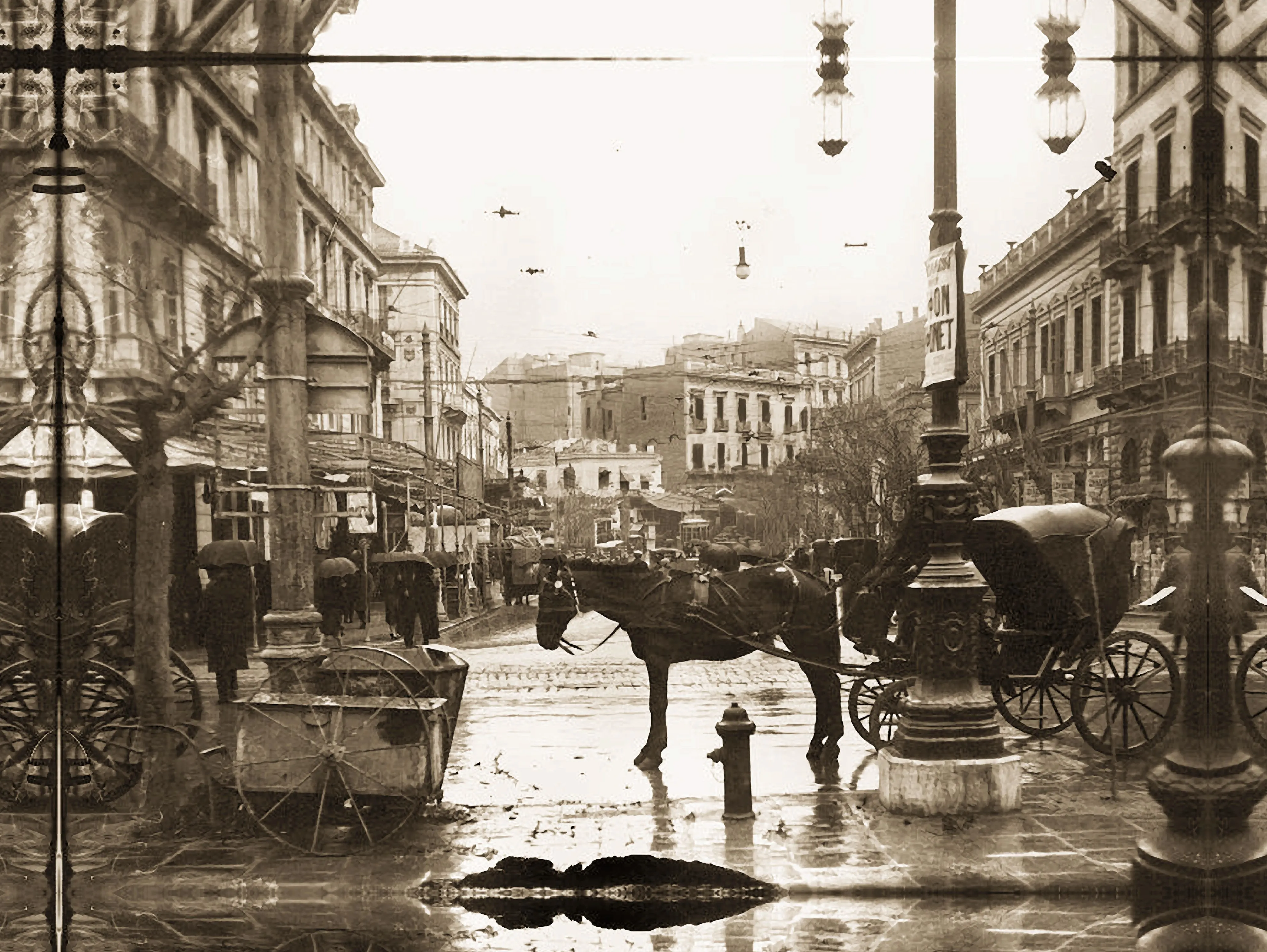 Athens in the 1920s (Source: Pinterest)
While moussaka is not solely a Greek dish - there are versions of it throughout the Balkans and the eastern Mediterranean - the story of the modern moussaka is a deeply Greek one. It is a product of the combination of all its neighbours, of existing at a confluence in geography and history, and of bringing the traditional in confrontation with the modern. It is a celebratory dish, but an iconic one, celebrating not only holidays, but what it means to be Greek itself.