

Vegan Liberian Spaghetti
Ingredients
Spaghetti
1 block tofu, pressed and crumbled
2 sheets nori, cut into small squares
2 tomatoes, quartered
1 onion, chopped
3 cloves garlic
1 red bell pepper, chopped
1 green bell pepper, chopped
3 habaneros, chopped
2 tbsp adobo
1/4 cup (60ml) vegetable broth
1 tsp turmeric
1 tsp cumin
Instructions
- Boil water to make the spaghetti. Start cooking the spaghetti.
- In a separate pan, heat oil over medium heat. Once the oil is hot, add the tofu, spices, and nori, stirring to combine. Cook the tofu until browned and the nori is soft.
- Add all remaining ingredients to a blender and blend into a puree. Feel free to add more broth if it feels too thick. Add this sauce to the tofu and stir to combine.
- Once the spaghetti is done, add it to the sauce. Stir to combine, then cook for another few minutes to let the flavour settle.
A longer and more detailed description
“Janneke,” you might be saying. “This looks suspiciously like you just made spaghetti and called it a day. Do you think your standards might be slipping?” To which I feel I must answer “Yes, this is spaghetti, and I’m flattered that you think I had any standards to begin with. That’s the most flattering thing you’ve ever said to me.”
So lets make spicy spaghetti, shall we?
Start by making spaghetti. If you need instructions on how to make spaghetti, please read the bag. It’s there to help, and has far more patience than I do.
With the spaghetti merrily doing whatever you think it ought to be doing, make tofu. Heat oil in a pan over medium heat, then crumble in some tofu. Sprinkle it with turmeric, cumin, and nori, then ignore it until it starts to burn, at which point, you should probably recognised you shouldn’t have ignored it. Hop in your time machine that you keep in your kitchen for exactly this reason, then cook the tofu until it’s brown not burned. Simple mistake, really, especially since the letters look so much like one another.
While the tofu is cooking, make your sauce. Take all the ingredients I haven’t listed yet, dump them in a blender, and press “blend.” Make sure the lid is on. Once they’re blended into an indiscernible puree, pour the sauce in with the tofu and give everything a mixy mix. Continue cooking until the spaghetti is done, then add the spaghetti. Give that a further mixy mix, cook for another minute or so, then serve. Enjoy!
Substitutions and suggestions
For the tofu - I was originally going to make this with palm hearts, but couldn’t find them. However, feel free to use whatever meat substitute you would like here. Part of the point of the dish is its flexibility, with the original being served with hot dogs, mince meat, shrimp, or whatever else people feel like putting in it. Make it yours in whatever way you’d like.
For the habaneros - These don’t have to be habaneros specifically, but again, feel free to use whatever pepper you’d prefer. You can also add more or fewer peppers, but adding none defeats the purpose.Definitely add something.
What I changed to make it vegan
Liberian cuisine includes more meat than I expected, with this dish commonly including shrimp, sausage, or any variety of meat. I removed all the meat, but added in nori to still give a bit of a seafood flavour. The nori is definitely important here, so don’t skimp on it.
What to listen to while you make this
Liberia is the home of hipco, a subgenre of hiphop focused on using Liberian vernacular to sing about political injustice, social ills, and public awareness (hipco artists have released songs about Ebola prevention and COVID, for example). It’s interesting, and I highly recommend checking out Takun J to get a sense of what hipco captures and what makes it so unique. This song was the most common ringtone in Liberia until it was supplanted by the COVID song, and I love it so much.
A bit more context for this dish
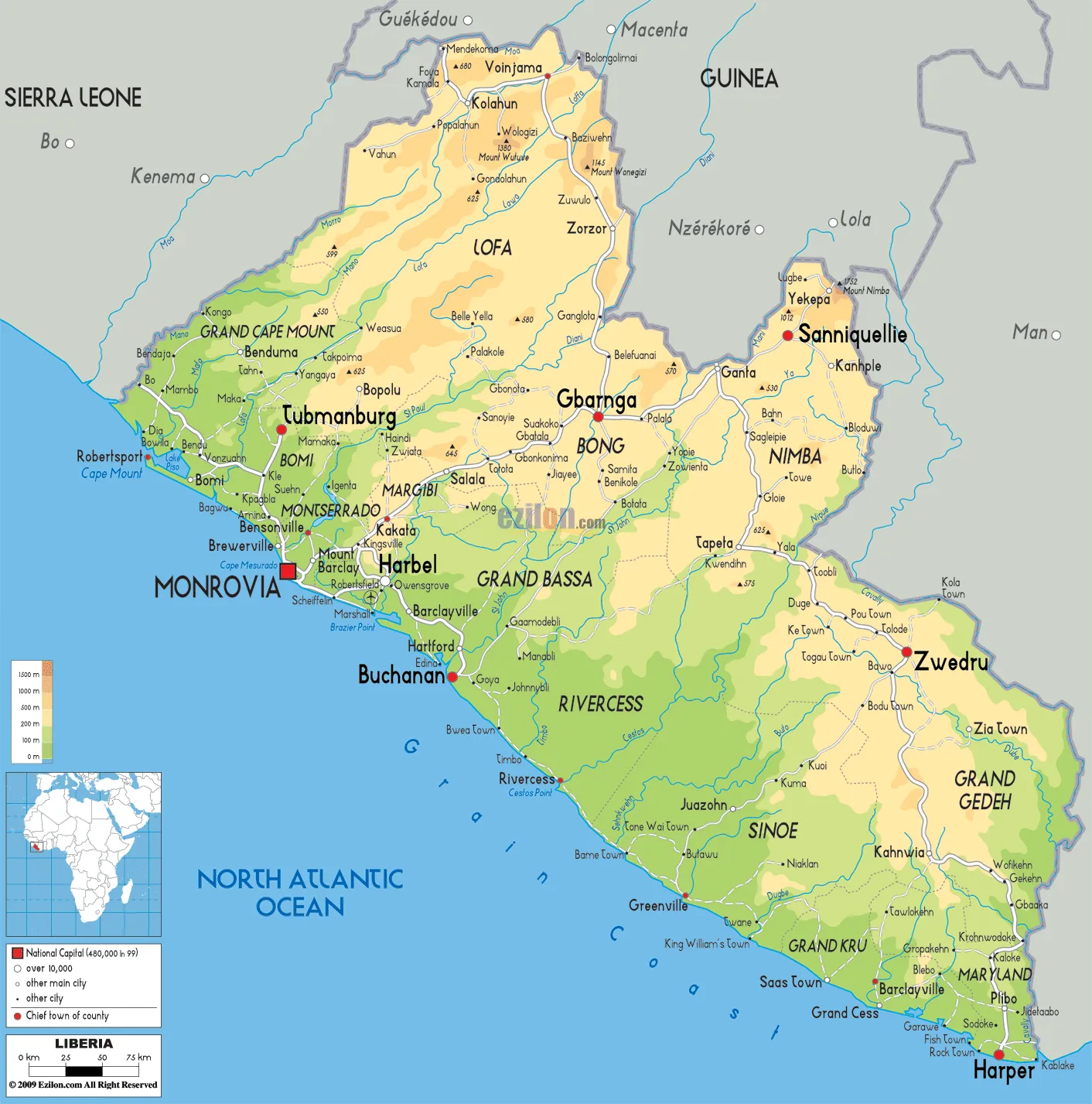
Liberian cuisine is, by virtue of Liberia’s history, a fascinating melange of both west African traditional cuisines, Caribbean and Southern US cuisines, and the consequence of the availability of local ingredients. Unlike most west African cuisines, Liberian cuisine includes breads, with rice being the staple food in most meals. It features heavy incorporation of seafood and meats - especially bushmeat - with chilis and tropical fruits and vegetables being included in most meals.
One consequence of a country being so reliant on one particular food as a staple is that, when that food becomes scarce, people are forced to either starve or learn to work with something that, by virtue of being alien, is absolutely cheap. In that list of ingredients I included above, you might notice that nowhere is pasta listed. Pasta is not a staple food of Liberia, or at least, wasn’t until the 2008 financial crisis.
Crisis is the mother of invention, and nowhere is that more true than in Liberia.
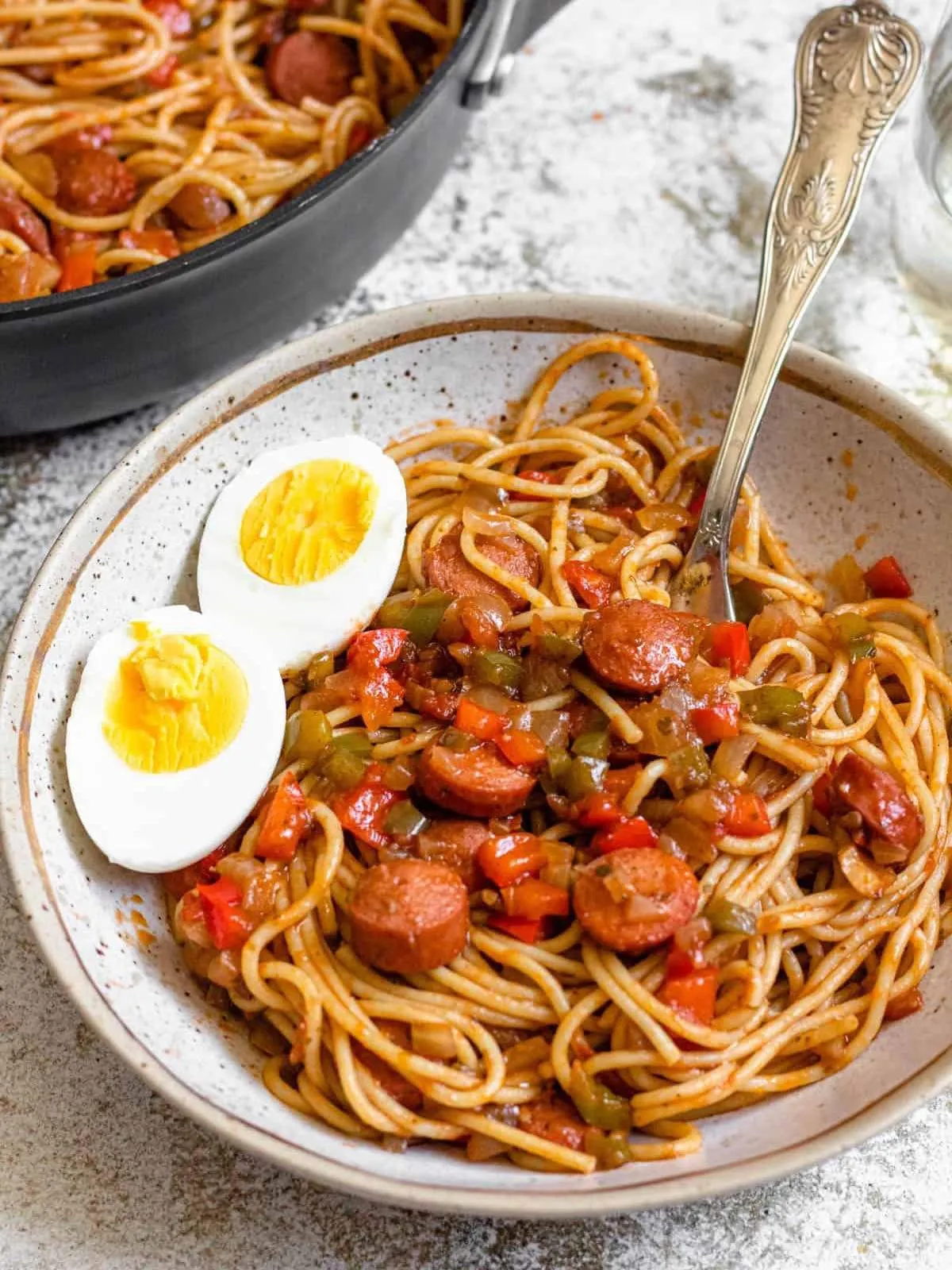 Desi-style spaghetti, as served by the Spaghetti Hub in Monrovia, Liberia (Source: Spaghetti Hub)
From 1989 to 2003, Liberia was in a state of civil war. While the causes and circumstances of this civil war are deeply complex, its consequences for the people of Liberia are more straightforward to understand. Liberia’s diverse ethnic groups formed militias or joined with existing militias to terrorise, massacre, and enslave one another. Much of these militias’ funding came from the use of forced labour to extract timber, gold, and diamonds. The term “blood diamond” itself originates from Liberia, and from the horrors perpetrated by these various militias as they jockeyed for control of terrified and traumatised Liberians. When Liberia emerged from war, it did so as a deeply broken nation, struggling to rebuild itself, but trying to rebuild itself nonetheless.
The act of rebuilding a nation is one that requires not only political cohesion, but funding. For Liberia, much of that funding came from outside sources, including private donors. For the first few years after the civil war, it enjoyed relative stability, fuelled by a rapidly growing economy that provided jobs and resources to people who previously had none. When the financial crisis hit, though, that foreign investment dried up. Liberian economic growth fizzled, bringing with it the threat of renewed violence as people faced a lack of food and opportunities.
Exacerbating these issues was the reality of the impact on the supply chain. The price of rice in Liberia nearly doubled as the Asian countries from whom Liberia imported its rice found themselves in their own financial crises. Faced with impossible prices, food stall owners sought new solutions, and found them in spaghetti.
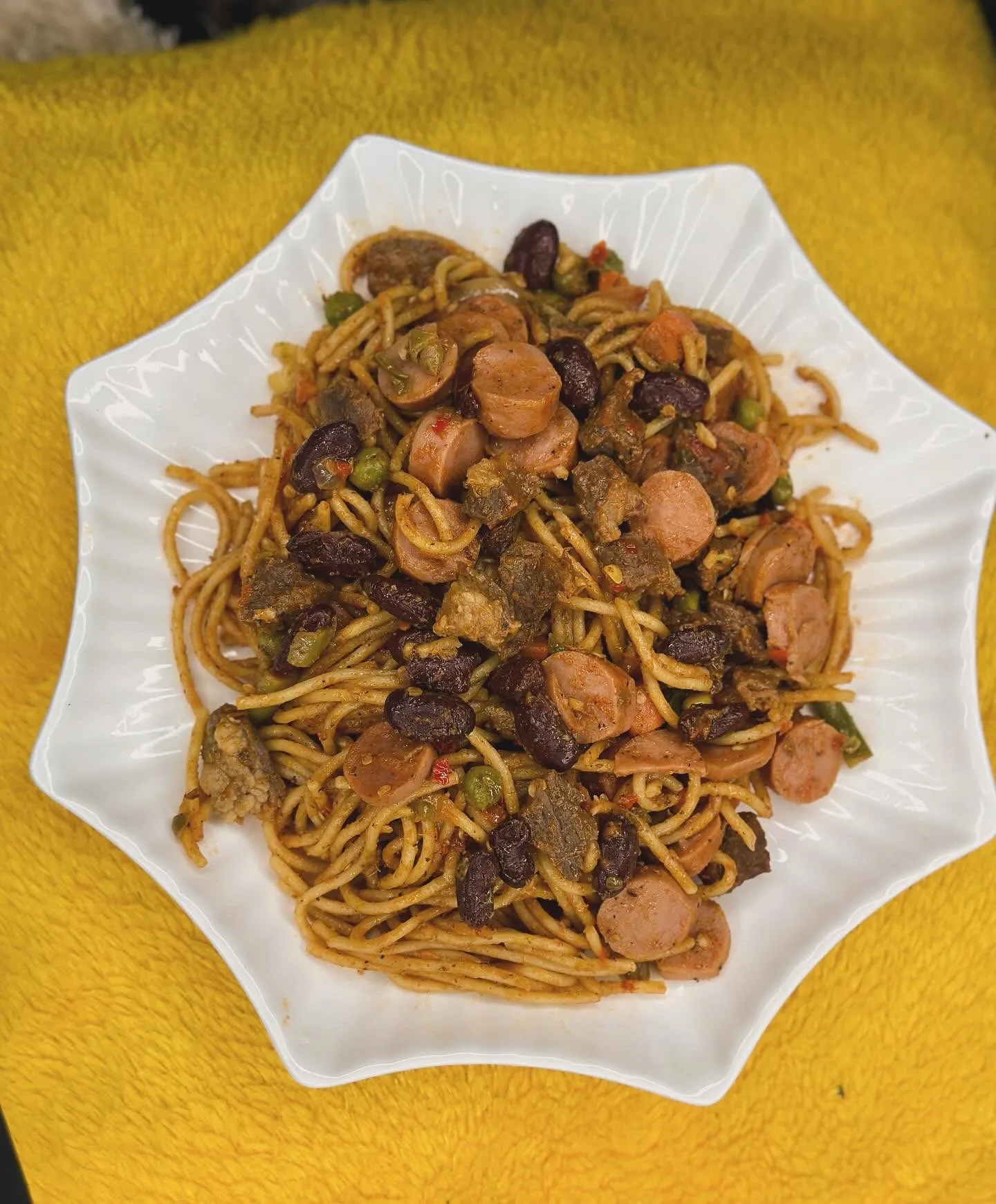 Belly boss spaghetti, as served by the Spaghetti Hub in Monrovia, Liberia (Source: The Spaghetti Hub)
One element I always find interesting in thinking about the consequences of actions is that it’s impossible to say what every consequence could be. Certainly the bankers making their decisions about sub-prime mortgages and gambling on the world economy likely weren’t thinking about the possibility of their poor decision making resulting in civil war and instability in west Africa. Their thoughts likely didn’t extend past the idea of “line go up,” with any consequences of that being Someone Else’s Problem.
For this piece, I tried to find out why spaghetti was in Liberia if no one wanted it or ate it. Articles like this one describe people needing to learn how to eat spaghetti, the fine art of twirling their forks around noodles, and of the debate of whether or not to cut the spaghetti to make it more familiar to non-spaghetti eaters. I don’t have a definitive answer, other than to gesture vaguely at the idea that foods can exist in a country for niche reasons and without needing to justify themselves for being there.
The impact of spaghetti being in Liberia, though, cannot be understated in how important it was in mitigating the impacts of the greed of bankers thousands of kilometres away who had no idea what their actions would do. Liberia stood on the precipice of violence, and spaghetti, while not the sole influence, helped pull it back.
Thousands of people, if not tens of thousands, died as a result of the 2008 financial crisis. Those responsible for their deaths have not faced the justice they should have, and indeed, remain influential in the financial world, repeating their poor decisions with one gamble after another, not knowing or caring who or what they take with them. There are times when people, confronted with a crisis beyond their manufacture, adapt, come together, and understand how to survive, not just for themselves, but for those around them.
Thousands of people died as a result of unchecked and unmitigated greed. Liberians, by the grace of spaghetti, were not among them. Street vendors kept their prices as low as they could for as long as they could and, when faced with the hunger of their neighbours, adapted to what they could. They cared for one another and recognised that greed would get them nowhere. They chose to make something new and better.
While those who committed war crimes have not necessarily faced the justice they should have, and while warlords remain influential in Liberia, it is nonetheless stable and democratic. It is a beacon of hope and a symbol for what people can do when they work together and resolve to rebuild for one another. The spaghetti is just another symbol of Liberia, of its resilience, and its future.