

Vegan Pommes Parmentier et Vegan Pommes Aligot
Ingredients
For the pommes Parmentier:
4 cups (600g) yellow potatoes, cubed
5 cloves garlic, minced
2 tsp Provencal spice mix
Salt
Pepper
Olive oil
For the pommes aligot:
3 cups (400g) potatoes
3 cups (400g) vegan shredded cheese
1/2 cup (100g) vegan creme fraiche
3 tbsp vegan butter
1 tbsp nutritional yeast
1 tsp garlic powder
Salt
Pepper
Instructions
- Preheat the oven to 425F (220C). Lightly coat a foiled baking tray with olive oil and place in the oven for five minutes, or while the oven is heating up.
- Boil sufficient water to coat the potatoes and add salt. Cube the potatoes (peeling is up to your discretion), then add them to the water. Boil for five minutes.
- Once the potatoes are boiled, nearly completely drain them, leaving maybe a tablespoon or so of water in the pot. Pour them on the heated pan. Sprinkle with salt, pepper, and the minced garlic, then set to roast for 30 minutes, turning occasionally.
- While the potatoes are roasting, boil another pot of water. Add the remaining potatoes to the pot and boil until soft.
- Drain and mash the potatoes.
- Once the potatoes are mashed, add the butter and cream and mix over low heat until everything is blended. Add the cheese, then mix for ten minutes, or until the potatoes are thoroughly creamy and firm.
- Once the potatoes are creamy, add the garlic powder, salt, pepper, and nutritional yeast. Mix for another few minutes.
- Toast two slices of bread. Add the pommes Parmentier on top of the bread, then pour the pommes aligot over it.
A longer and more detailed description
I’m going to let you in on a little secret. All these things I’ve said about authenticity, about wanting to try to capture the essence of a cuisine, while also recognising I am limited in what I can do due to my geographic location and the fact that I am not particularly good at any of this? None of that should have stood in my way here. I live in the Netherlands. France is right there. While Dutch cuisine and French cuisine are extremely distant cousins, there are nevertheless cousins, and all the ingredients I could ever need to make this authentic are in my grocery store. I have the right potatoes, the right spices, the right everything, and yet, I’m going to confess.
This, more than any other recipe, more than the Anzac biscuits with macadamias, the vegan Sachertorte, or the beyaynetu without injera, it’s this that I’m pretty sure is going to get me in trouble. You see, while the components of this dish are French, the end product is a crime against French cuisine.
I’ve affectionately called it “pommes de l’atrocite.” I am so very proud of it.
Let’s start by making the pommes Parmentier part of this dish. Preheat your oven and boil some salty water, then cube your potatoes (rectangular prisms are also acceptable) and toss them in said water. Let them boil for five minutes or so.
While the potatoes are boiling, do a very fancy thing, and lightly drizzle olive oil on a foiled baking sheet. Pop this into the oven to heat up the oil and the baking sheet. While this step sounds silly, I promise it’s not - one of the things that defines a good pommes Parmentier is its crispy outside and fluffy inside, and it’s the parboiling and special roasting that helps make that happen.
Once the potatoes are boiled, drain them nearly completely, then pour them on the heated oil. There should be a wonderful sizzle and a bit of steam to let you know you’ve done it correctly. If there’s not, that’s fine too, but be aware your potatoes won’t be able to be their best selves. Add the garlic, salt, and pepper, then pop them in the oven for half an hour. Give them a little turn with your spatula every once in a while, but otherwise, it’s time to work on the pommes aligot.
Using your remaining potatoes (I bought a 1kg bag!) and a second pot of boiling water, boil the potatoes until they are mashable. Drain them, then mash them into a lovely potato pulp. Add your cream and butter, but don’t fully remove them from the heat just yet. Instead, over low heat, give them all a lovely mixy mix until everything is a happy mashed potato friend.
Now we get to the weird part.
Once the potatoes are mixed and mashed, add an amount of cheese equal to the amount of potatoes and just…start mixing. Use slow, steady, and constant strokes, and mix constantly for at least ten minutes. While this seems ridiculous (because, let’s face it, it is), it’s this mixing that gives it the correct texture through a combination of beating and aerating and all sorts of other fancy techniques. Mix it until you’re bored, then mix some more. I recommend putting some music on, maybe dancing with your potatoes, something to make the time pass. Not mixing is not an option.
Once the potatoes are firm and roughly the consistency of fondue, stop mixing. Add the nutritional yeast, garlic, salt, and pepper, and mix just a minute or two longer. With that, your pommes aligot is complete. Set it aside.
For the final, abominable touch, toast two pieces of bread. Put your toast on a plate (or a napkin, or nothing, I ain’t your mother), and add the pommes Parmentier. Top it with the pommes aligot, and then laugh diabolically. You have created something that does not belong in a French kitchen, and you have made it out of the things that do. You are an evil genius. You are awe-inspiring.
Also, this is your carb allocation for the week. It’s been two days, and my body still threatens me with the guillotine when I think about eating more carbs. Bon appetit!
Substitutions and Suggestions
For combining all the things listed above: You don’t have to make pommes de l’atrocite. Any piece of this is perfectly acceptable on its own, and indeed, that is the preferred way to serve it. But if you could do this, why would you not?
For the vegan creme fraiche: This is a French recipe, and as such, the butter and cream are a fundamental component. That said, if you cannot find creme fraice, yoghurt, cream cheese, or coconut cream are all acceptable substitutes here. Personally, I think the yoghurt is the best bet, as you do want something that’s going to mimic the taste of cheese at least a little.
For the vegan shredded cheese: I used a shredded Gouda cheese because that’s what I had. However, if you have a soft vegan cheese like a mozzarella, that would probably be amazing. Barring that, shredded cheddar also sounds good.
For the Provencal spice mix: My spice mix has parsley, rosemary, basil, thyme, oregano, and tarragon. Feel free to use any combination of these spices, though the rosemary and tarragon are definitely the best and most interesting.
For the toast: I used German bread.
For the potatoes: There is no substituting the potatoes. They are the entire point.
What I changed to make it vegan
French cuisine is a cuisine that has centred its very heart and soul on butter and cream. I think the pommes Parmentier may be one of the only French dishes I’ve found that isn’t an absolute butter fest. That said, for the pommes aligot, I removed all dairy and replaced it with vegan alternatives.
What to listen to while you make this
There is a vast, vast world of French music out there, and to make any recommendation as if it’s representative of the whole would be criminal of me. That said, I got a lot of joy out of Paradigmes by La Femme. It’s exquisitely French, tons of fun, and a bit of a trip. Highly recommend.
A bit more context for this dish
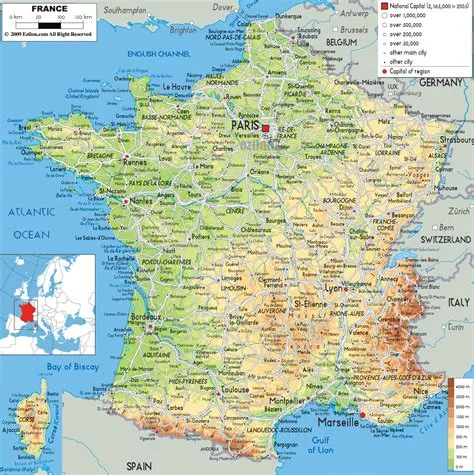
French gastronomy is on the UNESCO list of Intangible Cultural Heritage of Humanity, and understandably so. The concept of a meal served with multiple courses, while not unique to the French, propagated throughout Europe due to medieval French banquet tradition. Many of the words used in English for cooking techniques - saute, braise, flambe, confit, julienne, mince, puree, fry, roast, boil - are derived directly from French. For centuries, French cuisine and dining culture have been seen as the height of sophistication in Europe, and, with French colonialism spreading French culture around the world, increasingly globally as well.
French cuisine is also uniquely a part of French culture in a way that isn’t necessarily the case for many other nations. While every culture derives some part of its identity from what it eats, for French culture, the pride in the precision of culinary tradition means that to participate in French cuisine is not just to eat French food, but to participate in a long tradition of exact choices. The concept of mise-en-place - everything in its place - is a fundamental part of French culinary tradition. The ingredients that are used and how they’re prepared is not accidental. Everything is precise because to be precise is necessary to be the dish. French cuisine, more than any other, views substitution as a mangling of the dish. Tout a sa place pour une raison.
This, of course, makes French cuisine uniquely difficult to veganise, as there is a not insignificant body of French culinaires who see the very attempt as acting in defiance of what makes French cuisine French. If I can’t do it correctly, then I shouldn’t be trying at all.
And yet, the history of French cuisine is one of adaptation. It is one where things change, where there is evolution, where trying new things is part of how the modern cuisine has come to me. Nowhere is that more apparent than in the two dishes we made today, and the man who is to thank for them - Antoine-Augustin Parmentier.
That’s right. I tricked you. This is yet another post about potatoes.
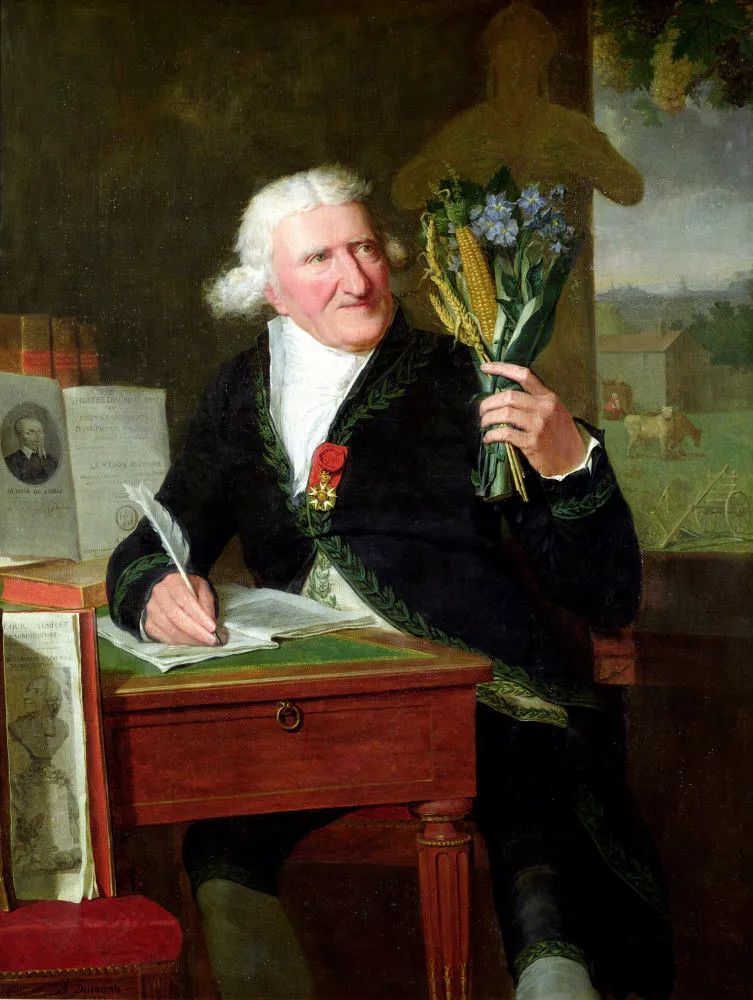 1812 portrait of Parmentier by Francois Dumont
The story of the potato in Europe is incomplete without also telling the story of Parmentier. Born in 1737 and working as a pharmacist in France, Parmentier is, at first, an unlikely hero. While he had an interest in the new plants arriving in Europe from the Americas, the potato had long since been relegated to the scrap heap, seen as only good for animal feed at best, and causing leprosy at worst. Indeed, in 1748, France banned the cultivation of potatoes, seeing them as fundamentally dangerous.
However, during the Seven Years’ War, Parmentier was captured by the Prussians, who had no such ban, and who had been increasingly experimenting with potatoes as a source of food for the Prussian peasantry. While in prison, Parmentier was presented with a choice by the guards - eat potatoes or starve. He chose potatoes.
As he languished in his Prussian prison, nibbling at potatoes and watching the war pass him by, Parmentier had a revelation. Potatoes, he discovered, were not only edible, but nutritious. Potatoes, he thought, could be the future the French peasantry needed.
When he returned to Paris, Parmentier set to work proving to the French people that potatoes were the future. Much as the United States has the Federalist Papers advocating for the Constitution, France has the pro-potato pamphlets of Parmentier. Parmentier through banquets where he served potatoes, gifted potato blossoms to Marie Antoinette, and planted 54 acres of potatoes, placing guards on it so local villagers wouldn’t “steal” them, while hoping they actually would. In 1773, he won a prize for his discoveries, leading to the ban on potatoes being lifted as the food was declared safe. His advocacy of the potato helped stave off a famine in 1785, and, on the eve of the French Revolution, hoping to keep the potato safe from revolutionary flames, Parmentier published his treatise on the use of the potato.
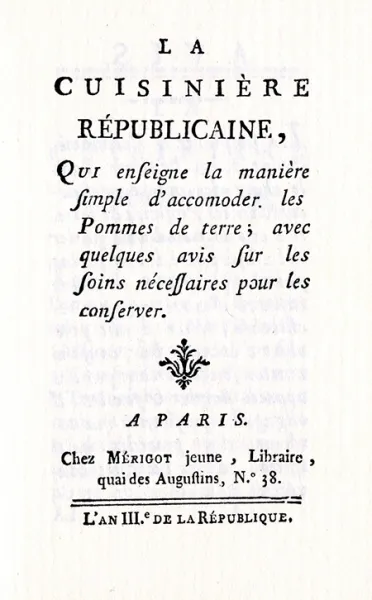
However, at this point, he was not alone in his advocacy and recognition of the humble potato. In 1794, a Republican cookbook advocating for the potato was published by an author calling herself “Madame Merigot.” The potato would make it through the French Revolution, but would be seen as the food of the revolutionaries. By the 19th century, it had spread throughout Europe, propagated by peasants and nobles alike.
That one of these dishes is called “pommes Parmentier” is not a mistake. This is a recipe that, while not derived directly from Parmentier, exists because of him and his work. Potatoes are a fundamental part of French cuisine because Parmentier advocated for them. There are dozens of French potato dishes that now bear his name. It’s a reminder of how drastic an impact any of us can have, and how, even the systems that seem most intransigent and resistant to change can still be swayed.
All it takes is a bit of something delicious.
 Potato flowers really are very pretty.